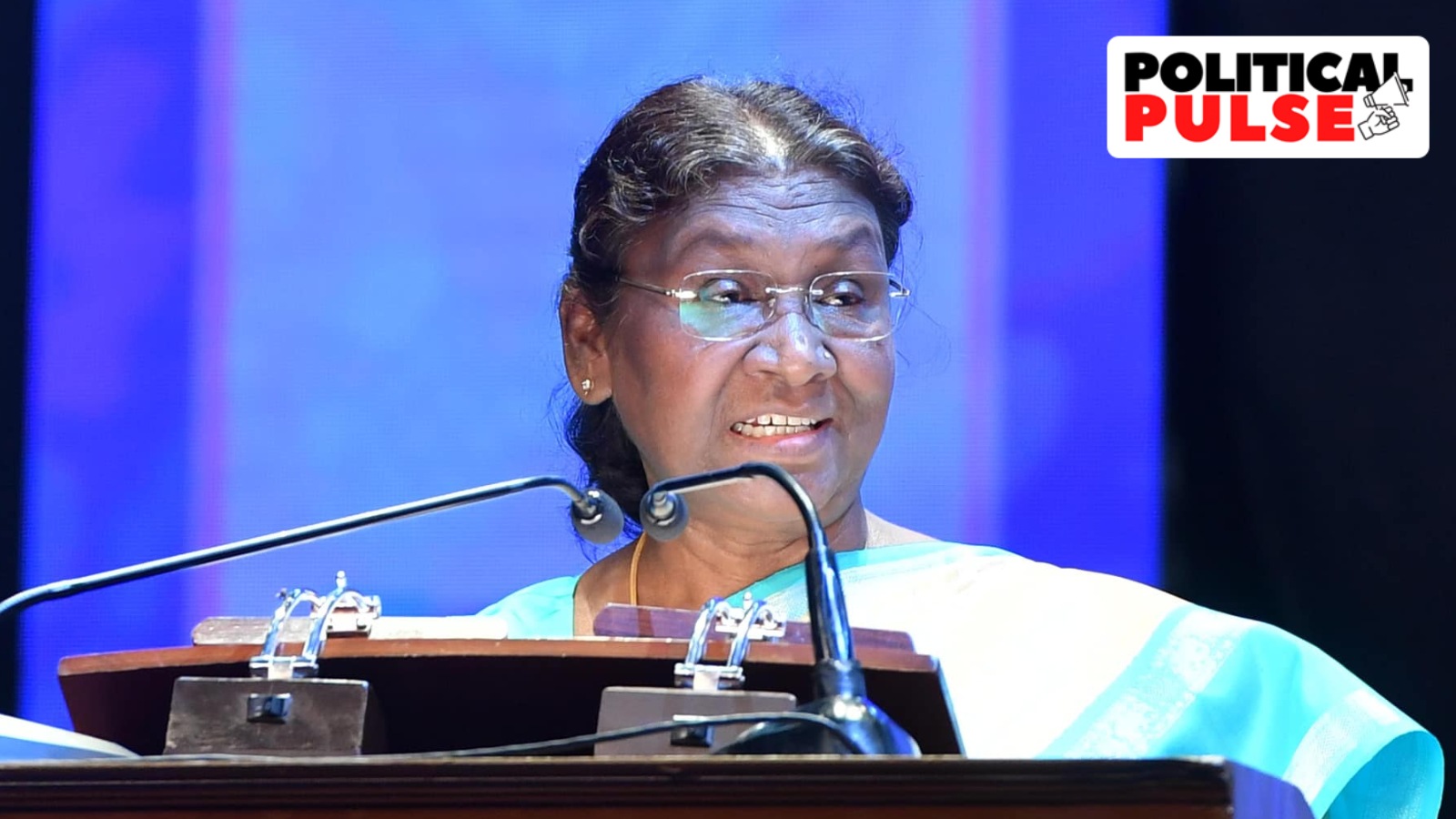

The Supreme Court has recently mandated a three-month deadline for the President and Governors to act on Bills sent by state Assemblies. In light of this, President Droupadi Murmu has requested the court’s opinion under Article 143(1) regarding the justiciability of their actions and whether such timelines can be enforced in the absence of constitutional provisions. On April 8, the Supreme Court established timelines for Governors to address Bills and stipulated that the President must decide on Bills reserved for the Governor within three months of receipt. Notably, Article 201 of the Constitution does not specify a timeframe for presidential decisions.
Several Opposition-ruled states, in addition to Tamil Nadu, have approached the Supreme Court, challenging their Governors over significant delays in granting assent to Bills that often seek to limit the influence of Governors in university matters. This article examines the states involved and the current status of the Bills.
In Tamil Nadu, citing the Supreme Court’s directive, previously stalled Bills were declared law from the date they were originally presented for assent. Legislation now recognized as law includes the Tamil Nadu Fisheries University (Amendment) Bill, 2020; the Tamil Nadu Universities Laws (Amendment) Bill, 2022; and others. However, the Madras University (Amendment) Bill, 2022, and the Tamil Nadu Veterinary and Animal Sciences University (Amendment) Bill, 2023, are pending due to technical issues and are under reconsideration.
Kerala’s government, led by Pinarayi Vijayan, turned to the Supreme Court in March 2024, accusing the President of withholding assent from four Assembly-passed Bills without explanation and alleging Governor Arif Mohammad Khan left seven Bills pending for up to two years before referring them to the President. These actions were described as “manifestly arbitrary.” The Kerala government contends that, in line with the Tamil Nadu ruling, any Bills awaiting assent should be regarded as law. After some Bills received assent, the Kerala government attempted to withdraw its legal challenge; however, the Governor’s counsel opposed this move. Presently, three Bills submitted to the President remain unresolved.
In Karnataka, tensions between the government and Governor Thaawarchand Gehlot have been less severe compared to Tamil Nadu and Kerala. Thirteen Bills awaited assent last month, with seven, including the Greater Bengaluru Governance Bill, approved. Currently, six Bills passed by the legislature are pending, addressing various issues from the governance of universities to taxation.
West Bengal’s governing Trinamool Congress filed a lawsuit in July 2024 against Governor C V Ananda Bose for purportedly blocking seven Bills without justification. The contested Bills cover amendments related to both health sciences and agricultural universities.
In Telangana, the Bharat Rashtra Samithi claimed in April 2023 that Governor Tamilisai Soundararajan withheld assent on ten Bills. The case was reportedly closed after the Centre informed the Supreme Court that these Bills were no longer pending.
In Punjab, the Aam Aadmi Party accused Governor Banwarilal Purohit in October 2023 of delaying four critical Bills, including amendments related to police and universities. A Supreme Court panel reprimanded Purohit for his inaction, reinforcing that indefinite delays on duly passed Bills are inconsistent with his responsibilities. Just before the verdict, one of the Bills received assent, while the others remain unresolved.
Original Source: https://indianexpress.com/article/political-pulse/sc-bills-president-governor-draupadi-murmu/
Category: Political Pulse
Tags:
Publish Date: 2025-05-15 18:43:00