
President Trump has defended his controversial decision to impose tariffs on imported goods, asserting that such measures will incentivize companies to shift production back to the United States and revitalize job growth. However, this rhetoric is met with skepticism, particularly from German firms that have established roots in the U.S. as far back as the late 1800s. Currently, these companies represent 12 percent of foreign investments in the U.S., with major automakers like BMW and Mercedes-Benz having long-established manufacturing plants sited across the country.
The recent move by the candy giant Haribo to open its first U.S. factory in Wisconsin exemplifies the ongoing commitment of German businesses to American operations. Yet, in light of the tariffs, many German firms are reassessing their investment strategies. Surveys indicate a growing reluctance among these manufacturers to commit further funds in the U.S. market, with sentiment declining notably since Trump initiated tariffs. Volker Treier, head of foreign trade at the German Chamber of Commerce and Industry, noted that the perception among companies has shifted from an optimistic outlook to increased concern, stating, “They have fallen against the trend…because tariffs are poison.”
Investment intentions have also dimmed among German firms, with only 19 percent now considering North America as a viable investment destination, a decrease from 25 percent according to a Deloitte survey. Meanwhile, Germany is witnessing a renewed focus on domestic investment, supported by a new government mandate aimed at reducing bureaucracy and lowering energy costs. The recent accession of Chancellor Friedrich Merz heralds hopes of tapping into €500 billion (approximately $564 billion) planned for infrastructure development over the next 12 years, creating a more favorable climate for German firms to expand on home soil.
As the 90-day suspension of tariffs approaches its expiration in July, uncertainty looms. Diplomatic discussions between Merz and Trump have centered around swiftly addressing trade disputes, offering potential avenues for resolution. The automotive sector, notably impacted by tariff challenges, continues to negotiate tactics to mitigate these burdens. Both Mercedes-Benz and Volkswagen, along with their subsidiaries, have suggested relocating some production to the U.S., a move the White House is eager to showcase as a success of its tariff strategy.
Current figures indicate that German direct investment in the U.S. reached $657.8 billion in 2023, vastly outpacing the $193.1 billion that flowed the other way from American companies to Germany. Treier emphasized the importance of this investment imbalance in ongoing trade negotiations, asserting, “We have invested more; our companies have created more jobs in the U.S. than American companies in Germany.” German companies have traditionally pursued U.S. production to enhance market access and meet local demands.
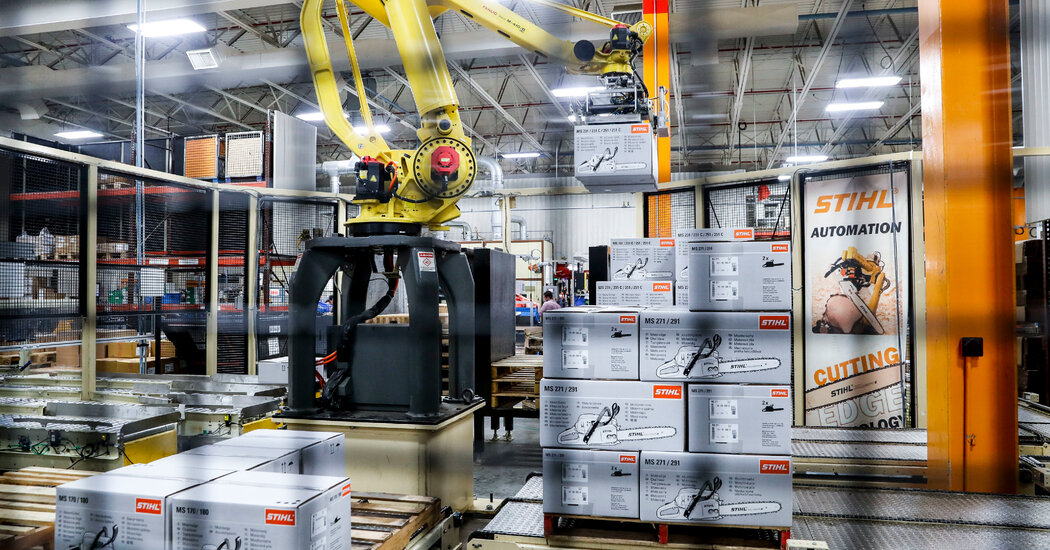
The shift in strategy is evident even for companies like Haribo, which is pursuing a long-term plan focused on local production, regardless of tariffs. Stihl, a power tools manufacturer based in Waiblingen, has operated a factory in Virginia since 1974, prioritizing local production over political considerations. Chairman Michael Traub articulated that their manufacturing decisions stem from sound business rationale rather than external pressures.
While Stihl has navigated some challenges posed by tariffs, it still relies on imports for essential components from Europe and Brazil, which inevitably affects pricing. “We believe that tariffs are taxes, and at the end of the day, our consumers will have to pay them,” said Traub, emphasizing the cascading impact of tariffs on final product costs. As the trade landscape evolves, the balance between American manufacturing ambitions and international investment strategies remains a focal point of contention in U.S.-Germany relations.
Original Source: https://www.nytimes.com/2025/05/13/business/germany-us-trade-trump.html
Category : International Trade and World Market,Customs (Tariff),Factories and Manufacturing,Foreign Investments,Bayerische Motorenwerke AG,Haribo,Stihl Inc,Volkswagen AG,Merz, Friedrich,Trump, Donald J,Germany
Tags:
Publish Date: 2025-05-13 18:52:00