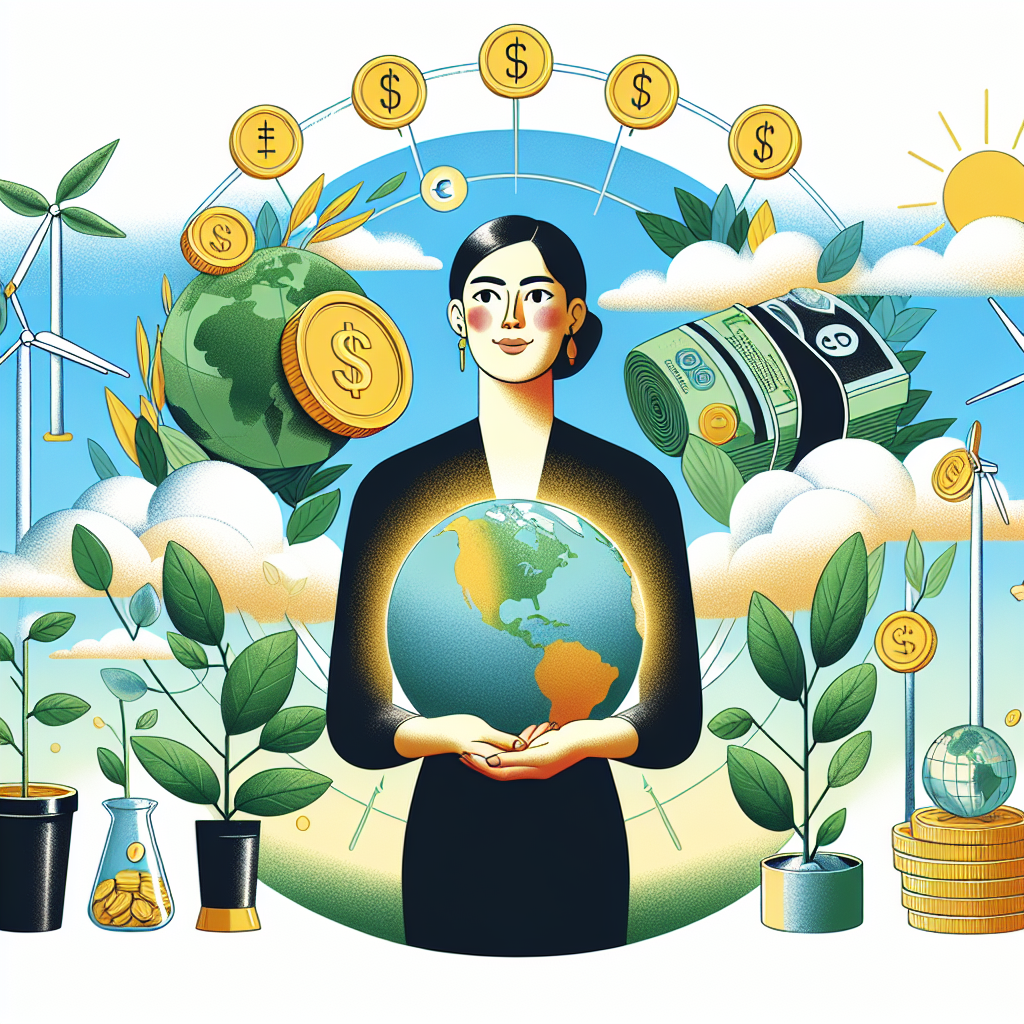
Ellen Jackowski’s Vision: Empowering Climate Action through Financial Inclusion

Imagine a world where your bank balance isn’t just a number but a reflection of your impact on Earth. Ellen Jackowski is working towards that vision—a beautiful, intricate tapestry where financial inclusion harmonizes with climate action. It’s about time we started seeing our money as a participatory act in the grand play of sustainability.
Isn’t it a bit ironic? Many people remain unbanked while our planet faces dire threats from climate change, often neglected by those who wield the financial power. Jackowski, the head of Sustainable Innovation at the global financial giant, strives to change this narrative. She believes that integrating sustainable practices with financial inclusion isn’t just a nice-to-have; it’s a necessity. It’s about creating pathways for marginalized communities to participate financially while contributing to a healthier planet.
Let’s take, for instance, the agricultural sector. In many developing regions, farmers face extreme challenges from climate change, yet they often lack access to basic financial services. Imagine a cooperative of small farmers in Meghalaya, northeastern India. They cultivate organic produce, but without proper financing, they can’t invest in sustainable practices. Enter Jackowski’s vision: imagine if financial institutions created tailored products for these farmers, not just loans but ones incentivizing eco-friendly practices. Perhaps a micro-loan with lower interest rates for farmers using drip irrigation or agroforestry methods that enhance soil health. This isn’t just a pipe dream; it’s a model of how finance can empower communities to be stewards of their environments.
What’s unique about Jackowski’s approach is the blend of technology and empathy. In an age where artificial intelligence and machine learning are all the rage, why not use them to analyze and assess both financial viability and the environmental impact of investments? Think about it: algorithms could identify which communities need support the most and tailor financial products to encourage climate-positive behaviors. It’s like having a financial GPS guiding both the map of your wallet and the future of the planet.
Now, you might wonder, what’s in it for the big financial players? Well, it’s about reframing growth. Businesses that adopt sustainable models not only tend to fend off regulatory risks but can also capture emerging markets that value sustainability. People are becoming conscientious spenders; they want to invest in companies that share their values. Therein lies a symbiotic relationship. The financial sector grows, and communities thrive—everybody wins.
Let’s break this down into practical takeaways. First, financial literacy is essential. Whether you’re in a bustling city or a quiet village, understanding money should be a fundamental right. Initiatives aimed at educating communities about finance, especially regarding sustainable investments, can catalyze change.
Second, there’s power in community. Collaborative approaches, like farmer cooperatives or community banks, can galvanize local efforts. When individuals come together, they can leverage collective resources to drive both economic and environmental goals.
Lastly, challenge the status quo. If you work in tech, design tools that democratize access. Seek partnerships with institutions committed to inclusivity and sustainability. The ultimate aim? Creating a financial ecosystem where everyone has a stake—not just in their wallets but in the world around them.
Jackowski’s vision isn’t just an ambitious blueprint; it’s a call to action. We’re at a crossroads where our choices in finance will reverberate through the fabric of our society and our planet. Imagine waking up to a future where financial inclusion fuels climate action, and every rupee spent is a step toward sustainability. It’s not just a dream; it’s a possibility waiting for us to seize.
So, the next time you discuss finances or investments, ask yourself: how can this choice benefit the world? The answers may surprise you and could lead us toward a more inclusive and sustainable future.
Author Profile:
Sanjeev Sarma is the Director of Software Services and Chief Software Architect at Webx Technologies Private Limited. He is a tech enthusiast whose insights bridge the gap between cutting-edge technology and everyday life, focusing on AI, cybersecurity, and entrepreneurship. Rooted in the rich culture of Northeast India, Sanjeev blends curiosity with a practical understanding to empower others through technology.