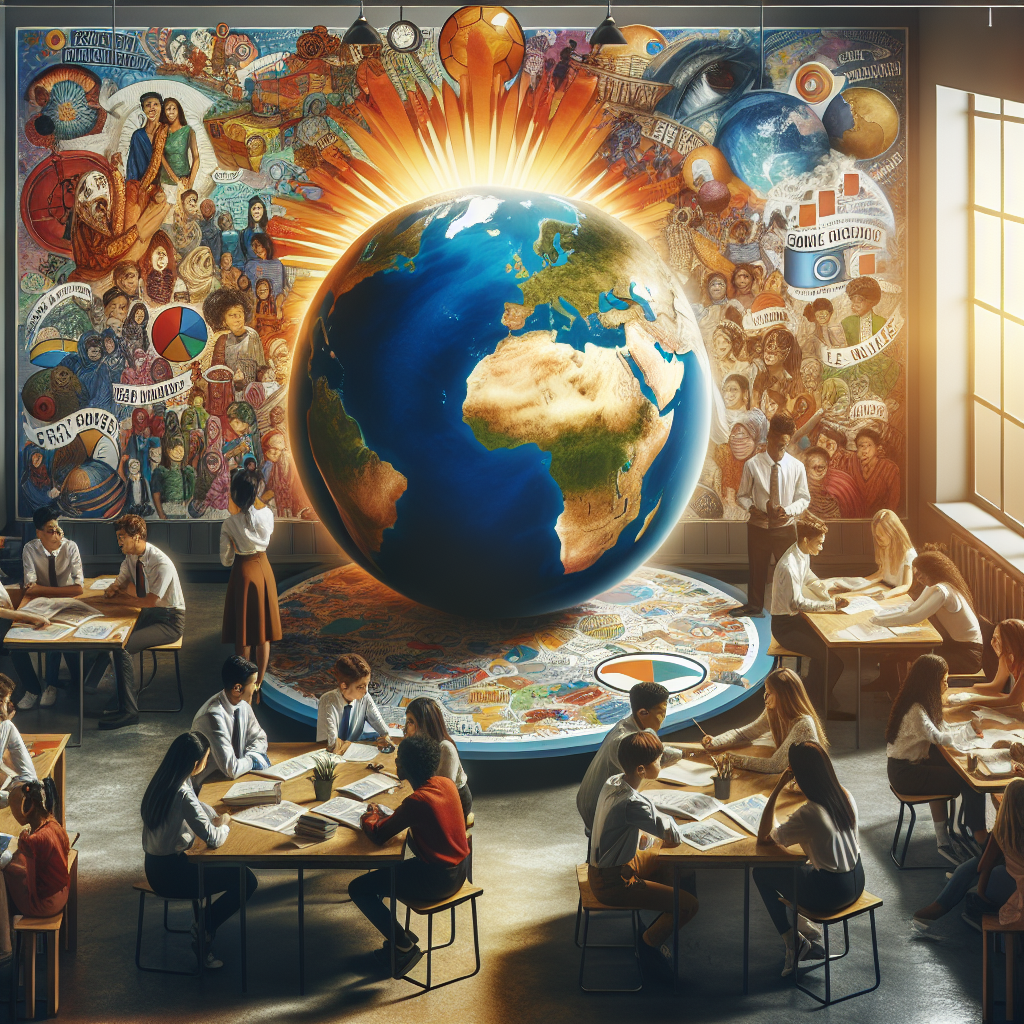
Empowering Future Leaders: Designing a Transformative Curriculum for Global Citizenship

Beyond Standards: Crafting a Curriculum for Today’s Global Citizens
In a world that is rapidly evolving, the traditional educational curriculum often falls short in preparing students for the complexities of modern society. As technology reshapes the workforce and international relations transform interactions, it becomes clear that an updated perspective on education is necessary. Crafting a curriculum for today’s global citizens calls for a model that transcends standard benchmarks by integrating cultural literacy, critical thinking, and digital savvy into its core.
Take the growing influence of Artificial Intelligence (AI) as a prime example. Not only should students understand the basics of how AI works, but they must also grasp its ethical implications and societal impacts. Schools like the International School of Amsterdam have embraced this approach by incorporating AI ethics into their curriculum, equipping students to engage thoughtfully with technology. When students discuss topics like privacy and algorithmic bias alongside their technical skills, they cultivate a broader worldview. This skill set prepares them not only for jobs that may not even exist yet but also for informed citizenship.
Moreover, fostering critical thinking is crucial in an era dominated by misinformation and rapid technological change. Chicago’s DePaul University has revamped its curriculum to meld traditional subjects with real-world problem-solving. By introducing challenge-based learning projects, students collaborate to tackle local issues, from environmental sustainability to community health. Such practical experiences sharpen analytical skills and empower learners to think independently.
This curriculum shift is made richer through the integration of digital tools. Embracing platforms like Google Classroom or educational apps encourages collaborative learning and promotes digital literacy. Teachers can incorporate multimedia resources to appeal to diverse learning styles while providing students with the tools they need to thrive in a technology-driven landscape.
Another essential component is cultural competence. The globalized world requires an understanding of diverse perspectives to navigate interpersonal relationships effectively. Schools like the United World Colleges emphasize intercultural learning through student exchanges and global collaboration projects. By experiencing different cultures first-hand, students develop empathy and adaptability—traits essential for success in today’s interconnected world.
While these advancements may seem lofty, they can begin with small, actionable steps within existing frameworks. Educators can start by integrating current events into the classroom. Discussing issues like climate change, social justice, or technological development fosters a connection between academic concepts and the real world. Involving students in local community projects can also spark a sense of responsibility and engagement.
For parents, supporting their children in these educational journeys is vital. Encouraging inquisitiveness, nurturing creative problem-solving, and discussing ethical dilemmas at home can complement what students learn at school. Workshops or family activities that center around technology or cultural exploration can help reinforce these themes.
Furthermore, it’s imperative to embrace continuous learning for educators themselves. Professional development programs that focus on innovative teaching methods and new technologies can elevate the standard of education delivered in classrooms today. An inspiring example is the Teacher Innovator Academy, where educators engage in collaborative projects to redesign engaging, student-centric learning experiences.
As we move forward in this age of technological advancement and global interdependence, it becomes necessary to craft educational experiences that prepare individuals not merely for jobs but for impactful lives. By nurturing critical thinking, cultural awareness, and digital literacy, educational institutions can empower students to emerge not just as good workers, but as engaged, conscientious global citizens ready to contribute meaningfully to society.
Author Profile:
Sanjeev Sarma is a Chief Software Architect at Webx Technologies and an emerging thought leader passionate about the convergence of technology, education, and social change. With expertise in Artificial Intelligence, Cybersecurity, and Digital Transformation, he ensures his work reflects the dynamic needs of a rapidly evolving global landscape. Sanjeev believes that understanding technology’s impact across various sectors—including health, finance, and education—is crucial for all. Through his writing and public speaking, he aims to make complex technological concepts accessible to curious professionals. His commitment to lifelong learning and fostering innovation drives his mission to inspire others to navigate the complexities of our modern world with confidence.