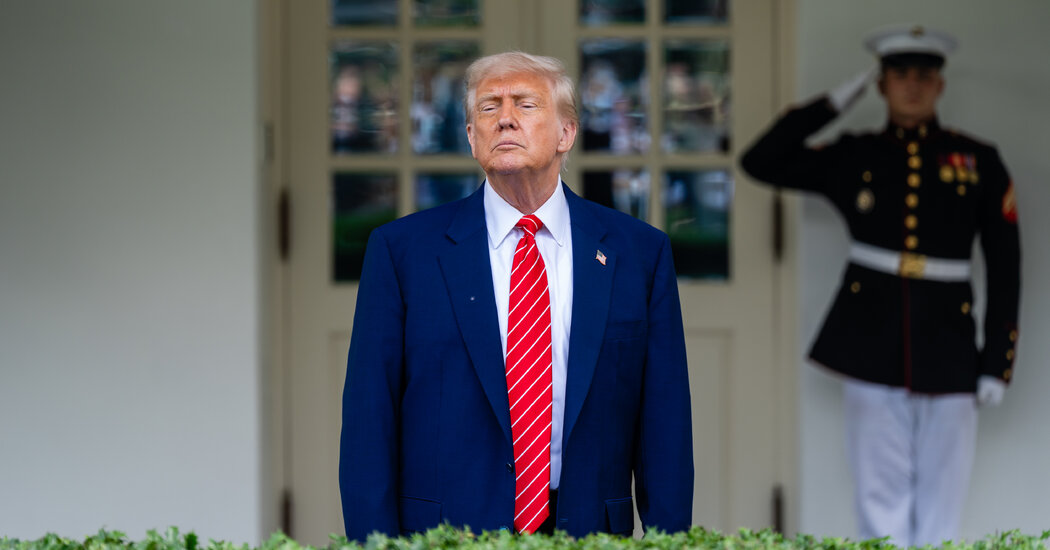

President Trump has raised eyebrows by suggesting a potential name change from the Persian Gulf to the Arabian Gulf ahead of his upcoming trip to the Middle East. This proposal has sparked outrage among Iranians, prompting a wave of condemnation from various segments of Iranian society. “I’ll have to make a decision,” Trump said in the Oval Office, emphasizing his reluctance to hurt anyone’s feelings. “I don’t know if feelings are going to be hurt.”
Reports earlier this week indicated that Trump intends to announce this name change during his visit to several Arab nations, which have lobbied for this rebranding for years. The body of water has historically been referred to as the Persian Gulf since at least 550 B.C., during the reign of Cyrus the Great in ancient Persia, which is now modern-day Iran. The entire southern coastline of Iran borders this gulf.
Both the Iranian government and its people have vigorously defended the name Persian Gulf as an integral part of their national identity. Political scientists note that Trump’s suggestion has unexpectedly united Iranians across various political and ideological divides, with many expressing their outrage through statements and social media. Historian Touraj Daryaee from the University of California-Irvine remarked, “It goes beyond politics… it’s about the nation and its history,” adding that renaming the gulf could undermine Iran’s cultural identity.
Despite Trump’s authority to enforce geographical name changes within the United States, such alterations do not carry weight internationally. Earlier this year, Trump attempted to rename the Gulf of Mexico to the Gulf of America, but the U.S. Board on Geographic Names still recognizes the term Persian Gulf for official business. The International Hydrographic Organization, which standardizes maritime naming conventions, has stated that no formal international agreement exists for naming such areas.
The backlash from Iran has been swift and significant. Ahmad Zeidabadi, a prominent analyst in Tehran, insisted on social media, “Just because of Trump’s wishes and whims, the Persian Gulf will not take on a fake name.” The Iranian national soccer team’s social media accounts also voiced opposition, sharing a map of the Persian Gulf along with a trending hashtag, #ForeverPersianGulf. Even Reza Pahlavi, son of the last Shah of Iran, condemned the proposed name change, branding it an “insult to the Iranian people and our great civilization.”
The historical context of the Persian Gulf’s name is rich, with its usage tracing back through ancient Persian texts, Greek records, and British diplomacy. While the push to rebrand it as the Arabian Gulf gained traction during the Pan-Arab nationalist movements of the late 1950s, the United Nations continues to endorse the term Persian Gulf. A 2006 U.N. paper reaffirmed the name’s historical significance, tracing its origin back to Persian King Darius in the fifth century B.C.
This controversy could have ramifications beyond mere geography, especially in light of ongoing nuclear negotiations between Iran and the United States. Having already held three rounds of mediated talks, both nations aim to address concerns regarding Iran’s advancing nuclear program and the existing economic sanctions. Seyed Hossein Mousavian, a former Iranian diplomat who participated in the 2015 negotiations, cautioned that renaming the Persian Gulf would exacerbate mistrust in these delicate talks. “It will just create mistrust and embolden hard-liners in Iran,” he warned, emphasizing the potential fallout from Trump’s proposed change.
As public sentiment coalesces against Trump’s idea, the legacy of the Persian Gulf name remains deeply intertwined with Iranian identity and history, making any potential change a contentious issue with far-reaching implications.
Original Source: https://www.nytimes.com/2025/05/11/world/middleeast/can-trump-rename-the-persian-gulf.html
Category : Persian Gulf,Names, Geographical,Iran,Trump, Donald J,United States International Relations,International Relations
Tags:
Publish Date: 2025-05-11 09:31:00