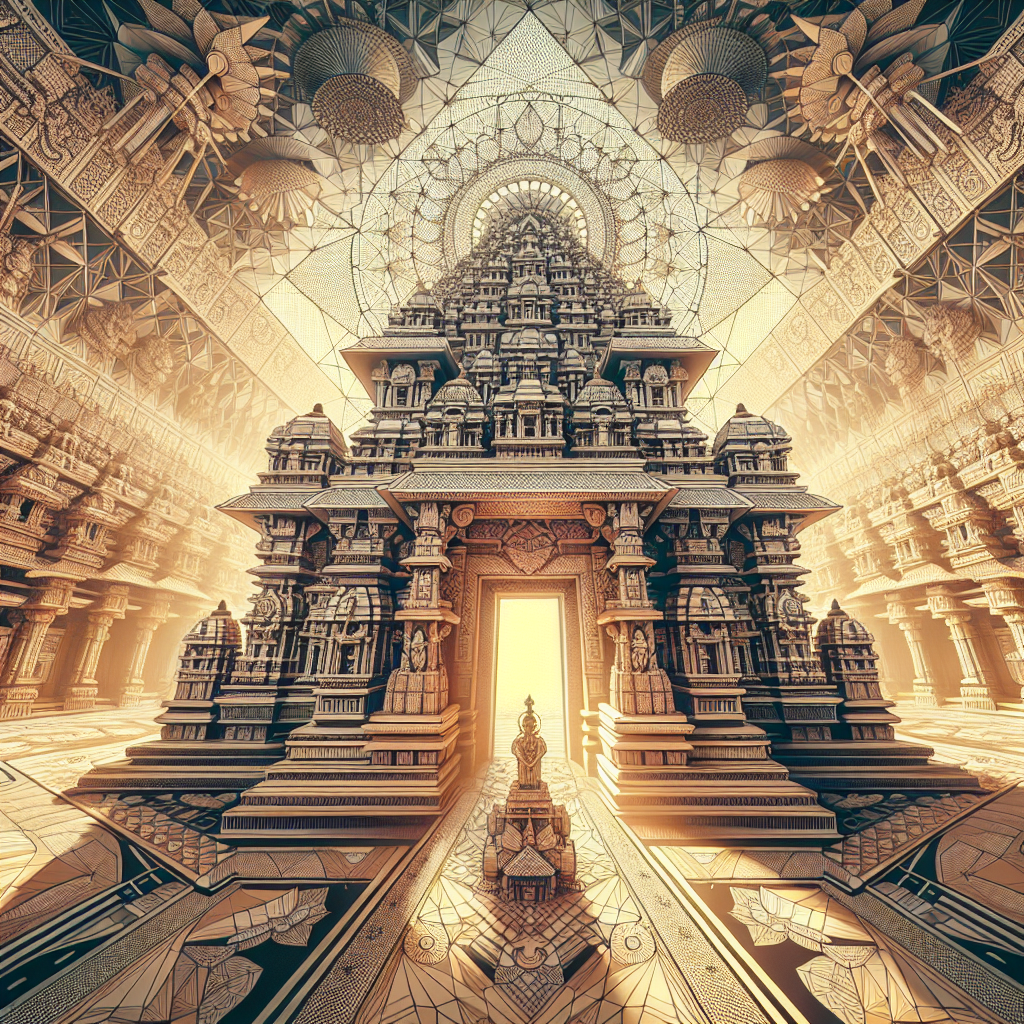
Sacred Spaces: Unveiling the Divine Geometry of Indian Temples

Timeless Temples: Exploring the Spiritual Geometry of Indian Architecture
The rich tapestry of Indian architecture is a masterpiece of spiritual geometry, intertwining art, science, and philosophy. From the intricate carvings of ancient temples to the towering spires that define their skylines, Indian temples serve as living expressions of religious fervor and cultural heritage. These structures are not just buildings; they are embodiments of spiritual principles manifested in stone, with proportions and designs that evoke transcendence.
Take, for instance, the iconic Brihadeeswarar Temple in Thanjavur, a UNESCO World Heritage site that stands as a testament to the Chola dynasty’s architectural brilliance. Completed in 1010 CE, its grand vimana (tower) reaches a soaring height of 66 meters, meticulously crafted to reflect cosmic proportions. The temple’s layout follows the principles of Vastu Shastra, an ancient Indian system of architecture that emphasizes harmony between nature and human establishment. The meticulous planning enables the temple to harness natural light, illuminating its carvings and sculptures in a way that creates a spiritually uplifting atmosphere.
Interestingly, the principles of geometry also find application in the temple’s orientation. Temples are often aligned to the cardinal directions, allowing elements like sunlight and wind to play a role in enhancing the meditative experience for devotees. This spatial awareness reflects a deep understanding of Earth’s natural forces, resonating with modern concepts found in sustainable architecture.
Consider the famous Sun Temple in Konark, built in the 13th century, which is a striking representation of the chariot of the Sun God, Surya. The temple is adorned with intricately carved wheels and horses, each symbolizing the passage of time and the eternal cycle of life. The precise alignment of the temple allows sunlight to illuminate specific parts of the sanctum at different times of the day, further enhancing its spiritual significance. Such architectural ingenuity teaches us valuable lessons about the convergence of nature and technology.
It’s not just about aesthetic beauty; it’s about how these structures are designed to evoke a specific emotional response. Many modern architects and designers draw inspiration from this spiritual geometry when creating contemporary spaces. For example, the use of light in building design often aims to mimic natural sunlight dynamics found in temples, fostering not only functionality but also a sense of peace.
As we move into an era of digital transformation, where technologies like Artificial Intelligence and Generative Design can optimize structures, there’s enormous potential to integrate these timeless principles into modern architectural projects. Imagine harnessing AI algorithms to analyze ancient temple layouts and generate new designs that respect the spiritual dimensions while invoking modern utility. This blend of ancient wisdom and modern technology could lead to the creation of spaces that resonate with tranquility and inspiration.
Additionally, the principles underlying Indian temple architecture have profound applications beyond spirituality. They can inform urban planning strategies that prioritize community cohesion and connectivity. As cities become more congested, integrating geometric principles inspired by these temples could help craft spaces that nurture collective wellbeing. For example, designing public parks and community centers that allow for natural light and airflow—much like traditional temples—can enhance mental health and social interaction among urban dwellers.
In exploring the spiritual geometry of Indian architecture, we not only uncover a treasure trove of cultural knowledge but also stimulate relevant discourse on how ancient principles can inform modern practices. These lessons can be invaluable for professionals across fields as they look to balance technological advancement with timeless wisdom.
By learning from the legacy of Indian temple architecture, we can build spaces that are not just functional but also enriching, fostering an environment where professionalism meets profound human experience. The temples, with their intricate designs and thoughtful layouts, continue to inspire us to seek beauty and depth in every project we undertake.
About the Author
Sanjeev Sarma is a dedicated IT enthusiast and Chief Software Architect at Webx Technologies, where he explores how technology intersects with daily life. With a strong passion for Artificial Intelligence, Machine Learning, and Digital Transformation, he delves into the innovative possibilities technology brings to various domains, from education to entrepreneurship. Sanjeev is an emerging thought leader committed to sharing insights on how these advancements can enhance our collective experience as we navigate the complexities of modern life. Beyond his professional endeavors, he believes in making technology accessible and engaging, encouraging professionals to embrace a holistic approach that merges tradition with innovation.