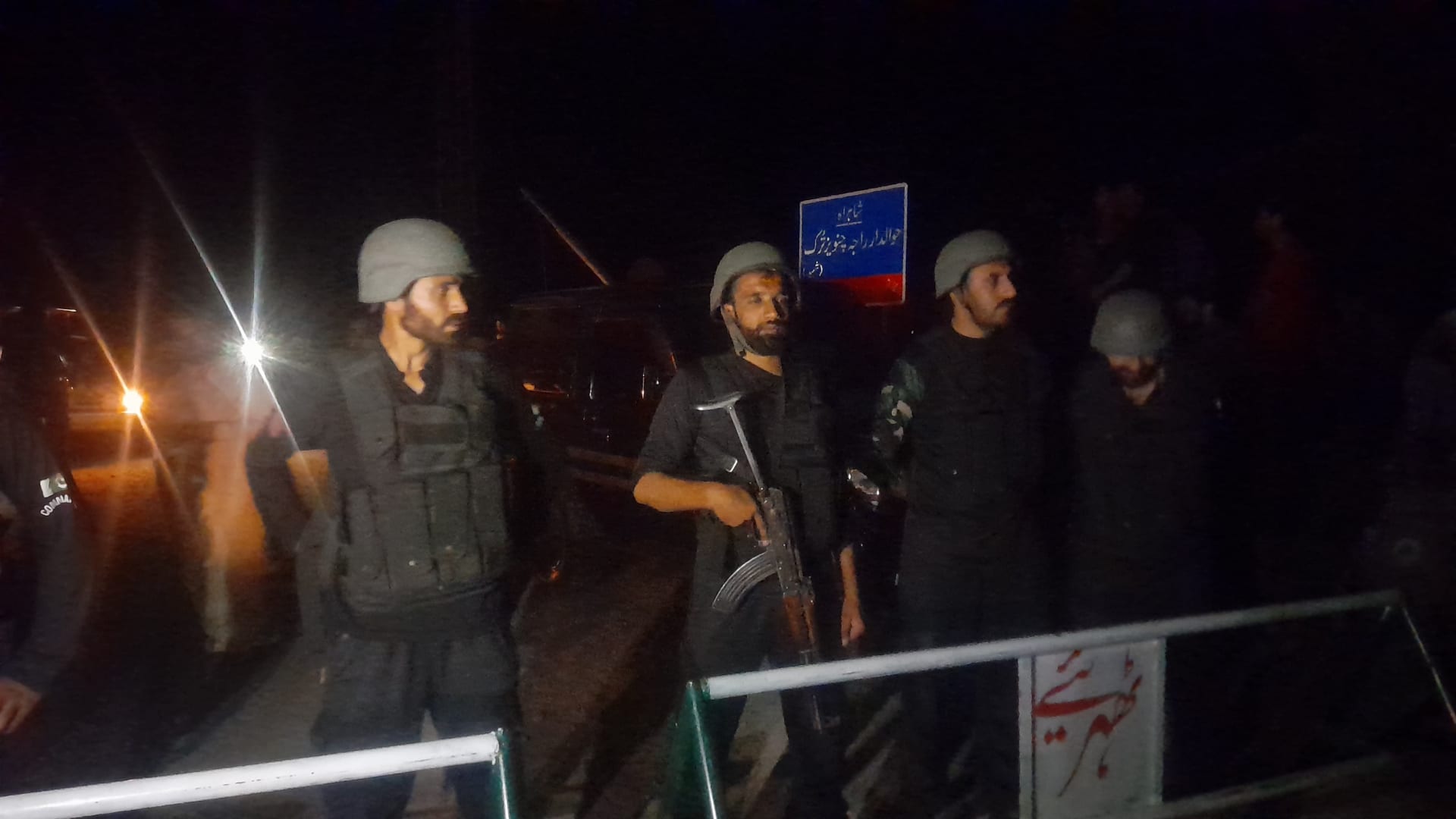

India’s recent military strikes on targets within Pakistan-administered territories have heightened geopolitical tensions, yet investors maintain confidence in India’s burgeoning market. Despite the disturbance in Muzaffarabad, Pakistan, where security measures intensified amid widespread panic during a blackout on May 7, 2025, the Indian markets remained resilient. The benchmark indices, Nifty 50 and BSE Sensex, showed marginal changes, reflecting investor optimism in India’s economic growth prospects.
Mohit Mirpuri, an equity fund manager at SGMC Capital, noted that “structural reforms, resilient domestic demand, and strong macro fundamentals” continue to make India a compelling choice for investors. This sentiment echoes across the market, with expectations of a swift de-escalation limiting any potential fallout. Historical precedents, such as the market’s reaction following the 2019 Pulwama attack, suggest that despite the current turmoil, investor confidence remains largely intact.
Supporting this optimistic outlook are ongoing advancements in India’s international trade relations. A recent free trade agreement with the U.K. and anticipated bilateral trade deals with the U.S., potentially finalized by the third quarter of 2025, bolster foreign confidence in India’s economic stability. Radhika Rao, a senior economist at DBS Bank in Singapore, expects Indian assets to remain stable despite the geopolitical turbulence with Pakistan.
Currency markets also exhibit stability; the Indian rupee weakened slightly by 0.33% against the U.S. dollar, aligning with broader trends in Asian currencies. Meanwhile, the yield on India’s 10-year government bonds showed a minor decrease, despite the tense geopolitical climate and an interest rate cutting environment.
Experts, however, do not entirely dismiss the risks posed by escalating tensions. Kranthi Bathini, director of equity strategy at WealthMills Securities, highlighted the potential for market volatility if the conflict intensifies. “The key question is whether this turns into a full-fledged conflict or remains a limited defense strike,” Bathini stated.
While the situation remains fluid, particularly along the border where India’s military action was described as more robust than past incidents, the overarching investor sentiment points towards a bullish outlook. Darren Tay, head of APAC country risk at BMP, mentioned, “We still think it will end in de-escalation over the coming months.” This cautious optimism is shared by analysts Tom Miller and Udith Sikand at Gavekal, who recognize the significant scale of this military engagement but observe the muted market reaction as an indicator of restricted military retaliation expectations.
The current events follow a militant attack in Pahalgam, Jammu and Kashmir, last month, which claimed 26 lives, adding a layer of urgency to the unfolding situation. As these developments continue, the interplay between geopolitical strains and economic aspirations remains under keen observation, with investors and analysts alike closely monitoring the evolving dynamics between the two nuclear-armed neighbors.
Original Source: https://www.cnbc.com/2025/05/07/indian-markets-are-undeterred-by-strikes-against-pakistan.html
Category :
Tags:
Publish Date: 2025-05-07 14:29:00