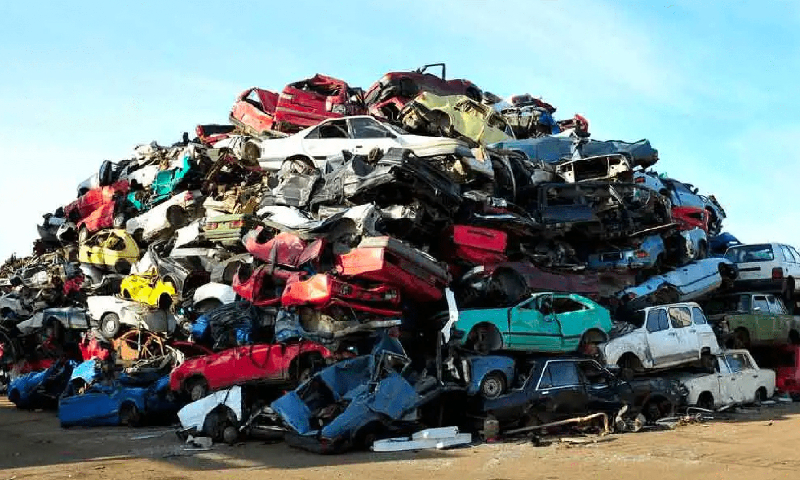

Guwahati: The Meghalaya government’s recent implementation of the Vehicle Scrappage Policy has ignited significant backlash and emotional resistance across the state. As reported by The Shillong Times, the new legislation mandates the phasing out of approximately 13,000 vehicles, comprising 5,000 government-owned vehicles older than 15 years and 8,000 private vehicles exceeding 35 years of age.
For many in this hilly state, vehicles symbolize more than mere transport; they serve as family heirlooms and cultural artifacts. The policy has been perceived by residents as an assault on their heritage and way of life. Vintage car enthusiast Ashoke Lyngdoh, who owns vehicles over six decades old, voiced strong criticism of the initiative, arguing that it compels individuals to part with cherished possessions. “It’s a veiled attempt to push people into buying cars they can’t afford,” he stated, expressing concerns that while his antique cars might be spared, common models like older Marutis are likely to be targeted, even if they pass emissions tests.
Lyngdoh emphasized that owning a vehicle often represents a culmination of years of hard work and aspiration in Meghalaya. “For many, it’s a dream,” he said, describing the policy as unjust for individuals who saved diligently to purchase secondhand cars. He also questioned the selective application of the policy, asking, “Why target private cars while allowing commercial lorries to remain unchecked? Are they any more environmentally friendly?” He highlighted that even his World War II jeep meets current pollution standards.
Echoing this sentiment, Khamjam Charmang, president of Café Racers Shillong, argued that the scrappage policy undermines India’s automotive heritage. “Scrapping old Indian-made cars like Marutis and Ambassadors is akin to erasing history,” he remarked, advocating for stricter emissions regulations rather than a sweeping ban on older vehicles. He warned that the policy fails to consider the emotional and practical realities faced by residents.
Residents also voiced concerns about the practicality of new vehicles in Meghalaya’s challenging terrain. “BS6 vehicles are too complex to repair on rural roads,” Charmang noted, indicating that many in remote areas rely on older, more durable vehicles for their livelihoods. Maxwell V Nongbri, another automotive enthusiast, criticized the government’s perceived double standards. “The real polluters, like cement and coke factories, operate unchecked while ordinary citizens bear the burden,” he stated, suggesting the government focus on scrapping only vehicles lacking valid registration or pollution clearance.
Harrison F Dhar highlighted the irony of the scrappage policy in light of Byrnihat being labeled one of the world’s most polluted cities. “The government should clean up Byrnihat, improve roads, and tackle traffic congestion instead of blaming old cars for pollution,” he argued.
In one of India’s poorest states, where vehicle ownership signifies dignity and economic stability, many residents view the scrappage policy as a bureaucratic intrusion into their lives. Lyngdoh encapsulated this sentiment poignantly: “You’re not just scrapping vehicles; you’re scrapping people’s dreams.”
Original Source: https://nenow.in/north-east-news/meghalaya/vehicle-scrappage-policy-in-meghalaya-draws-strong-public-backlash.html
Category : Meghalaya,Northeast News,Top News
Tags:
Publish Date: 2025-05-05 08:19:00