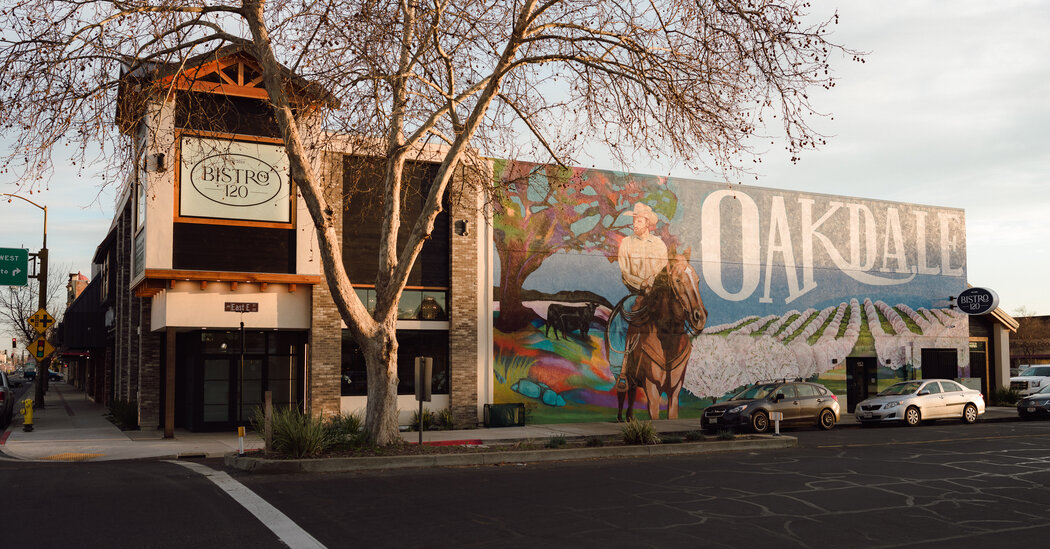

In Oakdale, California, a town steeped in rich cowboy traditions and picturesque almond blossoms, the face of news consumption has undergone a dramatic transformation. For years, this community of 20,000 residents relied on evening news broadcasts and local newspapers for information. However, over recent years, this reliance on traditional media has eroded, giving way to digital sources like podcasts, social media, and community-driven platforms.
The decline of nearby newspapers and local reporters began a trend that the 2016 and 2020 presidential elections accelerated, along with the pandemic. Trust in conventional media plummeted, not just in Oakdale but across smaller American communities. By the 2024 election, when Stanislaus County turned a significant shade of red, traditional media had nearly vanished, replaced by digital voices and influencers.
Facebook groups, created initially for local events, have become news hubs. These platforms transform residents into what some call “keyboard warriors,” who shape public discourse akin to editors-in-chief. However, the rapid growth and influence of these groups haven’t come without challenges. During the pandemic, a false rumor spread through a local Facebook group led to an armed militia converging on Oakdale over a supposed threat that never materialized. Julie Logan, the original creator of the group All Things Oakdale, took measures to make the group private and ban political discussions after this incident.
But as moderation tightened, splinter groups arose, emphasizing fewer controls on content, often prioritizing misinformation. Groups like Stanislaus News have amassed tens of thousands of members, becoming key sources of local information while aligning closely with law enforcement narratives.
This shift has stirred discomfort among many former consumers of mainstream media, like Fred Smith, a local gun store owner, who laments a loss of trust. Once an avid reader and viewer of major news outlets, he now turns to podcasters like Joe Rogan, while remaining skeptical of all media sources. “Now the news comes from everywhere,” Smith said, emphasizing a growing reluctance to trust any single source.
Meanwhile, the presence of alternative media like The Epoch Times in Oakdale reflects a diversification in print consumption, although not without its misinformation issues. Residents like John Ortega find its reporting “straightforward enough,” while others critique its partisan leanings.
Despite these changes, some Oakdale residents retain their traditional news habits, like Harvey Melgoza, who continues to listen to MSNBC while working in his shoe repair store. He appreciates staying informed, even amid claims of bias.
As Oakdale adapts to these shifts, the community’s dynamics are evolving, echoing broader trends where rural and small towns are redefining their media landscapes. Amidst these changes, the pursuit of credible information remains crucial, highlighting the contemporary struggle between a fragmented digital news ecosystem and the fading structures of traditional media.
Original Source: https://www.nytimes.com/2025/05/03/technology/news-misinformation-facebook-oakdale.html
Category : News and News Media,Newspapers,Rumors and Misinformation,Social Media,Computers and the Internet,CNN,Epoch Times,Fox News Channel,Facebook Inc,Bongino, Daniel,vis-photo,audio-neutral-informative
Tags:
Publish Date: 2025-05-03 14:30:00