Revolutionary Trump Proposal: A Bold Step to Resolve the Crimea Conflict and End a Decade of U.S. Resistance

During his first term, President Donald Trump stirred apprehension in Ukraine by indicating he might recognize Russia’s annexation of Crimea, a peninsula seized by Moscow in 2014. As a candidate, Trump expressed openness to reviewing the matter, despite the firm stance taken by the Obama administration and Western allies against Russia’s actions. Trump even suggested that, in his view, many Crimeans preferred being under Russian control. Nonetheless, he didn’t act on these musings and eventually reinforced opposition to Moscow when, in July 2018, then-Secretary of State Mike Pompeo issued the “Crimea Declaration,” emphasizing the U.S. policy of nonrecognition until Ukraine’s territorial integrity was restored.
Currently, Trump is reportedly contemplating a shift in this established policy as part of a broader effort to mediate the ongoing conflict between Russia and Ukraine. Sources reveal that a recent U.S. peace proposal presented in London hints at recognizing Crimea as Russian, stirring concerns among American and European diplomats. Daniel Fried, a veteran diplomat familiar with Ukraine and Russia, criticized this potential concession as one of the most troubling aspects of Trump’s proposal, as it appears overly favorable to Moscow’s interests.
While Trump has suggested he’s not asking Ukraine’s President, Volodymyr Zelensky, to recognize the Russian claim, such a move by the U.S. would be contentious. Zelensky unequivocally rejected any possibility of conceding Crimea, citing the Ukrainian Constitution and asserting, “It is our land, the land of the Ukrainian people.” Analysts suggest that even if European and Ukrainian officials tolerate a U.S. stance on Crimea, they would remain firm in their refusal to formally endorse it.
The proposal to recognize Crimea as Russian territory could set a precedent, raising fears of similar actions by other regimes. Senator Marco Rubio, co-sponsor of a 2022 measure preventing U.S. recognition of any Russian territorial claims in Ukraine, warned that it could encourage authoritarian regimes like China to pursue aggressive territorial ambitions, such as in Taiwan.
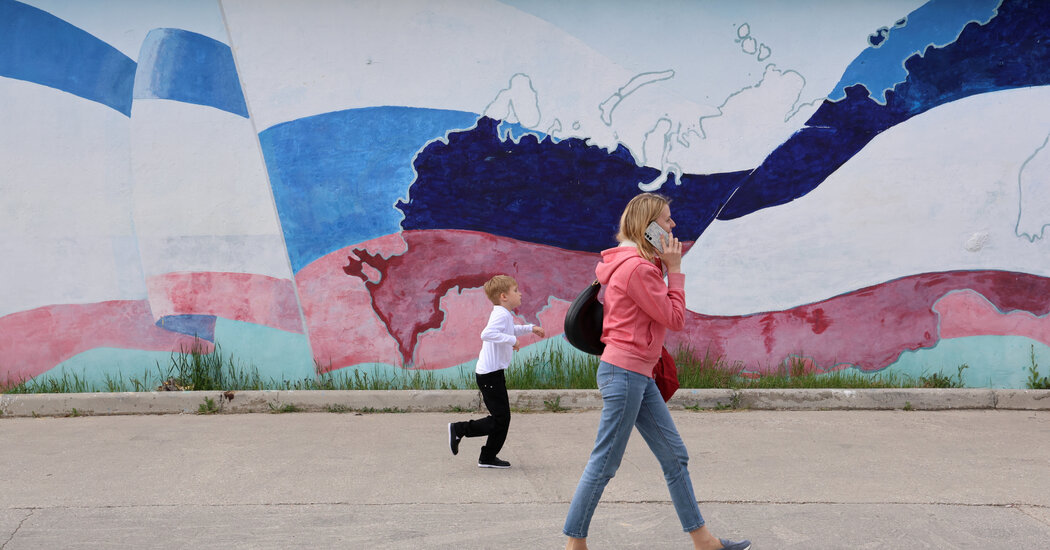
Critiques argue that formally acknowledging Crimea’s status could significantly impact international norms about territorial integrity. However, some suggest it merely reflects the situation on the ground. Since Russia’s 2014 occupation, it has solidified its presence in Crimea, enhancing military infrastructure and establishing logistical connections to mainland Russia. Given that Ukraine struggles to reclaim occupied eastern areas after years of combat, reclaiming Crimea poses significant challenges.
Crimea holds immense strategic and symbolic value for Russia and President Vladimir Putin, whose historical ties to the region are profound. Crimea served as a critical military base and held iconic status due to its longstanding ties within the former Russian Empire. Yet, despite symbolic gestures like the 1954 transfer of Crimea to Ukraine within the USSR framework, it remains a point of contention post-Soviet collapse.
Samuel Charap of the RAND Corporation points out Trump’s history of formalizing disputed territories’ statuses, mentioning precedents like U.S. positions on Israel’s Golan Heights and Morocco’s claim over Western Sahara. Charap questions what the U.S. gains from making concessions to Russia on Crimea, calling attention to the Welles Declaration, which refused Soviet claims over the Baltic States and proved resilient until their independence after the USSR dissolved.
In sum, this contentious proposal, though part of broader peace negotiations, challenges core international principles and presents significant diplomatic implications amid ongoing geopolitical tensions.
Original Source: https://www.nytimes.com/2025/04/24/us/politics/trump-crimea-peace-agreement.html
Category : United States International Relations,Russian Invasion of Ukraine (2022),International Relations,Cold War Era,Peace Process,Territorial Disputes,Putin, Vladimir V,Trump, Donald J,Crimea (Ukraine)
Tags:
Publish Date: 2025-04-25 06:03:00