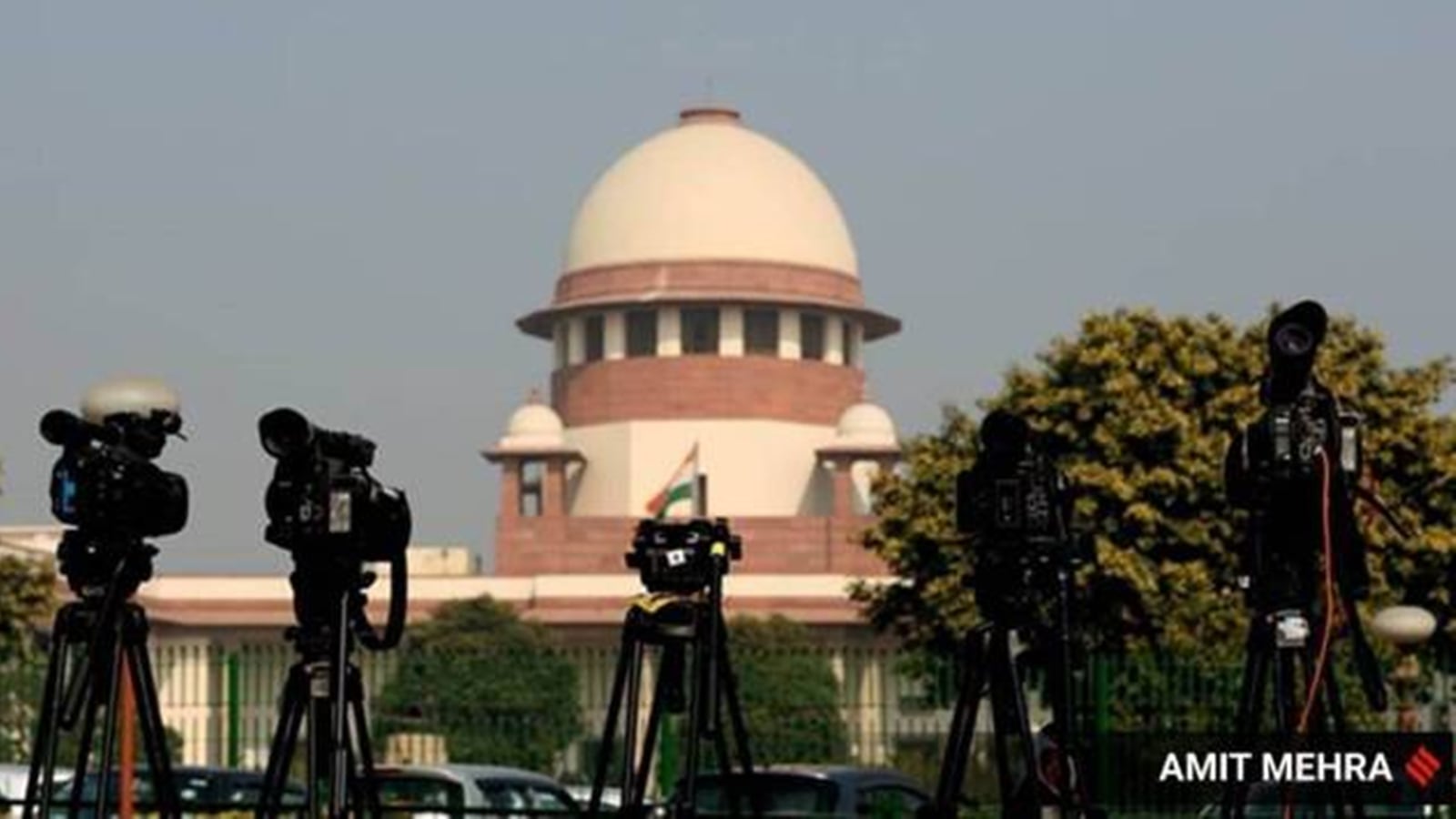

In a pivotal session on Wednesday, the Supreme Court deliberated on the contentious Waqf Act of 2025, hinting at a possible stay on specific provisions. Among the debated elements were the concept of ‘waqf-by-user,’ the appointment of non-Muslims to waqf boards, and the role of the Collector in altering disputed waqf land status. Chief Justice of India, Sanjiv Khanna, expressed concerns about the sweeping implications of de-notifying ‘waqf-by-user,’ noting that while normally hesitant to pause legislation at this stage, this situation might indeed warrant it.
Under the 2025 Waqf Act, the ‘waqf-by-user’ principle—which considers land used for Muslim religious or charitable purposes as waqf, even without formal registration—has been eliminated. This shift introduces significant uncertainty around many existing waqf properties. Justice Khanna acknowledged both the potential misuse and the legitimate existence of ‘waqf-by-user,’ emphasizing the ambiguity and complexity of registering such waqfs.
Solicitor General Tushar Mehta defended the government’s stance, affirming that registered waqfs will retain their status, referring to historical requirements for waqf registration dating back to the 1923 Act. Mehta stressed the necessity for mandatory registration, a point reiterated through successive Waqf Acts, ensuring continuity in recognition and legitimacy of waqfs by user.
The 2025 statute introduces a clause empowering district collectors to classify property as government land, potentially nullifying its waqf status until a court confirms otherwise. The Supreme Court suggested that while collectors can proceed with investigations, their conclusions should be withheld pending further judicial review.
The bench, also comprising Justices P.V. Sanjay Kumar and K.V. Viswanathan, postponed dictating an interim order after Solicitor General Mehta requested additional time for arguments. The next hearing is slated for April 17, where the court will determine whether to address the cases collectively or defer them to a High Court for detailed scrutiny.
Post-hearing, Chief Justice Khanna voiced concerns over recent disturbances in West Bengal, describing the situation as “disturbing.” Solicitor General Mehta added that there seemed to be a phenomenon where the system could be pressured.
Senior advocate Abhishek Manu Singhvi, representing the petitioners, highlighted that nearly half of the nation’s waqfs—estimated at over 8 lakh—might be affected by the law’s new provisions that essentially nullify these waqfs. The petitioners referenced the Supreme Court’s previous Ayodhya judgement, which acknowledged ‘waqf-by-user’ as a historically accepted practice, arguing for a stay to prevent immediate adverse effects.
In response to Mehta’s insistence on the necessity of registration, CJI Khanna pointed out the historical context, where property registration was non-existent during the pre-British era. Consequently, requiring ancient masjids to produce registration documents now is unrealistic. Nonetheless, Mehta contended that post-1923 legislation mandated registration, which should have been adhered to. Senior advocate Kapil Sibal criticized the amendments, likening them to a parliamentary overreach affecting India’s Muslim community’s faith and heritage.
This hearing shines a light on the complex interplay of legal reform, historical practices, and societal impact, with the Supreme Court poised to navigate the intricacies of modernizing waqf legislation while respecting ancient traditions.
Original Source: https://indianexpress.com/article/india/supreme-court-waqf-law-9948142/
Category :
Tags:
Publish Date: 2025-04-17 04:55:00