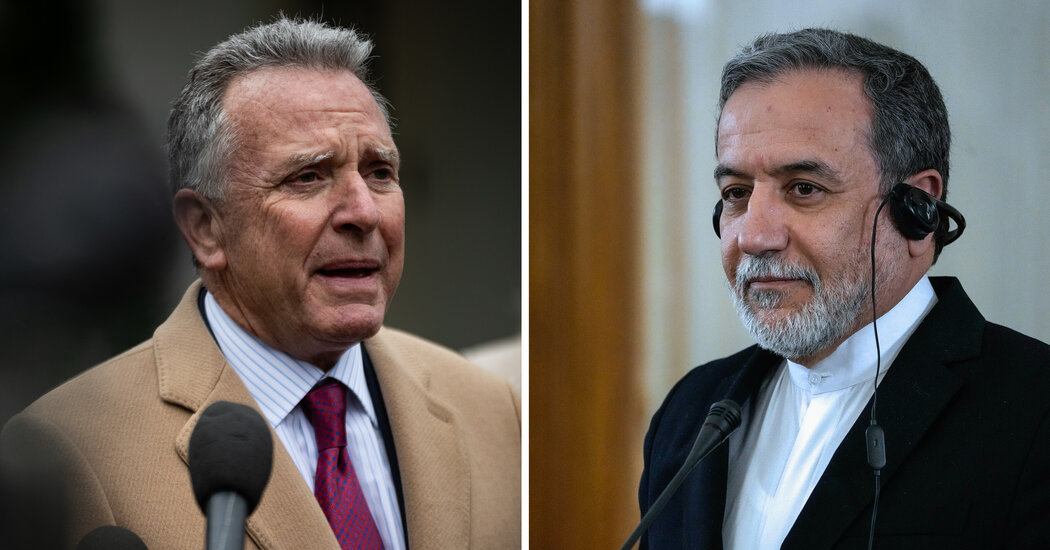

In a significant diplomatic development, the United States and Iran initiated talks on Saturday to address Iran’s escalating nuclear program. This meeting, held amidst tensions and a mutual desire to avert further conflict in the Middle East, marks the beginning of potentially pivotal negotiations. As both sides prepare to reconvene next Saturday, the challenges ahead are substantial, with hard-liners in the U.S., Iran, and Israel likely to resist any proposed agreement.
The urgency of these talks is underscored by Iran’s pressing need for economic relief. Hit hard by Israeli actions and the weakening of its regional allies, Iran seeks to negotiate under the threat of severe consequences from the U.S. President. Donald Trump, who abandoned the 2015 nuclear deal over its perceived inadequacies, has not shied away from warning Iran of unprecedented military reprisals. Yet, Iran’s Supreme Leader, Ayatollah Ali Khamenei, has empowered his negotiators to explore a trade-off of nuclear ambitions for security assurances.
With the setting in Oman, these discussions promise a more streamlined process compared to the multi-year, multilateral negotiations of 2015, which involved six nations and the European Union. Now, the U.S. and Iran are conducting bilateral talks, with other international players like Russia and China on the periphery. Despite longstanding animosity, pragmatic communication channels have opened, demonstrated by direct dialogues between U.S. special envoy Steve Witkoff and Iran’s Foreign Minister Abbas Araghchi.
“The start is promising,” commented Ali Vaez, Iran project director at the International Crisis Group. The mutual agreement to continue dialogue and acknowledge shared objectives signals potential progress. The Trump administration’s focus seems to have shifted towards preventing Iran from acquiring nuclear weaponry, setting aside earlier demands for the complete dismantling of Iran’s nuclear and missile programs. Iran, for its part, remains firm on resisting demands that could cripple its defense capabilities.
Vali Nasr, a professor at Johns Hopkins School of Advanced International Studies, emphasized Iran’s expectations from these talks. The country is prepared to negotiate on nuclear enrichment levels and inspection mechanisms if the primary U.S. concern remains limited to nuclear weapon prevention. The goal for Iran is clear: obtain credible sanctions relief and a durable agreement.
Although Tehran insists its nuclear program is for civilian purposes, data from the International Atomic Energy Agency indicates Iran’s capacity to produce weapons-grade material, intensifying global apprehensions. Despite reservations about Trump’s commitments, Iran perceives him as potentially capable of delivering a more sustainable deal than his predecessor, a sentiment echoed by Nasr.
Chatham House’s Sanam Vakil acknowledges the positive statements from both parties, highlighting their pragmatic approach. However, the road to a comprehensive, technical agreement is fraught with potential derailments from opposition factions in both nations and Israel. Prime Minister Benjamin Netanyahu’s demands for Iran to cease uranium enrichment altogether remain a critical sticking point.
The prospect of an interim agreement could pave the way for sustained negotiations, allowing for a phased approach to sanctions relief in return for Iran’s compliance with uranium and inspection stipulations. Nasr suggests such a process could embed the deal sufficiently before political shifts could threaten its stability.
Nonetheless, Iran finds itself against a timeline concerning the “snapback” sanctions, which could be reinstated by European signatories if no progress is made by October 18. Iran is keen to maintain the narrative of diplomacy, ensuring it isn’t deemed responsible should talks collapse and tensions escalate.
As discussions progress, both nations will need robust assurances. For Iran, enduring economic engagement and security guarantees are paramount, while the U.S. seeks firm commitments on regional stability and Israel’s security. Achieving a mutually beneficial agreement will require overcoming significant trust deficits and navigating complex geopolitical landscapes.
Original Source: https://www.nytimes.com/2025/04/13/world/europe/us-nuclear-talks-iran.html
Category : International Relations,United States International Relations,Nuclear Weapons,Hamas,Hezbollah,International Atomic Energy Agency,Araghchi, Abbas,Trump, Donald J,Witkoff, Steven
Tags:
Publish Date: 2025-04-13 17:17:00