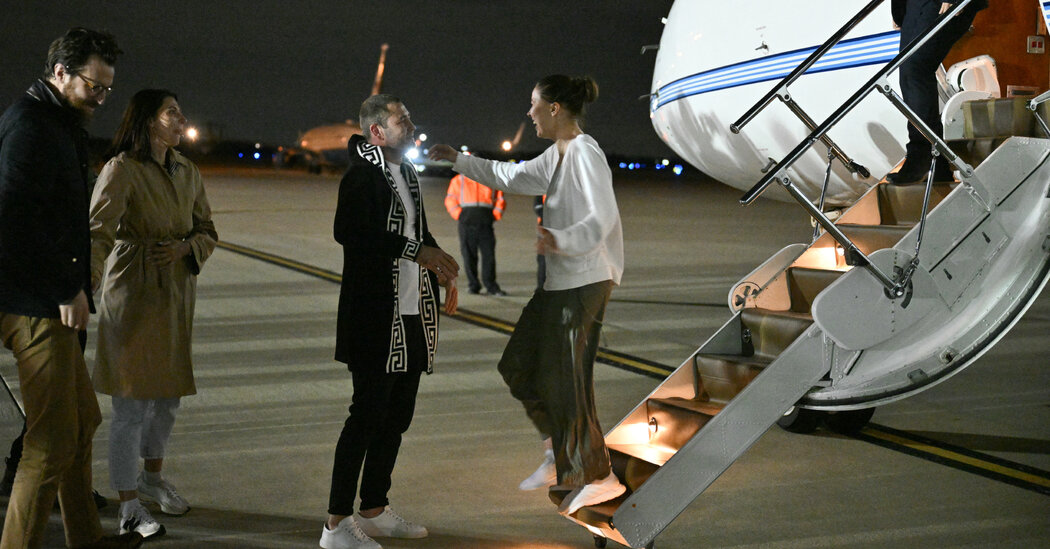

In a remarkable diplomatic maneuver, the United States and Russia executed a significant prisoner swap on Thursday, releasing American citizen Ksenia Karelina from Russian custody. This swap, involving the exchange of Karelina for Artur Petrov, a dual Russian-German national, spotlights a rare moment of cooperation amid otherwise tense U.S.-Russia relations.
Ksenia Karelina, who holds dual American and Russian citizenship, had been serving a 12-year sentence in Russia following her conviction for treason. Her alleged crime involved donating approximately $50 to a nonprofit organization providing nonmilitary assistance to Ukraine. Secretary of State Marco Rubio confirmed her release on X, stating, “She was wrongfully detained by Russia for over a year and President Trump secured her release.”
Russia’s intelligence agency revealed that Ms. Karelina’s release came via a presidential pardon in exchange for Artur Petrov. The U.S. Department of Justice had charged Petrov with export control violations for attempting to smuggle U.S. microelectronics to Russian military factories. The masterminding of the swap is credited to multifaceted diplomatic efforts, involving contributions from the CIA and international partners, notably the United Arab Emirates.
The exchange occurred at Abu Dhabi’s airport, facilitated by Emirati mediation. This act of diplomacy underscores ongoing dialogue between Washington and Moscow, despite the stalled ceasefire negotiations concerning the Ukraine conflict, which Russia initiated more than three years ago.
The White House lauded the CIA’s instrumental role, emphasizing the “importance of keeping lines of communication open with Russia.” CIA Director John Ratcliffe expressed his pride, “President Trump brought home another wrongfully detained American from Russia. I’m proud of the CIA officers who worked tirelessly to support this effort.”
As U.S. and Russian diplomats convene in Turkey to navigate pathways to improved bilateral relations—such as resuming direct flights and resolving embassy staffing disputes—the recent swap is seen as a positive development. However, substantial issues, including the future of sanctions and diplomatic property, remain unsettled.
Karelina’s detention added to the list of high-profile cases stoking concern over Russia’s alleged strategy of using American citizens as bargaining tools. This follows similar incidents involving Brittney Griner and Evan Gershkovich, both freed in previous U.S.-Russia prisoner exchanges under the Biden administration. In a previous 2023 exchange negotiated by Trump’s special envoy Steven Witkoff, American teacher Marc Fogel was released in February after being wrongfully detained on drug charges, in exchange for Alexander Vinnik, a Russian convicted of money laundering.
While her fiancé, Chris van Heerden, expressed joy and gratitude toward President Trump and the relevant U.S. officials for securing her release, other Americans, like Stephen Hubbard, remain in Russian custody. Hubbard, a teacher captured in Ukraine, is still a focus of U.S. diplomatic efforts.
This exchange highlights the intricate dance of international diplomacy and the continued pursuit of strategic dialogue between the U.S. and Russia. It serves as a reminder of the complexities involved in geopolitical negotiations and the potential for thawing relations even amid ongoing conflicts.
Original Source: https://www.nytimes.com/2025/04/10/world/europe/russia-us-ksenia-karelina-swap.html
Category : United States International Relations,Karelina, Ksenia,Russia,United States,Biden, Joseph R Jr,Rubio, Marco,Trump, Donald J,Witkoff, Steven,Abu Dhabi (United Arab Emirates),Putin, Vladimir V
Tags:
Publish Date: 2025-04-11 11:51:00