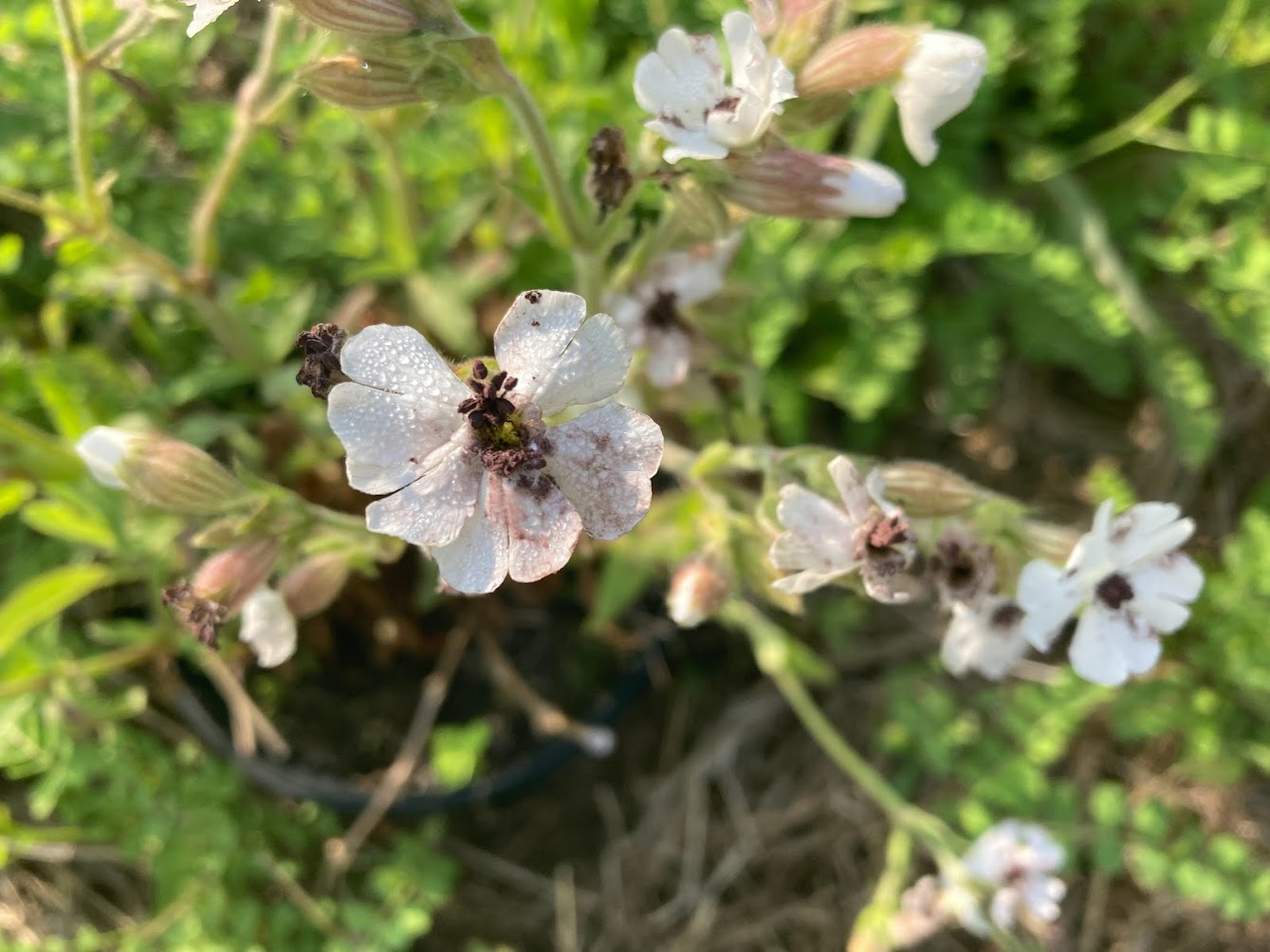

Young organisms, from toddlers in daycare to seedlings in forests, often fall prey to sickness more easily than their mature counterparts. Shedding light on this evolutionary puzzle, University of Maryland researchers have uncovered significant insights into why young plants, specifically, struggle to develop robust disease resistance. Their research, published in the Proceedings of the National Academy of Sciences on April 4, 2025, provides a compelling explanation for this phenomenon: a trade-off exists between early disease resistance and growth, impacting plants’ future reproductive success.
The team focused their study on Silene latifolia, or white campion, and its interaction with anther-smut, a fungal disease that doesn’t kill the plant but renders it infertile by preventing pollen production. This infection acts like a “plant STD,” as co-author Emily Bruns, an assistant professor of biology at UMD, describes it. Through experimentation with 45 genetic variations of the Silene plant, the researchers observed that seedlings displaying stronger disease resistance produced fewer flowers and seeds over their lifetime in disease-free environments. In contrast, adult plants didn’t suffer such penalties when building disease resistance.
“Our findings reveal a hidden trade-off that prevents young organisms from evolving stronger disease resistance,” Bruns explained. “Energy devoted to disease defense during the seedling phase detracts from growth and future reproductive potential.” This phenomenon occurs because young plants, with limited energy and resources, face a critical decision between fighting off disease or allocating energy towards growth. As a result, they remain vulnerable to infections, allowing pathogens to take hold early.
Lead authors Sam Slowinski and Allyson Kido found that the costs of disease resistance for young plants do not manifest immediately. Initially, resistant seedlings seemed healthy, but as they matured into their second year, a period when reproduction peaks, they produced substantially fewer flowers. Interestingly, male plants endured this trade-off more heavily, likely due to their need to produce more flowers to spread pollen widely, making resource allocation to disease resistance particularly taxing.
Bruns and her team believe their findings have broader implications beyond the Silene plant, extending to agriculture, conservation, and public health. Understanding these evolutionary dynamics could inform strategies to manage disease outbreaks across various species. Future research by the team aims to explore if introducing pathogens later in a plant’s life could mitigate resistance costs and investigate whether adult plants with high disease resistance can protect nearby seedlings by decreasing local disease prevalence.
While this research is groundbreaking in understanding the evolutionary mechanisms governing juvenile susceptibility, Bruns notes that “Nature is full of infectious diseases. Understanding the different checks and balances between hosts and pathogens helps us understand how evolution has shaped these relationships over millions of years.”
This study, supported by the U.S. National Science Foundation, emphasizes the delicate balance young organisms must maintain between growth and disease resistance, offering a new perspective on evolutionary fitness. By uncovering these dynamics in wild plants, scientists can better understand disease management and evolutionary biology’s intricate dance across ecosystems.
Original Source: https://cmns.umd.edu/news-events/news/researchers-reveal-why-young-plants-may-be-more-vulnerable-disease
Category :
Tags:
Publish Date: 2025-04-05 00:53:00