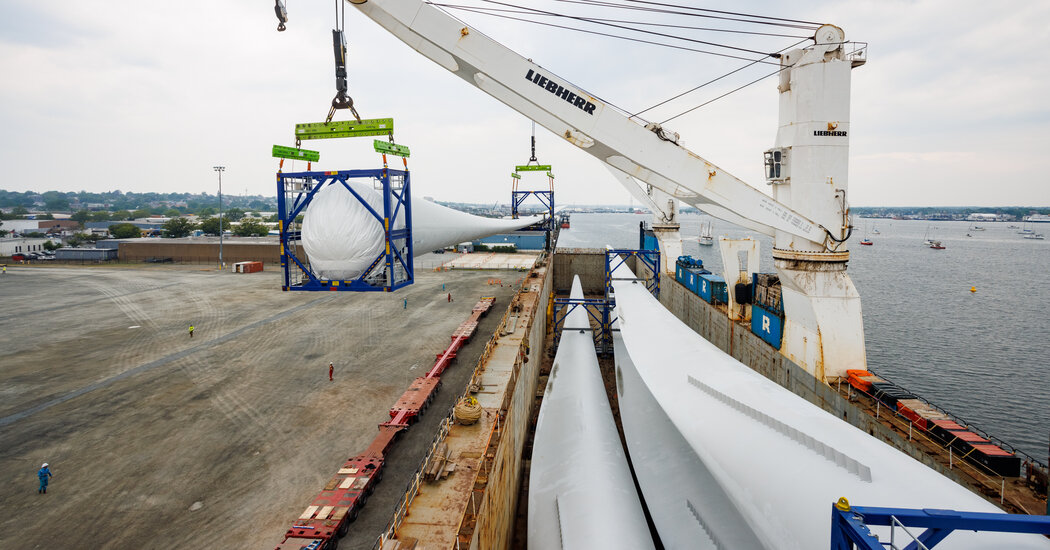

President Trump’s proposed tariffs are poised to increase the costs associated with constructing renewable energy projects in the United States, according to industry analysts. The renewable energy sector, already grappling with numerous challenges, may face further hurdles due to potential tariff-induced price hikes. Wind turbines and other renewable energy equipment typically consist of components sourced from various global suppliers and assembled domestically in the U.S. Imposing tariffs would likely lead to a rise in the cost of these imported parts.
Endri Lico, an analyst at consulting firm Wood Mackenzie, highlights the complexity of wind turbines, noting they “consist of thousands of subcomponents.” Lico estimates that in 2023, the U.S. imported about $1.7 billion worth of wind-related components from countries including Europe, Mexico, Vietnam, and India. Although the specifics of Trump’s tariffs are yet to be detailed, Lico speculates that a 25% tariff on imported goods could elevate the costs of land-based wind turbines by about 10% and lead to a 7% increase in the overall construction costs for renewable energy facilities. This escalation in expenses could translate into higher electricity prices, potentially discouraging new energy developments amid growing demand to power data centers and electric vehicles.
Even before the potential tariffs, the Trump administration’s skeptical stance on renewable energy caused analysts to lower their growth forecasts for the industry. States along the East Coast that have been relying on offshore wind projects to meet their clean energy objectives may face obstacles, with only a limited number of these sizable projects likely to materialize in the coming years. The market reactions have been prominent, as evidenced by the falling share prices of companies like Denmark-based Vestas Wind Systems and Orsted, both of which have significant offshore wind projects in the U.S. Despite their recent financial challenges, both companies saw a brief uptick in share prices on Wednesday.
Lico suggests that turbine manufacturers like Vestas and GE Vernova, its primary U.S. competitor, can potentially mitigate tariff impacts by strategically relocating their component sourcing. With manufacturing within the U.S. gaining momentum due to incentives from the Biden administration’s Inflation Reduction Act, imports of land-based wind equipment have witnessed a decline in recent years.
Industry experts express concerns that elevated costs resulting from tariffs may slow down the transition to renewable energy, complicating their ambitious climate and energy objectives. The international trade dynamics, coupled with an evolving world market, underscore the intricate challenges faced by the renewable energy sector today.
As analysts continue to assess the potential repercussions of the proposed tariffs, the U.S. renewable energy industry remains in a state of flux. Stakeholders are vigilant, navigating through international trade complexities and fluctuating pricing pressures, all while striving to maintain momentum toward sustainable energy solutions.
Original Source: https://www.nytimes.com/2025/04/02/business/trump-renewable-energy-tariffs.html
Category : Wind Power,Alternative and Renewable Energy,International Trade and World Market,Prices (Fares, Fees and Rates),Customs (Tariff),Factories and Manufacturing,GE Vernova Group,Orsted AS,Vestas Wind Systems AS,Trump, Donald J
Tags:
Publish Date: 2025-04-02 23:53:00