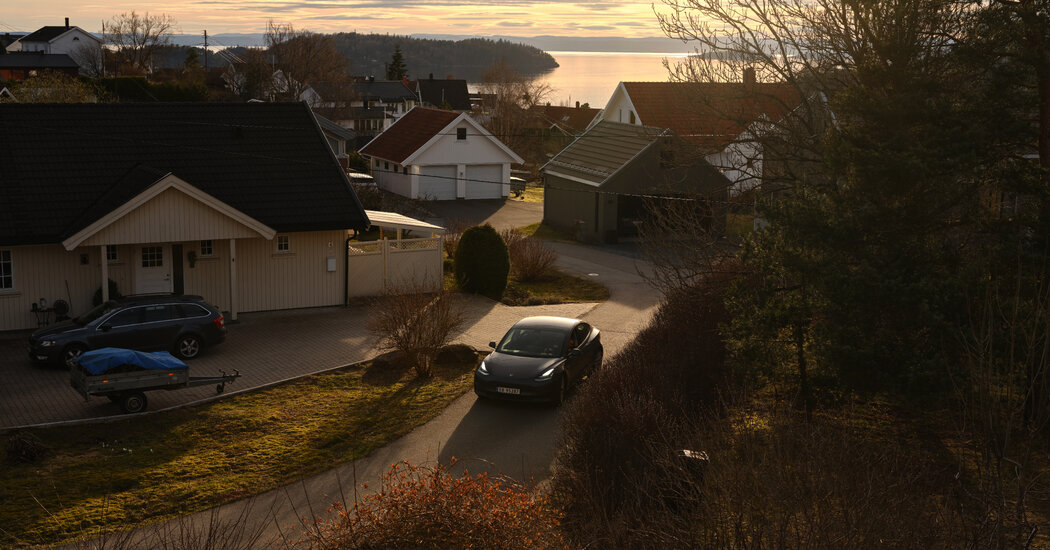

In a country like Norway, where over 90% of new cars are electric and consumers are well-versed in EV technologies, Tesla’s recent sales decline is an unexpected turn of events. Norway, considered a bellwether for electric vehicle trends, now sees Tesla slipping from its once dominant position. Sales have decreased by more than 12% this year, trailing behind competitors like Volkswagen and Toyota. This shift is not isolated to Norway; other European markets, including Denmark, France, the Netherlands, and Sweden, have also witnessed declines. Analysts predict that these downward trends will be evident in Tesla’s upcoming global sales report for the first quarter.
Contributing factors to this downturn include Tesla’s reliance on the Model Y SUV and Model 3 sedan for the majority of its sales and the underperformance of its latest Cybertruck model. Once a leader in battery range, software, and driver-assistance technology, Tesla faces stiff competition from established carmakers like BMW, Mercedes-Benz, and newer entrants from China such as BYD and Xpeng, who are rapidly closing the technological and market share gap.
The company’s challenges are compounded by a growing consumer backlash against CEO Elon Musk’s political involvement. His alignment with right-wing politics, coupled with his high-profile presence in the Trump administration, has alienated some of Tesla’s environmentally and politically conscious customer base. Geir Rognlien Elgvin, an urban planner in Oslo and former Tesla owner, noted his shift in allegiance due to Musk’s political inclinations and concerns over Tesla’s data security.
The shift in consumer sentiment is echoed across the Atlantic. In New York, protesters, including 75-year-old Kao Leu, have voiced their discontent over Musk’s political stance, impacting Tesla’s image in progressive markets. Andrea Fresk, a Tesla owner in Norway, expressed her growing discomfort with Musk’s affiliations, yet she holds onto her car due to financial commitments.
Tesla’s competitors are gearing up with the release of next-generation electric vehicles, promising advancements in battery technology that enhance range and charging speed. These developments could further erode Tesla’s market dominance, presenting potential buyers with attractive alternatives.
Back in Norway, retailers like Rebil, the country’s largest used-car dealer, report a rise in Tesla sales on the secondary market, fueled by what some term “Tesla Shame.” Salesman William Oestby notes that despite this sentiment, Tesla vehicles often provide unmatched value concerning price, range, and size.
While Tesla continues to adapt and respond to these pressures, traditional automakers are advancing aggressively, suggesting that the electric vehicle market is entering a new phase of competition. As these dynamics unfold, the landscape Tesla once dominated is becoming increasingly crowded, signaling significant shifts driven by consumer sentiment, political influences, and technological competition.
This transformation in Tesla’s stronghold market is an indicator of broader global trends, underscoring the importance of adapting business strategies to evolving consumer attitudes and competitive pressures in the rapidly changing landscape of electric and hybrid vehicles.
Original Source: https://www.nytimes.com/2025/04/02/business/tesla-sales-elon-musk.html
Category : Electric and Hybrid Vehicles,Automobiles,Fringe Groups and Movements,Fuel Efficiency,Company Reports,Right-Wing Extremism and Alt-Right,Batteries,International Trade and World Market,Tesla Motors Inc,Musk, Elon,Trump, Donald J,Customer Relations,Prices (Fares, Fees and Rates)
Tags:
Publish Date: 2025-04-02 14:33:00