
The auto industry experienced a significant surge in activity last month, drawing parallels to the annual “March Madness” frenzy, as consumers rushed to dealerships across the United States. This spike in purchasing was largely fueled by anticipation of impending auto tariffs announced by President Trump, expected to push vehicle prices upwards by several thousand dollars. “This past weekend was by far the best weekend I’ve seen in a very long time,” stated Randy Parker, CEO of Hyundai Motor North America, underscoring the urgency felt by consumers eager to secure advantageous deals before the tariff hike.
Hyundai reported a 13% increase in its March sales compared to the previous year. Meanwhile, Ford Motor Company also benefited from the rush, revealing a 19% climb in dealership sales for the same month. However, Ford’s quarterly sales noted a slight 1% decline, totaling approximately 500,000 vehicles, primarily due to decreased fleet sales. In contrast, General Motors (G.M.) documented a robust 17% rise in its first-quarter results, translating to 693,000 vehicles, although it did not specify distinct March figures.
The catalyst for this frenzy is President Trump’s decision to impose a 25% tariff on imported vehicles starting Thursday, extending to auto parts by May 3. Given the global sourcing of parts—many U.S. manufactured cars exceed 50% of foreign components—analysts predict a potential price increase exceeding $10,000 on certain models to mitigate these tariffs.
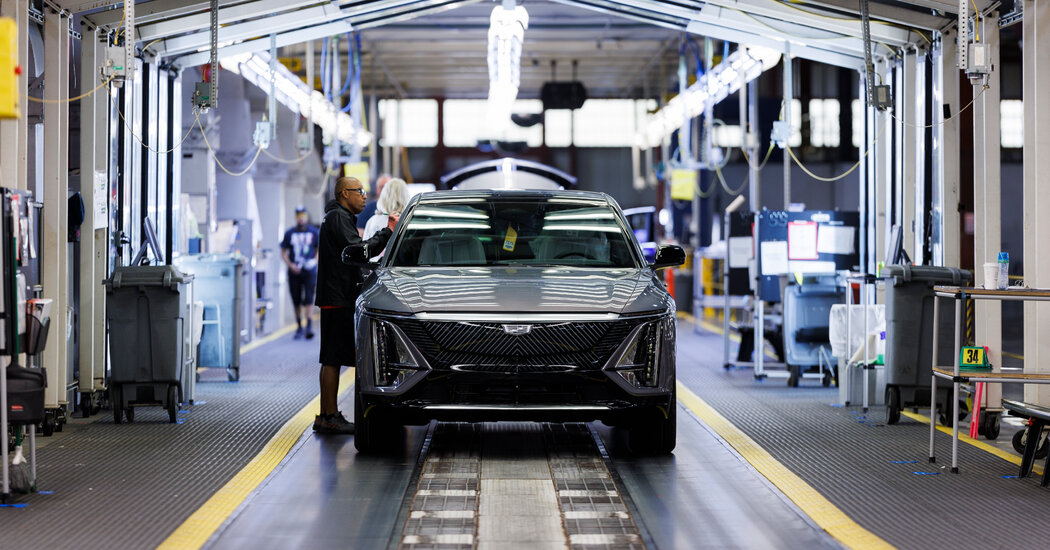
The month also highlighted a significant shift towards electric and hybrid vehicles, as sales in these categories soared. General Motors reported sales of their battery-powered units, such as the electric Equinox SUV, surged nearly twofold to 32,000 vehicles. With a competitive starting price of around $35,000, the Equinox stands out as an affordable option in the U.S., underscoring the growing appeal of electric vehicles amid shifting market demands.
Similarly, Toyota announced their North American segment experienced a 44% increase in hybrid and electric vehicle sales in March, making up nearly half of their total sales. Despite Toyota’s dominance in hybrids, they currently have a smaller share in the fully electric vehicle market. Ford’s first-quarter results were promising for electrification, with hybrid sales soaring by 33% and electric vehicle sales, including the Mustang Mach-E, up by 12%, even as traditional internal combustion engine vehicle sales fell by 5%.
Hyundai recorded a remarkable 68% jump in hybrid sales quarter-over-quarter, coupled with a more moderate 3% rise in sales of pure electric vehicles. Meanwhile, BMW revealed a 26% increase in sales of its electric models in the U.S., contributing to a 4% overall quarterly sales growth for the brand.
Randy Parker of Hyundai expressed uncertainty about the precise impact the tariffs would have on vehicle pricing, noting that while Hyundai and Kia operate factories in Georgia and Alabama, a significant volume of vehicles are imported from South Korea. “We haven’t made any firm decisions yet,” he commented, adding a word of caution for consumers: “Don’t wait to buy tomorrow what you can buy today.”
This pivotal moment in the automotive sector, influenced by international trade policies, underscores the growing consumer demand for environmentally-friendly vehicle options and the potential reshaping of the market landscape in response to evolving tariff regulations. As the industry braces for changes, companies and consumers alike are navigating a complex web of international trade and pricing strategies.
Original Source: https://www.nytimes.com/2025/04/01/business/auto-sales-trump-tariffs.html
Category : Company Reports,Electric and Hybrid Vehicles,Customs (Tariff),Automobiles,International Trade and World Market,General Motors,Trump, Donald J,United States
Tags:
Publish Date: 2025-04-02 02:19:00