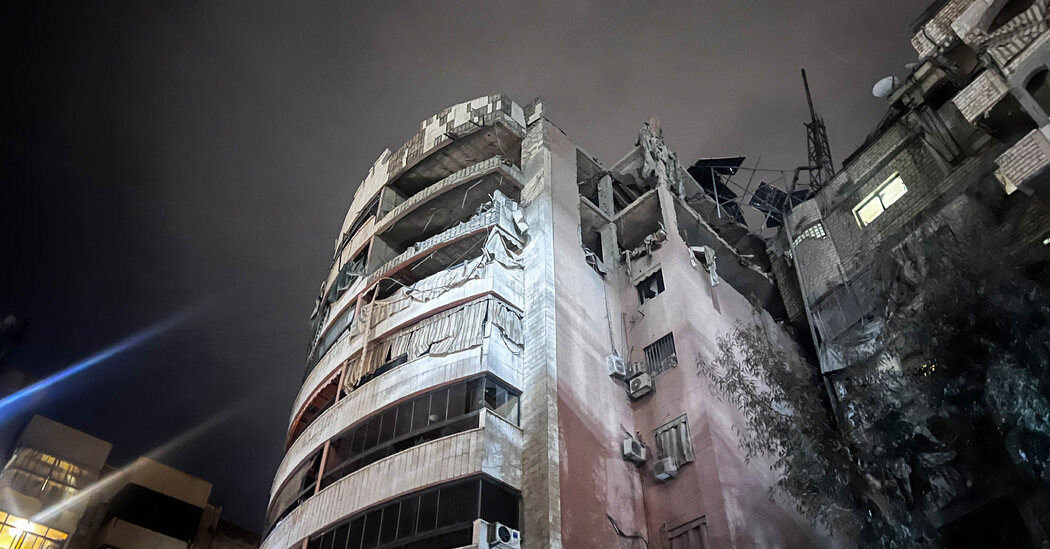

Israel launched a series of airstrikes on the southern suburbs of Beirut on Tuesday for the second time in less than a week, intensifying fears that a tenuous cease-fire with Hezbollah might be breaking down. The Israeli Defense Forces (IDF) confirmed the attack targeted a Hezbollah operative implicated in aiding Hamas with orchestrating an “imminent and significant” assault on Israel. Details about the planned assault remain undisclosed.
The latest airstrikes struck the Dahiya region, an area recognized as a Hezbollah stronghold, resulting in the deaths of three individuals and injuring at least seven more, according to Lebanon’s health ministry. The ministry did not specify whether the casualties were civilians or militants. Lebanon’s Prime Minister Nawaf Salam condemned the attack, declaring it a “blatant violation” of the truce established with Hezbollah last November. This fragile agreement, halting Lebanon’s most lethal conflict in decades, is now under threat with the resurgence of hostilities and mounting apprehensions about potential escalation.
Despite the cease-fire, Israel continues to target purported Hezbollah sites within Lebanon, while the militant group has, until now, refrained from retaliatory actions. Analysts suggest Hezbollah, debilitated by a prolonged 14-month conflict with Israel, is reluctant to provoke renewed warfare as it grapples with the aftermath and seeks recovery. Thus far, Hezbollah has not issued a response to the overnight airstrikes.
The recent intensification follows Friday’s IDF airstrikes in Dahiya, a day after residents were advised to evacuate from a densely populated area. These airstrikes represented the first assault on the Lebanese capital since the cease-fire began. The actions were preceded by rockets fired into northern Israel from Lebanese territory, an incident for which Hezbollah denied responsibility, reiterating its commitment to the cease-fire.
The Israeli military acknowledged targeting a facility housing Hezbollah drones and additional positions in southern Lebanon, actions it described as countermeasures in response to the rocket attacks. These retaliatory strikes resulted in the deaths of three more individuals as recorded by the Lebanese health ministry.
The backdrop to this current strain in Israel-Lebanon relations traces back to early October 2023, when Hezbollah, aligning with its Palestinian affiliate Hamas, commenced attacks on Israeli positions. This chain of events was triggered after Hamas spearheaded an offensive against Israel on October 7, 2023. What began as sporadic skirmishes ballooned into a full-fledged conflict that claimed the lives of nearly 4,000 people and devastated extensive regions across Lebanon.
Continued airstrikes and escalating rhetoric threaten to dismantle the delicate balance maintained since the cease-fire, evoking concerns about full-scale war renewal in this volatile region. As tensions simmer and international observers watch closely, the potential for renewed conflict looms, demanding vigilant diplomatic engagement to avert broader hostilities.
Original Source: https://www.nytimes.com/2025/03/31/world/middleeast/israel-strike-lebanon-beirut.html
Category : War and Armed Conflicts,Hezbollah,Beirut (Lebanon),Israel,Israel-Gaza War (2023- ),Iran-Israel Proxy Conflict,Dahiya (Lebanon),Lebanon
Tags:
Publish Date: 2025-04-01 13:46:00