
In a groundbreaking move, Syrians are coming to terms with the overnight announcement of a new caretaker government, which promises to guide the country through the next five years. Unveiled late Saturday, this pivotal shift in governance sees the ongoing rule of the rebel group that seized power last December being solidified, much to the mixed reactions of a nation weary of conflict but hopeful for inclusivity. The rebel group, which overthrew President Bashar al-Assad, has designated their leader, Ahmed al-Shara, as interim president, tasking him with spearheading the transitional government.
The weekend announcement introduced a cabinet of 23 ministers, marking a significant development that holds both strategic and symbolic weight. The cabinet appears to balance the need for diversity with the realities of power, integrating representatives from Syria’s main ethnic minorities. This delicate equilibrium aims to unite a country torn by civil war and ethnic divisions. Key appointments include seven ministers from Idlib’s provincial administration, a rebel stronghold under al-Shara’s influence, alongside nine independents comprising technocrats and seasoned activists. Notably, five ministers are individuals who served under Assad’s regime during the early civil war years, highlighting an effort to reach across past alliances.
A notable inclusion is the selection of ministers from each of Syria’s primary ethnic minorities—Kurds, Druze, Christians, and Alawites. This includes Hind Kabawat, the cabinet’s sole female minister, a Christian who will lead the Ministry of Social Affairs. Her appointment signals a cautious step toward gender diversity in a traditionally male-dominated political landscape. As Abdy Yeganeh, policy director at Independent Diplomat in London, remarked before the swearing-in, “No doubt some voices will feel excluded still. But overall, there is a sense of cautious optimism with the transition in Syria.”
The formation of this new government comes amid heightened expectations from Western nations and within Syria’s civil society for an inclusive coalition. Such demands have intensified following recent sectarian clashes among Alawite communities along Syria’s coast. Ibrahim al-Assil, a senior fellow at the Middle East Institute in Washington, D.C., emphasized the necessity for broader representation within the ruling ranks. “There is a need to widen the circle,” he stated, referring to the pressing need for inclusivity. “They cannot run the show on their own.” These insights resonate with Syria’s broader political landscape, where inclusivity is not just ideal but a necessity for governance.
Ahmed al-Shara’s administration, therefore, faces the dual challenge of ensuring a stable transition while navigating the complex ethnic and political terrain of Syria. The recent cabinet announcement underscores the importance of collaboration and representation and suggests a cautious yet hopeful step towards national reconciliation.
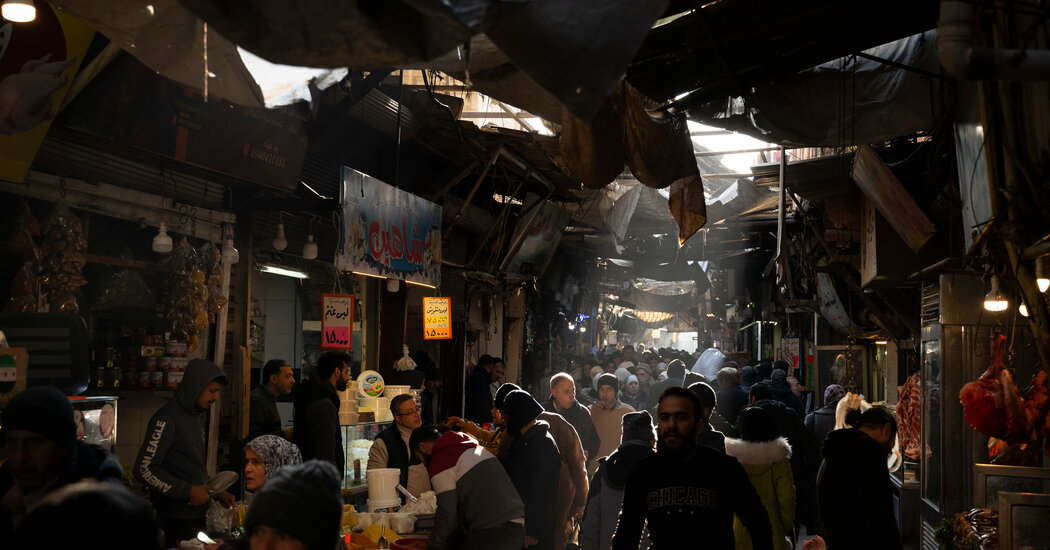
As the country observes the holy month of Ramadan ending and the festival of Eid al-Fitr beginning, Syrians are left to contemplate this political shift’s potential impact. With hopes pinned on this caretaker government, the nation stands at a critical juncture, hopeful yet wary of the path forward. This cabinet announcement could mark the beginning of a new chapter in Syria’s turbulent history, charted under the watchful guidance of interim president Ahmed al-Shara.
Original Source: https://www.nytimes.com/2025/03/30/world/middleeast/syria-new-transitional-government.html
Category : War and Armed Conflicts,Politics and Government,Islamic State in Iraq and Syria (ISIS),al-Shara, Ahmed (Abu Mohammad al-Jolani) (1982- ),Assad, Bashar al-,Idlib (Syria),Syria
Tags:
Publish Date: 2025-03-30 18:00:00