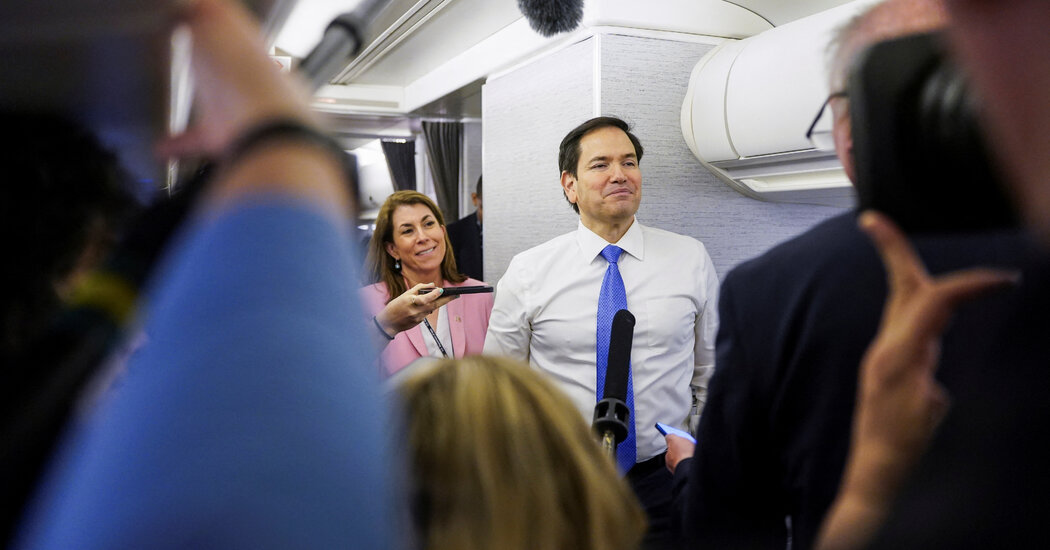

In a sweeping move affecting immigration policy, Secretary of State Marco Rubio has confirmed the revocation of over 300 visas since taking office in late January. These revocations appear to target individuals based on foreign policy views and criminal activities. Speaking to reporters during his return from a diplomatic tour of the Caribbean and South America, Rubio emphasized his personal involvement in each case, stating, “If we knew this information about them before we gave them a visa, would we have allowed them in? And if the answer is no, then we revoke the visa.”
While the specific breakdown of the visa types—ranging from student to visitor visas—remains unclear, Rubio was emphatic about the overarching criteria: activities deemed contrary to the U.S. national interest or foreign policy agenda. “They’re visitors to the country. If they’re taking activities that are counter to our national interest, to our foreign policy, we’ll revoke the visa,” he clarified during the press briefing aboard an Air Force jet en route to Miami.
Rubio’s recent actions have sparked significant controversy, particularly in the realm of education and free speech. This has included the targeting of individuals reportedly involved in activism deemed disruptive or counter to U.S. policy. One of the more publicized cases involves Rumeysa Ozturk, a Turkish doctorate student and Fulbright scholar at Tufts University. Her visa was revoked following an essay she co-authored supporting Palestinian rights. Following Rubio’s decision, Ozturk was reportedly detained in Massachusetts by federal agents in an operation that drew considerable attention.
Further fueling the debate, Rubio has stripped green card status from activists like Mahmoud Khalil and Yunseo Chung, linked to pro-Palestinian protests at Columbia University. Khalil, a Syrian-born permanent resident married to a U.S. citizen, was detained by immigration officials despite his familial ties and pending parenthood. Chung, who has lived in the U.S. since age seven, has seen legal intervention in her favor, with a federal judge halting her deportation efforts.
The secretary’s stance has found itself under intense scrutiny, with critics likening it to actions typical of authoritarian regimes that suppress dissent. However, Rubio remained firm, dismissing comparisons and defending the U.S.’s sovereign right to control visa issuance. “Every country in the world can deny visas to whoever they want. It’s that simple,” he remarked when questioned about parallels to the Hong Kong protests.
Rubio’s role emerges as a pivotal one within the contentious immigration efforts under the Trump administration. His recent deal with El Salvador’s President Nayib Bukele allowing deportation flights exemplifies his active role. Yet, the nature of the deportations, including some migrants with credible repressions claims, raises complex questions regarding due process and human rights.
The actions taken by Rubio reflect a broader strategy aligned with administration policies but face repeated legal challenges and public outcry, especially from academic and civil rights circles. As these measures unfold, the debate over national security, immigration, and freedom of expression continues to garner substantial national and international attention.
Original Source: https://www.nytimes.com/2025/03/28/us/politics/rubio-immigration-students-ozturk-chung-khalil.html
Category : United States International Relations,Pro-Palestinian Campus Protests (2023- ),Deportation,Visas,Immigration and Emigration,Immigration Detention,State Department,Chung, Yunseo,Ozturk, Rumeysa,Rubio, Marco,Trump, Donald J
Tags:
Publish Date: 2025-03-29 05:02:00