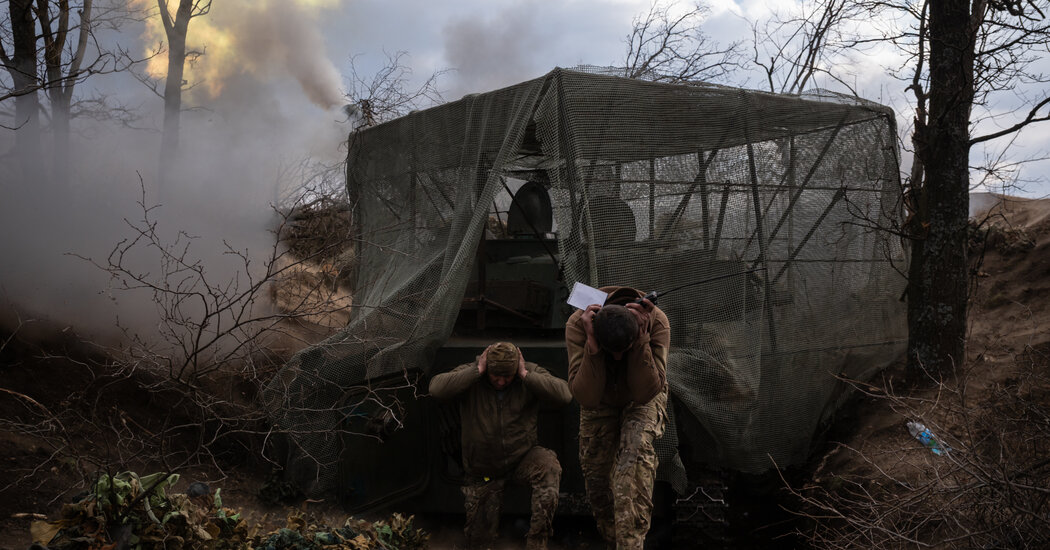

European leaders are set to meet in Paris on Thursday to reinforce their commitment to supporting Ukraine amid ongoing tensions with Russia. This gathering aims to bolster the “coalition of the willing,” a group determined to assist Ukraine in its defense against Russian aggression, despite fluctuating support from the United States. France and the United Kingdom have been at the forefront of this initiative, previously organizing meetings in both Paris and London. This summit will bring together over 30 officials, mainly European heads of state and EU representatives, to strategize on short-term military aid, long-term security, and potential peacekeeping efforts.
The discussions will focus on a proposed European “reassurance force,” a concept designed to deter further Russian aggression once the conflict subsides. Although Britain and France introduced this idea, no European country has yet committed troops, and the plan remains largely conceptual. Russia has already dismissed the proposal, labeling it unacceptable. French officials, however, emphasize that the summit underscores a growing joint European response, championed by President Emmanuel Macron of France and Britain’s Prime Minister Keir Starmer. “We are and will remain resolutely at Ukraine’s side,” declared Macron after meeting Ukrainian President Volodymyr Zelensky in Paris. “The future of the European continent and our security are at stake.”
President Zelensky expressed hope for decisive outcomes from the summit, particularly regarding immediate military support and strategies to bolster Ukraine’s defense capabilities. The readiness of the United States to participate in these efforts remains uncertain, especially since President Trump’s special envoy, Steve Witkoff, criticized the idea of stationing European troops in Ukraine as merely “a posture and a pose.” Despite past criticisms from the Trump administration regarding Europe’s defense contributions, Trump has hesitated to offer American security guarantees, which Starmer notes are crucial for Europe’s commitment of troops.
Macron reassured that any European force would be stationed away from the conflict’s front lines, not serving in a monitoring or enforcement capacity—that role, he suggested, might better suit United Nations peacekeepers. Instead, European troops would act as a deterrent, providing training and support to Ukrainian military forces. “It’s a pacifist approach,” Macron explained, emphasizing that any new conflict initiation would be the result of Russian aggression. Zelensky concurred, highlighting the foreign contingent’s role in maintaining stability and preventing further Russian offensives.
A senior official in the French presidency outlined that the European assistance to Ukraine operates transparently and harmoniously with American partners who favor the approach. Macron’s push for “strategic autonomy” for Europe has gained traction amid shifts in U.S. policy and an escalated European focus on defense. Yet, the official acknowledged the diverse political landscapes across Europe, which affect countries’ willingness to deploy ground troops. “There are different political traditions, because constitutions are different, because political sensitivities can vary,” the official noted. Nonetheless, the collective aim remains to establish robust security guarantees for Ukraine.
This concerted effort reflects Europe’s commitment to safeguarding its own security while providing unwavering support to Ukraine in the face of ongoing challenges from Russian forces.
Original Source: https://www.nytimes.com/2025/03/27/world/europe/european-leaders-ukraine-support.html
Category : Russian Invasion of Ukraine (2022),France,Macron, Emmanuel (1977- ),Zelensky, Volodymyr,Paris (France),European Union,Starmer, Keir,Europe
Tags:
Publish Date: 2025-03-27 09:31:00