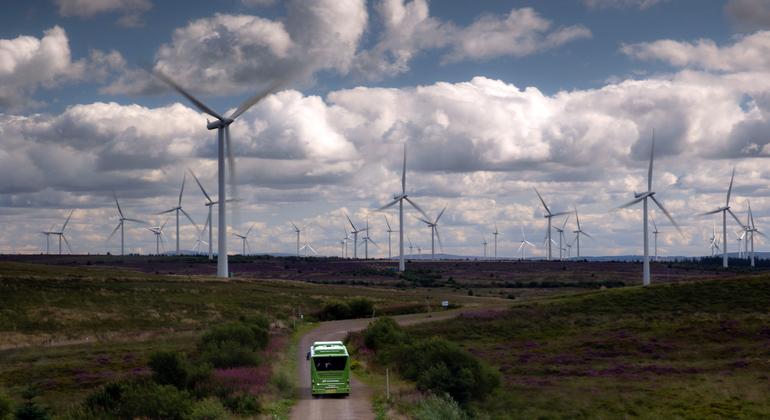

The race for renewable energy is picking up pace, and with climate change pressing the urgency, signs of progress continue to emerge. Solar panels are increasingly covering desert landscapes, wind turbines are sprouting along coastlines, and hydropower plants are exploiting rivers to produce clean energy. This momentum, primarily driven by more affordable technology and the pressing need to reduce carbon emissions, comes with cautionary notes from experts. Renewable energy production, heavily reliant on weather conditions, faces a growing threat as climate change influences these very elements.
In 2023, this interlinked dependency became particularly evident when renewable energy generation worldwide experienced volatility. A significant temperature increase of 1.45°C from pre-industrial levels compounded with a shift from La Niña to El Niño brought disparities in rainfall, wind patterns, and solar radiation. Hamid Bastani of the World Meteorological Organization highlighted a dramatic instance, noting hydropower output in Sudan and Namibia plunged by over 50 percent due to scant rainfall. Sudan, relying on hydropower for 60 percent of its electricity, received only 100 millimeters of rainfall in 2023—significantly below its long-term average.
The challenges extended beyond hydropower. Wind energy output, particularly in China, saw a modest increase due to aberrant wind conditions. India faced declines amidst weaker monsoon winds, and certain African regions suffered sharper drops, with wind output plummeting by up to 30 percent. Conversely, solar energy in South America thrived, benefiting from increased solar radiation under clear skies, boosting generation by four to six percent, thanks to favorable conditions in Brazil, Colombia, and Bolivia.
Experts like Roberta Boscolo from WMO caution that renewable infrastructures, rooted in historical climate patterns, are vulnerable to changing conditions. Reliance on past patterns poses risks; for instance, melting glaciers initially boost hydropower but ultimately lead to long-term deficits as water sources wane. The UN Environment Programme underscores additional threats, such as rising sea levels and intense storms jeopardizing coastal solar farms, alongside the increased frequency of wildfires disrupting power lines.
Looking forward, the adaptation strategy hinges on integrating climate intelligence into energy planning through advanced data, forecasting, and AI. As Mr. Bastani explains, future energy systems require insights beyond historical averages to optimize operations efficiently. Examples from Chile illustrate how climate-driven surges in hydropower can benefit from seasonal forecasts, while AI applications in wind speed and solar project operations are already proving effective in Costa Rica and Chile, respectively.
While climate-smart planning and investment pave the path forward, the energy sector also needs to diversify its renewable resources to reduce the risk of overdependence on single sources. This approach counters potential scenarios like the “dunkelflaute” in Europe, where extended periods of low wind and solar conditions necessitate robust compensatory measures like energy storage.
Ultimately, as the global transition towards renewable energy accelerates, overcoming climate-related volatility will be crucial. Investing not just in capacity expansion but also in resilient and adaptable infrastructure, informed by cutting-edge climate science, remains essential. WMO experts stress the importance of leveraging advanced forecasting tools and AI to effectively anticipate and mitigate weather-driven disruptions, thereby securing a sustainable future powered by renewables. The journey isn’t just about more solar panels and windmills; it’s about ensuring they can withstand the very climate challenges they aim to combat.
Original Source: https://news.un.org/feed/view/en/story/2025/03/1161526
Category :
Tags:
Publish Date: 2025-03-26 17:30:00