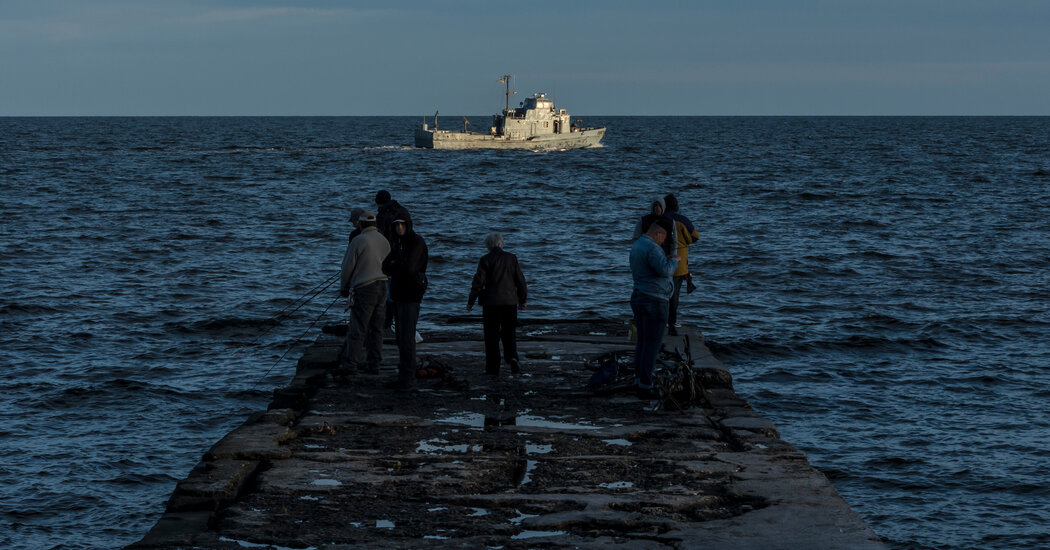

In a significant development, Russia and Ukraine have reached a tentative agreement to halt hostilities in the Black Sea, facilitated by the United States. However, the pact’s future remains uncertain as both nations maintain reservations. Russia has stipulated that it will only honor the ceasefire once sanctions against its agricultural sector are lifted—an intricate task considering the measures were enforced by the U.S. and the European Union. Moscow’s stance highlights its strategic patience, leveraging its current military advantage and favorable ties with the White House to extract maximum concessions.
The interpretations of the agreement vary between the two countries. While Russia sees it as a means to revive a 2022 U.N.-backed arrangement granting it oversight over commercial shipping routes, Ukraine insists on preventing Russian naval forces from accessing the western Black Sea, vital for Ukrainian exports. The fragile trust between the nations was evident as accusations flew following reported breaches of the ceasefire—Ukraine cited attacks on Mykolaiv, and Russia claimed to have intercepted two Ukrainian drones over the Black Sea.
Russia’s conditions for the ceasefire underscore the complexity of the negotiations. The Kremlin demands the reconnection of its state agriculture bank and affiliated financial institutions to the international payment system, Swift. Moreover, Moscow is pushing for the resumption of agricultural equipment deliveries and lifting of sanctions on its food and fertilizer trade-related entities. These demands are significant, given Russia’s substantial agricultural export figures, amounting to $45 billion in 2023.
Ukraine’s position is marked by skepticism. President Volodymyr Zelensky criticized Russia’s demands as an attempt to undermine the agreement’s integrity. He expressed concerns over the U.S.’s move to facilitate Russian agricultural exports, viewing it as a potential weakening of sanctions. Analysts note that while Ukraine agreed to the maritime ceasefire, the real advantage it gains remains ambiguous. The U.S. has not confirmed whether the deal prevents Russian assaults on Ukrainian ports or ensures the reopening of crucial passageways like Mykolaiv and Kherson.
While Russia advocates a return to the prior U.N.-backed agreement, Ukraine finds this less appealing due to past delays in export caused by Russia’s inspection process. Instead, Ukraine has developed its shipping corridor by ousting the Russian Navy from parts of the Black Sea, restoring its grain exports to near-pre-war levels. In addition to the maritime truce, both nations have tentatively agreed to pause strikes on each other’s energy infrastructure for 30 days. This moratorium includes various facilities, but mutual distrust remains palpable with mutual allegations of grid attacks.
The dialogue’s complexity reflects Moscow’s strategy of portraying openness to negotiation without substantial compromise. Ukraine’s Defense Minister, Rustem Umerov, has indicated the necessity for “additional technical consultations” to effectively implement these agreements. As the world watches, the potential for peace in the Black Sea remains entangled in geopolitical and economic negotiations, underscoring the profound challenges of resolving such deep-rooted conflicts.
Original Source: https://www.nytimes.com/2025/03/26/world/europe/russia-ukraine-black-sea-cease-fire.html
Category : Russian Invasion of Ukraine (2022),Embargoes and Sanctions,Agriculture and Farming,International Trade and World Market,Ships and Shipping,Putin, Vladimir V,Trump, Donald J,Zelensky, Volodymyr,Black Sea,Russia,Ukraine
Tags:
Publish Date: 2025-03-26 16:24:00