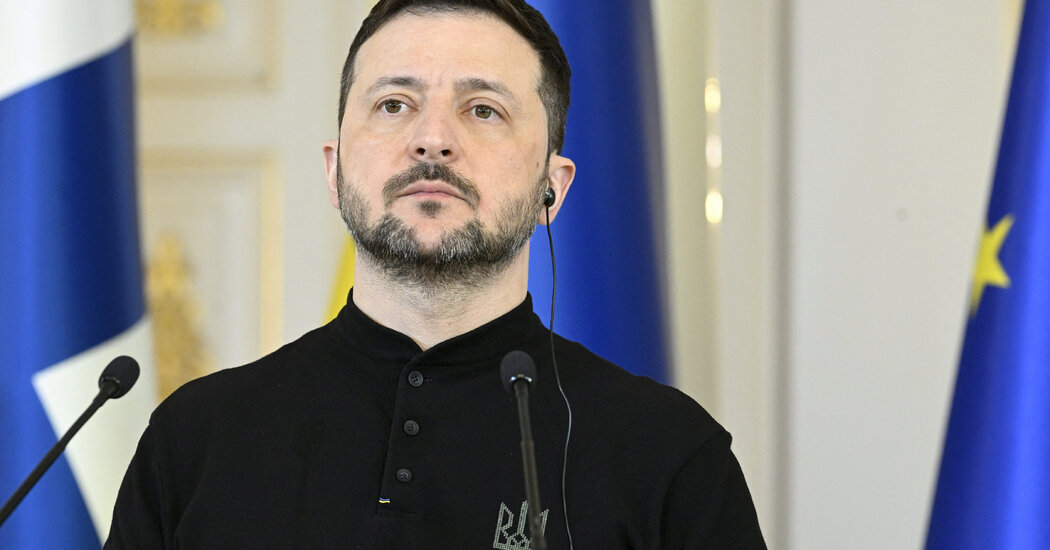
Zelensky’s Game-Changing Decision: Halts Strikes on Russian Energy Targets After Powerful Call with Trump

In a pivotal phone conversation on Wednesday, Ukrainian President Volodymyr Zelensky agreed with former U.S. President Donald Trump to accept Russia’s proposal for a temporary halt to attacks on energy infrastructure. This move is considered a preliminary step towards a broader ceasefire in the ongoing conflict initiated by Russia’s invasion of Ukraine in 2022. Despite this significant development, how or when this pause in hostilities will be implemented remains unclear. Alarming evidence of the ongoing tensions was underscored by air raid sirens sounding in Kyiv warning of incoming Russian drones.
During the call, Trump suggested that the United States could assume control over Ukrainian power facilities, an idea met with skepticism by Ukrainian energy experts who dismissed it as impractical. This notion, if pursued, could include facilities such as the Zaporizhzhia Nuclear Power Plant, Europe’s largest, currently under contentious control.
In a statement following their conversation, Zelensky revealed that Trump had shared insights from his prior discussion with Russian President Vladimir Putin. Putin’s pitch centered on a 30-day cessation of targeting each other’s energy infrastructures as a potential first step towards a comprehensive cessation of hostilities. Zelensky reiterated Ukraine’s readiness to embrace this proposal, stating, “One of the first steps toward fully ending the war could be ending strikes on energy and other civilian infrastructure. I supported this step, and Ukraine confirmed that we are ready to implement it.”
Meanwhile, the Trump administration disclosed plans to convene technical discussions in Saudi Arabia in the days ahead. These discussions will explore extending the ceasefire to activities in the Black Sea, potentially paving the path to a full-scale ceasefire.
The phone call marked the first direct communication between Trump and Zelensky since a tense meeting in the Oval Office the previous month. During that confrontation, Trump, alongside Vice President JD Vance, criticized Zelensky for a perceived lack of gratitude towards U.S. support, predominantly allocated during President Biden’s term. Following the meeting, the Trump administration temporarily halted military and intelligence assistance to Ukraine, prompting Zelensky to engage in diplomatic efforts to mend relations.
Efforts appear to be underway to smooth over past tensions, with Zelensky and Trump both describing the latest dialogue as constructive. Trump characterized the conversation as “very good,” emphasizing its hour-long duration. A subsequent joint statement by National Security Adviser Mike Waltz and Secretary of State Marco Rubio asserted that the discussion had “significantly helped in moving toward ending the war.”
In this delicate and evolving situation, any narrow agreement between Zelensky and Putin still leaves significant gaps on the broader conditions necessary to conclude the war. Zelensky has previously criticized some Russian proposals as mere stalling tactics, designed to buy time while Moscow seeks tactical advantages on the ground. The international community, while cautiously optimistic, remains alert to how these diplomatic developments will translate into tangible progress toward peace.
This article highlights the tentative steps being taken by key international leaders towards de-escalating one of the most critical geopolitical conflicts in recent history, capturing attention across global news platforms and search engines with its focus on high-stakes negotiations and international diplomacy.
Original Source: https://www.nytimes.com/2025/03/19/world/europe/zelensky-trump-ukraine-russia-putin.html
Category : Russian Invasion of Ukraine (2022),Putin, Vladimir V,,Trump, Donald J,Zelensky, Volodymyr,Ukraine,Russia
Tags:
Publish Date: 2025-03-20 00:50:00