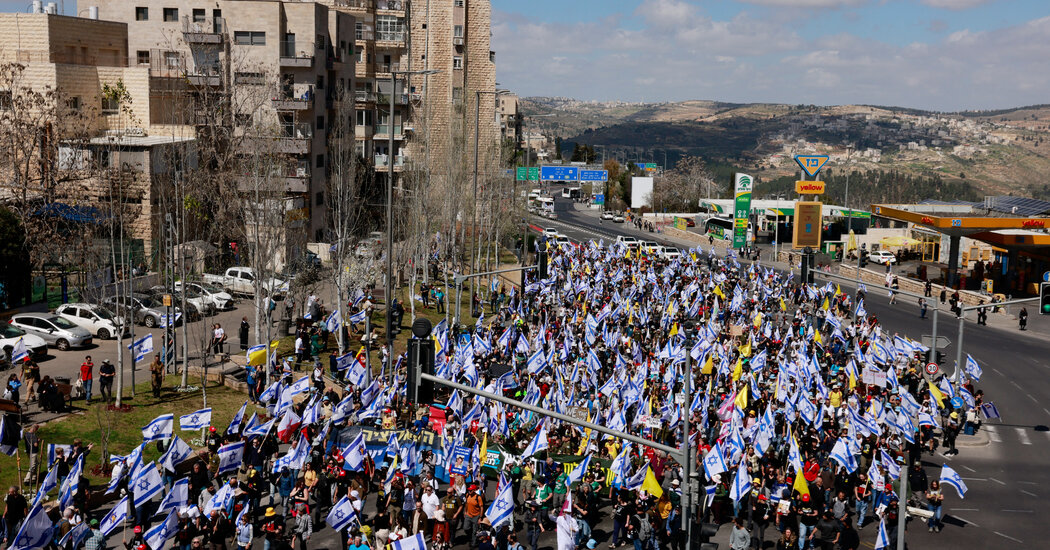

Israelis gathered outside the Parliament building in Jerusalem on Wednesday, voicing their discontent with Prime Minister Benjamin Netanyahu’s recent decisions, which they argue threaten the nation’s democratic fabric. Protesters are also advocating for a renewed cease-fire with Gaza to facilitate the return of hostages. This protest reflects a growing unease over domestic governance and national security measures, following Israel’s aerial operations in Gaza early Tuesday. These actions marked the end of a temporary truce with Hamas that began in January, exacerbating domestic tensions and splintering what once appeared to be national unity surrounding the ongoing Gaza conflict, initiated by Hamas’s attack on southern Israel on October 7, 2023.
A noteworthy point of contention among Israelis is Netanyahu’s perceived focus on political survival and efforts to strengthen his right-wing coalition ahead of an impending budget vote. Demonstrators clogged main thoroughfares into Jerusalem, reminiscent of pre-war protests against plans to limit judiciary powers—measures thought to have weakened Israel’s security posture, according to some security analysts.
The immediate catalyst for Wednesday’s protests was Netanyahu’s announcement to dismiss Ronen Bar, the head of Israel’s domestic intelligence agency, citing lost trust. This move has raised alarms over the potential erosion of state oversight and concerns over loyalty-based appointments within the government. Opposition leader Yair Lapid, representing centrist voices in parliament, encouraged citizens to participate in the protests via a social media message, stating, “This government does not stop at red. The only solution is unity, not silent, submissive, or fake unity, but the unity of an entire nation coming together and saying: Enough!” He emphasized the importance of national solidarity, inviting citizens to “take to the streets.”
In response, Netanyahu described the Gaza operation as a renewed military strategy aimed at compelling Hamas to release hostages, following ineffective negotiations intermediated through various channels. He stated that Israel would now pursue increased military pressure, with talks happening amidst active conflict. This declaration underscores Israel’s intricate balancing act of national security demands against growing internal calls for democratic preservation.
The convergence of domestic dissatisfaction and military assertiveness places Netanyahu’s government under intense scrutiny, as the nation grapples with maintaining internal cohesion while addressing external threats. This evolving scenario is a palpable reflection of Israel’s complex geopolitical and domestic challenges, as citizen voices continue to resonate through the capital’s streets, demanding action and accountability from their leaders.
Reporter Rawan Sheikh Ahmad contributed insights from Haifa, offering a broader perspective on the national mood and its implications for Israel’s immediate political landscape. As these developments unfold, the intricate interplay between protest movements, national security strategies, and governance continues to mold the narrative of Israel’s current socio-political climate.
Original Source: https://www.nytimes.com/2025/03/19/world/middleeast/israel-protests-hamas-gaza-strikes.html
Category : Israel,Israel-Gaza War (2023- ),Hamas,Kidnapping and Hostages,Demonstrations, Protests and Riots,Netanyahu, Benjamin,Bar, Ronen (1965- )
Tags:
Publish Date: 2025-03-19 16:08:00