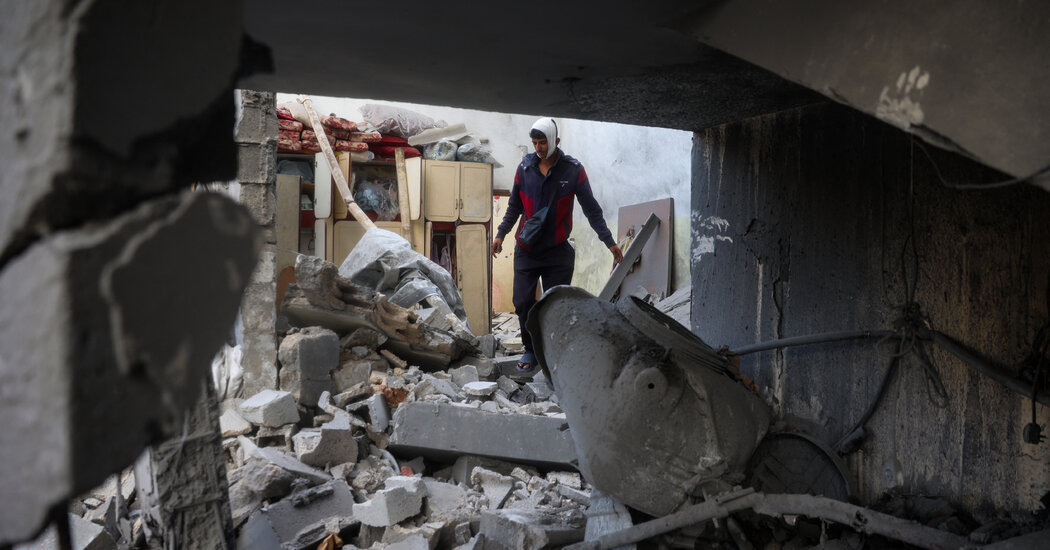

Nine hours after the intense Israeli bombardment began, Hamas had yet to retaliate. The delay in their response raised questions about whether their military capabilities had been severely impaired during earlier stages of the ongoing conflict, or if a calculated decision had been made to avoid provoking a more aggressive Israeli response. Nonetheless, Hamas maintained a strong stance in negotiations, publicly denouncing the airstrikes. In an official statement, the group accused Israel of jeopardizing the lives of hostages still captive in Gaza, urging Israel to be held “fully responsible for violating and overturning the agreement.”
In Israel, the re-escalation of hostilities elicited a mixed reaction of celebration and alarm. For the families of approximately 60 hostages still held in Gaza, this renewal of conflict stirred fear that their loved ones’ return might be indefinitely postponed. The Hostages and Missing Families Forum, an advocacy group, voiced their distress on social media, stating, “The Israeli government has chosen to abandon the hostages.” However, the decision to resume military operations found favor with right-wing politicians, including Itamar Ben-Gvir, a far-right legislator vocal in his opposition to the earlier cease-fire. Ben-Gvir supported the renewed offensive as “the right, moral, ethical and most justified step,” emphasizing his stance that “we must not accept the existence of the Hamas organization and it must be destroyed.”
Critics of Prime Minister Benjamin Netanyahu suggested that his motives for reigniting the conflict might be politically driven. They speculated this move was meant to consolidate support from right-wing factions for the passing of a crucial national budget and divert attention from the government’s controversial plan to dismiss Shin Bet’s chief, Ronen Bar. Opposition leader Yair Golan accused Netanyahu of leveraging the conflict to distract from domestic controversies, implicating the Prime Minister in risking lives for political leverage. As Israel’s cabinet prepared to deliberate on Bar’s future, some opposition groups called for public protests.
Despite this criticism, the Prime Minister’s office issued a statement portraying the military operation as a necessary measure aimed at securing the release of hostages. The statement attributed the collapse of negotiations to Hamas and stressed that the military actions were undertaken to achieve “the release of all of our hostages,” notably avoiding any direct mention of a mission to dismantle Hamas.
In the midst of this escalation, the ongoing Israel-Gaza conflict, marked by tragic fatalities and intense military confrontations, continues to captivate the global community’s attention. This resurgence in violence underscores the volatile nature of the region’s geopolitical landscape, with far-reaching implications on both sides of the border. Maintaining an informed perspective on these developments is crucial, as international observers and stakeholders remain engaged in understanding the conflict’s complex dynamics and potential outcomes.
Reporting contributions were made by Rawan Sheikh Ahmad in Haifa and Myra Noveck in Jerusalem, affirming the international interest and concern surrounding these events. As the conflict progresses, the world watches closely, scrutinizing the actions and statements of involved parties to discern potential paths toward resolution or further confrontation.
Original Source: https://www.nytimes.com/2025/03/18/world/middleeast/israel-gaza-hamas-war.html
Category : Israel-Gaza War (2023- ),Terrorism,Defense and Military Forces,Deaths (Fatalities),Kidnapping and Hostages,Hamas,Gaza Strip,Israel
Tags:
Publish Date: 2025-03-18 16:31:00