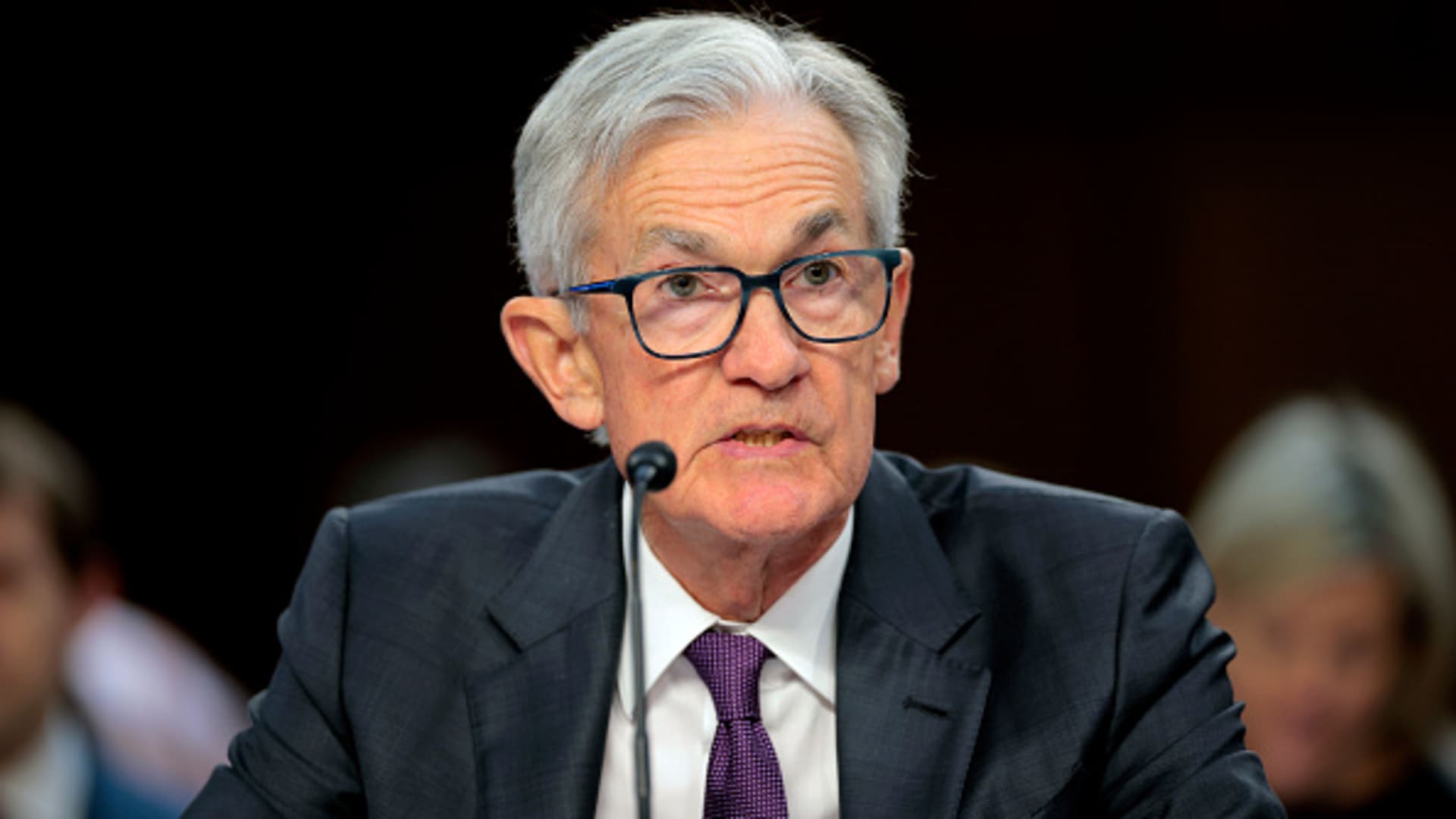

Federal Reserve Chair Jerome Powell recently appeared before the Senate Banking Committee, as economic concerns mount amidst rising recession fears. According to the March CNBC Fed Survey, economists and financial experts have increased the risk of a U.S. recession to its highest level in six months, revising growth forecasts for 2025 downward and adjusting inflation expectations upward. This growing apprehension is largely attributed to the Trump administration’s fiscal policies, particularly tariffs, which are now seen as a major threat to the U.S. economy, overshadowing previous concerns about inflation.
The survey, which gathered insights from 32 professionals including fund managers, strategists, and analysts, indicated that the probability of a recession has climbed to 36%, up from 23% in January. Initially, there was optimism after President Trump’s election, as evidenced by January’s three-year low figure. However, current survey data reflects increased skepticism, with concerns about the administration’s trade policies leading the discourse. Barry Knapp of Ironsides Macroeconomics highlighted the heightened economic risk, commenting that investors are anxious about the potential derailing of Trump’s agenda.
Economic growth forecasts have been notably adjusted, with expectations for GDP in 2025 decreasing from 2.4% to 1.7%. This marks a significant shift from the upward trends observed in previous surveys since September. However, the GDP is anticipated to rebound to 2.1% in 2026, aligning with earlier forecasts. Neil Dutta from Renaissance Macro Research pointed to the risks in consumer spending, a stagnant housing market, and reduced expenditure by state and local governments as significant contributors to the pessimistic GDP estimates for 2025.
Discussion about potential Federal Reserve actions remains active, with most experts predicting at least two rate cuts within the year, despite stubbornly high prices and slowing growth. A notable portion of respondents, three-quarters, expect two or more quarter-point rate reductions, while approximately 19% are skeptical that any cuts will occur. The general consensus appears to be that tariffs, considered temporary price influencers, will not trigger widespread inflation.
The Federal Reserve faces a precarious situation. Peter Boockvar of Bleakley Financial Group emphasized Powell’s challenge with tariffs, noting the risk of prematurely cutting rates if economic growth concerns escalated, only for tariffs to potentially be lifted thereafter. Most survey participants, over 70%, believe tariffs negatively impact inflation, jobs, and growth. Opinions vary; 34% forecast a decrease in U.S. manufacturing owing to tariffs, while 37% anticipate a manufacturing output increase. Furthermore, a majority express that the Department of Government Employment (DOGE) cuts could hinder economic growth and job creation, albeit slightly deflationary in effect.
Economic expert Mark Zandi from Moody’s Analytics warned that a global trade war, erratic DOGE employment reductions, aggressive immigration policies, and political dysfunction could significantly threaten what was once a thriving economy. The cumulative effect of these policies could ultimately push the U.S. toward a recession. These economic shifts and their ramifications underscore the complex landscape the Federal Reserve and economic stakeholders must navigate in the years ahead, as policymakers grapple with balancing growth, employment, and inflation amidst geopolitical and domestic uncertainties.
Original Source: https://www.cnbc.com/2025/03/18/slower-economic-growth-is-likely-ahead-with-risk-of-a-recession-rising-according-to-the-cnbc-fed-survey.html
Category :
Tags:
Publish Date: 2025-03-18 16:22:00