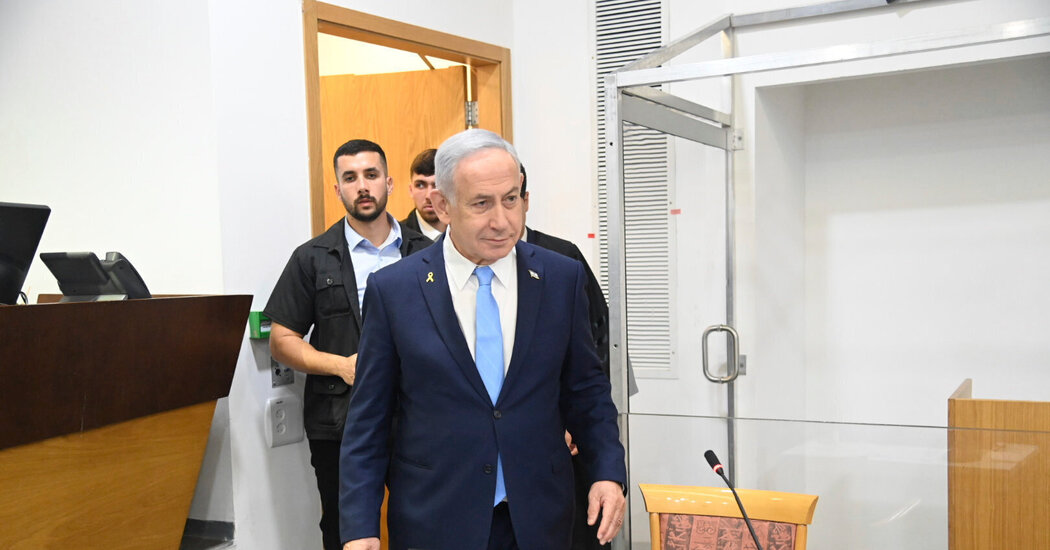
Shocking Power Play: Netanyahu’s Bold Move to Oust Shin Bet Chief Signals Aggressive Control Agenda

Israeli Prime Minister Benjamin Netanyahu’s recent push to dismiss Ronen Bar, head of the domestic intelligence agency Shin Bet, has ignited fresh debates over governmental control. This move, announced as a planned cabinet vote, comes shortly after Netanyahu’s administration expressed a similar intent to remove Gali Baharav-Miara, the attorney general. Simultaneously, Netanyahu’s coalition has revived efforts in Parliament to grant politicians more influence over the selection of Supreme Court justices, a continuation of previous attempts to consolidate power.
These developments underscore a renewed drive by Netanyahu’s right-wing government to enhance executive power, echoing the controversial judicial overhaul efforts of 2023. The initial overhaul faced widespread condemnation and led to prolonged mass protests, further polarizing Israeli society. Although this campaign was briefly paused due to a unifying national crisis following a Hamas-led attack in October 2023, renewed tensions have emerged following a tentative cease-fire in Gaza.
Legal expert Amichai Cohen from the Israel Democracy Institute views Bar’s potential removal as symptomatic of broader attempts to undermine independent state institutions. “It’s part of the general trend of taking on these independent agencies and increasing the power of the executive,” Cohen stated. Amidst these developments, a personal feud between Bar and Netanyahu further complicates the picture. Bar had previously initiated probes into alleged leaks from Netanyahu’s office, an ongoing source of tension.
Fuel was added to the fire when Nadav Argaman, Bar’s predecessor, hinted at potential revelations concerning Netanyahu’s conduct during a televised interview. For Netanyahu, this pivotal moment seemingly transformed the internal resentment into a direct confrontation. “He saw it as a direct threat,” commented former adviser Nadav Shtrauchler, suggesting the timing of the attempted dismissal is no coincidence.
This governmental shake-up highlights deeper ideological divides within Israel. Netanyahu’s coalition, consisting of ultra-religious and settler-focused parties, desires diminished oversight from judicial and security entities. These groups have historically chafed against watchdogs that challenge the privileges of the ultra-Orthodox, restrict settler initiatives, or investigate Netanyahu’s own corruption allegations, which he denies.
Proponents of these governmental changes argue that reducing judicial power enhances democratic function, enabling lawmakers to fulfill electoral mandates. Eithan Orkibi, writing for the right-wing daily Israel Hayom, claimed that reassigning the Shin Bet’s responsibilities would restore its focus, post-Bar.
However, opposition voices warn that such measures could undermine democratic safeguards, paving the way for authoritarian practices. Barak Seri, in a column for the centrist Maariv, critiqued these moves as dismantling essential checks on power, threatening the foundational integrity of Israel’s democracy.
As Netanyahu navigates these contentious waters, Israel finds itself at a critical juncture, confronting questions about governance, oversight, and national identity. With tensions high and opinions sharply divided, the future of crucial state structures rests on a precarious balance, reverberating through the nation’s political and societal fabric.
Original Source: https://www.nytimes.com/2025/03/17/world/middleeast/israel-netanyahu-shin-bet-firing.html
Category : Politics and Government,Netanyahu, Benjamin,Israel,Shin Bet,Ronen Bar,Israel-Gaza War (2023- ),Gaza Strip
Tags:
Publish Date: 2025-03-17 20:33:00