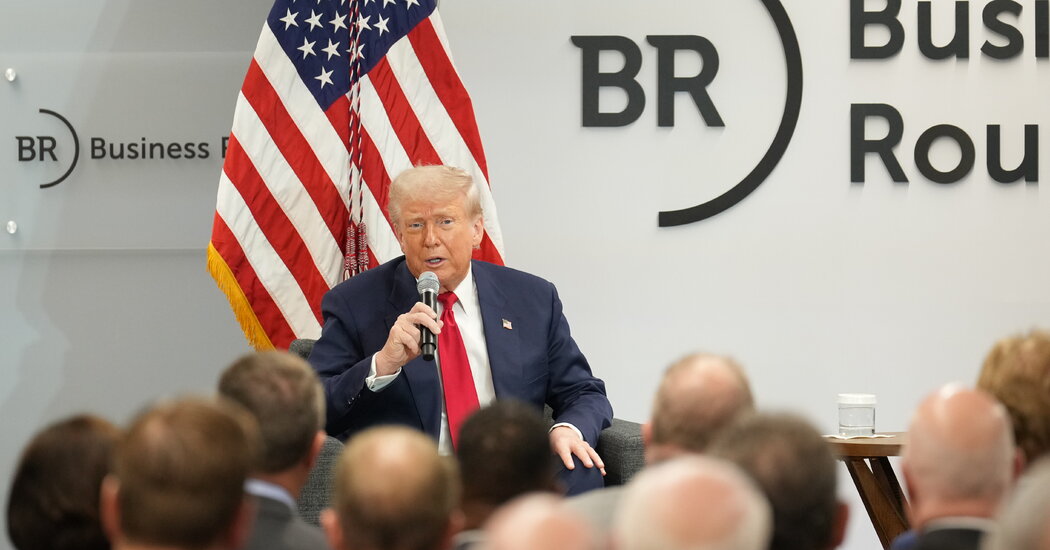

In a move that has reignited tensions between the United States and the European Union, former President Donald Trump has enforced steel and aluminum tariffs affecting around $28 billion in European exports. Trump, critical of the EU, has suggested the bloc’s formation aimed at disadvantaging the U.S., accusing it of unfair trade practices. Despite EU officials’ attempts to mitigate an impending trade war through negotiations and increased purchases of U.S. natural gas, the situation appears increasingly complex.
The EU responded sharply, imposing retaliatory tariffs, effective April 1, on American goods. These levies, as high as 50%, target iconic brands like Harley Davidson and Kentucky bourbon. A second wave, slated for mid-April, threatens to extend to critical agricultural products and industrial goods, crucial to Republican territories. Despite not wishing to escalate tensions, the EU emphasizes its readiness for further retaliation if provoked.
“Our approach is to avoid disruption if the U.S. works with us,” stated Maros Sefcovic, the European Commission’s trade minister, highlighting the bloc’s preference for negotiation over confrontation. Yet, President Trump’s response was swift, labeling the EU’s actions as “nasty” and threatening additional tariffs on European goods, including a proposed 200 percent tariff on alcohol from France and other EU countries, pending the retraction of tariffs on American whiskey.
The rationale behind the tariffs from the Trump administration remains multifaceted. While tariffs are touted as a means to level the playing field, they’re also seen as a way to finance U.S. tax cuts or penalize the EU for its regulations on technology firms. The disparity in tariffs is relatively minor, with Europe’s averaging slightly above the U.S.’s 3.5%, although substantial on particular items like vehicles.
Despite efforts by EU officials to engage with the Trump administration, progress has been limited. The absence of direct dialogue between Trump and European Commission President Ursula von der Leyen underscores the communication gap. Trade expert Penny Naas characterizes the situation as lacking the mutual benefit typical of negotiations, comparing it to an imperious demand rather than a reciprocal engagement.
Amidst escalating tensions, the EU is preparing a robust response, maintaining its retaliatory measures proportional to U.S. actions in hopes of deterring further conflict. Yet, the possibility of a full-blown trade war looms.
Recognizing the stakes, European leaders hope the pressure on American political strongholds, potentially exacerbated by tariffs on vital Republican exports, will incentivize negotiation. The spirits industry, already anticipating a setback from the tariffs, warns of further harm to distillers and farmers if the trade hostilities intensify.
The underlying tension also impacts American corporates like Tesla, where recent declines in Germany reflect growing European discontent. Nevertheless, Trump’s administration appears willing to endure short-term economic challenges for broader trade reshaping objectives.
For Europe, confronting a possibily altered global trade policy under Trump is daunting, threatening its historically beneficial partnership with the U.S. This evolving dilemma underscores the intricacies of modern international trade, where the stakes extend beyond commerce to the geopolitical realm.
Original Source: https://www.nytimes.com/2025/03/13/world/europe/trump-europe-tariffs-retaliation.html
Category : International Trade and World Market,Customs (Tariff),United States Economy,Steel and Iron,Bourbon (Whiskey),Politics and Government,European Union,European Commission,Tesla Motors Inc,Trump, Donald J,von der Leyen, Ursula,Europe,United States
Tags:
Publish Date: 2025-03-14 07:34:00