Historic Breakthrough: Israel and Lebanon Unite for Pivotal Border Talks, Alleviating Long-Standing Tensions

Israel and Lebanon have taken significant steps towards resolving their long-standing land border disputes by agreeing to initiate negotiations, officials announced on Tuesday. This development presents a potential opportunity to ease decades of tensions and conflict between the two nations. Morgan Ortagus, the U.S. deputy Middle East envoy, stated that the United States is facilitating these discussions between Israel and Lebanon, which will focus primarily on demarcating their shared land border. The agenda will also address five Israeli military outposts in Lebanon and the plight of Lebanese prisoners still held in Israel following a cease-fire that concluded more than a year of cross-border hostilities.
The office of the Israeli Prime Minister revealed the plan to form working groups dedicated to these critical issues. A Lebanese official, speaking anonymously due to the sensitivity of the diplomatic engagement, confirmed the mutual agreement to engage in these crucial negotiations. However, the exact format of the talks remains unclear, given the absence of direct formal diplomatic relations between Israel and Lebanon.
A potential agreement could weaken a core justification used by Hezbollah, a militant group wielding significant influence in Lebanon, for maintaining its arsenal. According to analysts like Mohanad Hage Ali from the Carnegie Middle East Center in Beirut, a successful border deal would undermine Hezbollah’s claim of combating Israeli occupation. “If a deal on the border is done, Hezbollah’s alibi will be gone,” said Hage Ali. “It will pull the rug out from under them.”
Tensions escalated following a surprise Hamas attack from the Gaza Strip on October 7, 2023, which prompted Hezbollah to launch rockets and mortars into northern Israel, expressing solidarity with the Palestinian militants. This ignited months of retaliatory assaults across the Israeli-Lebanese border until Israel intensified its military response against Hezbollah, targeting its leadership, weapon caches, and launching ground operations in Lebanon.
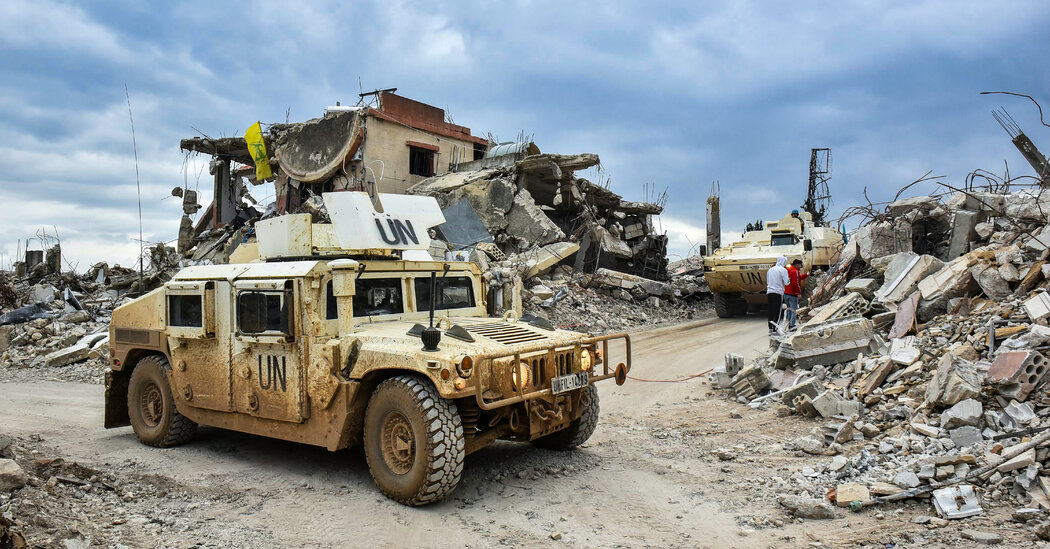
In November, Israel and Lebanon reached a cease-fire agreement requiring both parties to relinquish control of southern Lebanon to the Lebanese military by January’s end. Although Israel retains control over five southern Lebanon points, it accuses Hezbollah of failing to honor its commitments, while Hezbollah claims Israel violated the agreement.
U.S. officials, speaking anonymously due to restrictions on media communications, expressed hope for an upcoming meeting to address these concerns, although no exact timeline was provided. One official highlighted 13 specific border disagreement points between the two nations.
This renewed focus on land border talks follows Israel and Lebanon’s successful 2022 agreement on delineating their maritime border, a deal that finalized their exclusive economic zones in the eastern Mediterranean. However, the war in Gaza delayed earlier plans for land border negotiations, initially proposed by U.S. envoy Amos Hochstein.
Tuesday’s announcement emerged after a meeting involving officials from the United States, Israel, Lebanon, France, and the United Nations, centered on implementing the cease-fire. Following the meeting, Lebanese President Joseph Aoun’s office announced Israel’s release of four Lebanese citizens detained during last year’s conflict, with a fifth set for release on Wednesday. Israel framed these releases as a goodwill gesture toward President Aoun, while the exact number of remaining Lebanese detainees remains undisclosed.
Contributions to this report were made by Aaron Boxerman and Euan Ward.
Original Source: https://www.nytimes.com/2025/03/11/world/middleeast/israel-lebanon-border-talks.html
Category : Lebanon,Israel,Ortagus, Morgan,Hezbollah
Tags:
Publish Date: 2025-03-12 01:36:00