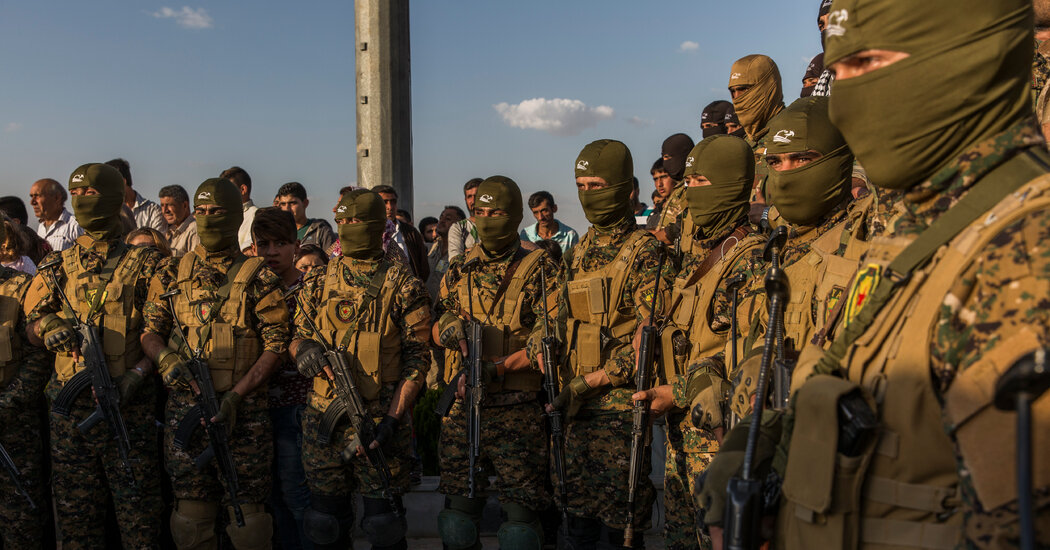

In a significant political shift, the Kurdish-led forces controlling northeastern Syria have agreed to integrate with the nation’s new central government. Announced by Syria’s presidency on Monday, this marks a crucial step for Damascus toward national unification amidst ongoing unrest. The U.S.-backed Syrian Democratic Forces (SDF), a key player in the region, will merge both their civil and military institutions—including vital oil and gas resources—into the Syrian state by year-end.
This consolidation follows a deal involving the SDF’s commitment to aid Damascus against the remnants of the Assad regime, simultaneously emphasizing inclusive political representation for all Syrians. The agreement comes at a critical time, amid violence in Syria’s coastal areas, which has claimed over 1,300 lives, offering a momentary respite for the interim president, Ahmed al-Shara.
Al-Shara, who led a coalition to overthrow former dictator Bashar al-Assad last December, faces the challenge of integrating a diverse array of rebel groups into a coherent national army. The Kurdish forces stand as one of the most strategic yet complex factions due to their historical autonomy and American support, which left them operating almost as an independent state in northeastern Syria.
For years, the SDF has been a crucial ally of the U.S. in combating the Islamic State (ISIS) in Syria, taking significant territory amidst the protracted civil war. The group, advocating for the Kurdish minority—comprising around 10% of Syria’s population—has also been responsible for the security of detention camps housing ISIS fighters and their families. However, with wavering U.S. engagement under President Trump, the SDF’s negotiating strength has diminished, prompting the need to align with the Syrian government’s goals.
Despite the symbolic breakthrough, several critical questions remain unanswered. It is uncertain if the SDF will be integrated as an independent military entity within Syria’s official armed forces—an issue previously met with governmental resistance. Additionally, the enactment of a cease-fire across Syria, as stipulated in the agreement, faces logistical challenges amid ongoing clashes.
Currently, fighting in the northeast persists between Kurdish-led forces and groups backed by Turkey, which remains a staunch ally of the new Damascus government. Historically, Turkey views the SDF as affiliated with its own Kurdish insurgents but recently these groups have signaled an end to their longstanding conflict. Despite this, the potential for escalating tensions with Turkey remains a concern, particularly for the Kurds who fear marginalization under a government aligned with their traditional adversaries.
Nonetheless, the announcement brought celebrations in northeastern Syria, especially among the Arab population who had feared assaults by Turkey or the central government. Faisal Ahmed, a local Arab resident, expressed his cautious optimism, hoping for protection from Turkish aggression.
Naleen Mohammed, a Kurdish woman, echoed the sentiment, appreciating the peace path with Damascus as preferable to conflict, especially considering the violence in Latakia. “It is good to have an agreement with Damascus—much better than fighting,” she highlighted.
As this development unfolds, skepticism abounds regarding al-Shara, who once led a group allied with Al-Qaeda, and whether his administration can truly implement an inclusive government. Yet, integrating the SDF is a pivotal move in attempting to stabilize the war-torn nation.
Original Source: https://www.nytimes.com/2025/03/10/world/middleeast/syria-kurds-agreement.html
Category : Kurds,War and Armed Conflicts,Syrian Democratic Forces,Islamic State in Iraq and Syria (ISIS),al-Shara, Ahmed (Abu Mohammad al-Jolani) (1982- ),Syria
Tags:
Publish Date: 2025-03-11 09:51:00