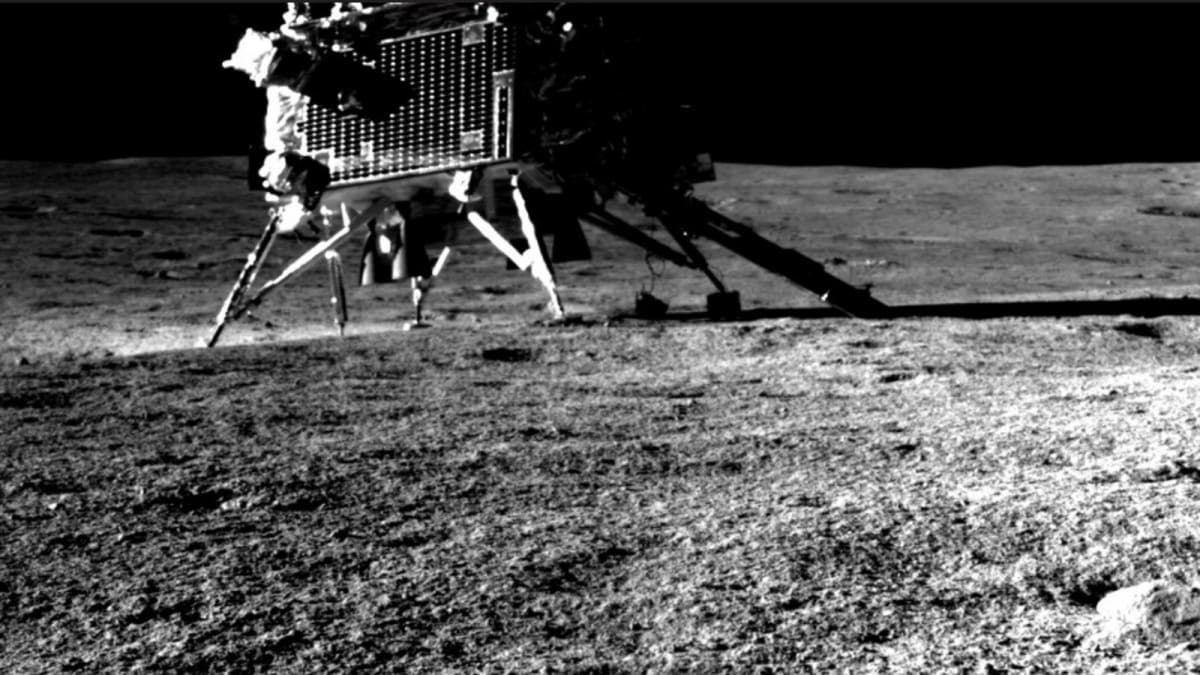

In a significant stride for lunar exploration, India’s Chandrayaan-3 mission, launched by the Indian Space Research Organisation (ISRO) on July 14, 2023, has uncovered the potential presence of ice in more areas of the Moon’s polar regions than previously anticipated. The spacecraft made history on August 23, 2023, as the first to successfully land near the lunar south pole, a region long speculated to harbor water ice beneath its surface.
Scientists from Ahmedabad’s Physical Research Laboratory (PRL) embarked on an in-depth analysis of the data beamed back by Chandrayaan-3. Their findings revealed intriguing and highly localized surface temperature variations that suggest ice may be lurking just a few centimeters beneath the Moon’s surface. This revelation could be a game-changer for future lunar missions, as the accessibility of water is pivotal for sustained human exploration and potential habitation of the Moon.
Traditionally, scientific understanding of lunar surface temperatures has relied heavily on remote sensing data and insights from the Apollo missions of the 1970s, which primarily explored equatorial regions lacking the terrain diversity found at the poles. However, the data collected by Chandrayaan-3’s Vikram Lander and its onboard Chandra’s Surface Thermophysical Experiment (ChaSTE) have provided a fresh perspective. The thermal probe, which delved 10 centimeters into the lunar regolith, recorded dramatic temperature fluctuations. At a Sun-facing slope angled at 6 degrees Celsius, the temperature soared to 355 Kelvin (82 degrees Celsius) but plummeted to 105 Kelvin (-168 degrees Celsius) during the lunar night. Comparatively, a nearby flat terrain recorded a lesser peak temperature of 332 Kelvin (59 degrees Celsius).
Lead scientist Durga Prasad, from PRL, utilized these metrics to develop a model elucidating how slope angles influence surface temperatures at high lunar latitudes. Their analysis suggests that slopes angled more than 14 degrees away from the Sun could be cool enough for ice accumulation, proposing that local topography significantly affects temperature dynamics at high-altitude lunar sites. This conclusion aligns with the conditions in the lunar south pole, earmarked for NASA’s manned Artemis missions.
The recent findings, published in the esteemed Nature journal’s Communications Earth and Environment section, point to a broader and more accessible distribution of ice on the Moon than previously understood. This could substantially ease the logistical and technical challenges faced by future missions aiming to extract and utilize this ice, thereby opening avenues for more ambitious lunar exploration agendas.
ISRO’s prior accomplishments in 2008 marked a watershed moment, providing the first evidence of water on the Moon. Over a decade later, as Chandrayaan-3 delivers groundbreaking insights, these efforts underscore India’s pivotal role in expanding our understanding of the lunar environment. Notably, last year’s data from the mission also substantiated the existence of a vast magma ocean on the Moon in its formative years, supporting theories regarding its origin and evolution.
The successful endeavors of Chandrayaan-3, featuring the Vikram Lander and the Pragyan rover, manifest the continuous advancements in space exploration technology. With six scientific instruments onboard, the mission stands as a testament to human ingenuity and the quest for knowledge beyond Earth. As the world pivots towards harnessing lunar resources, such discoveries illuminate the path forward, suggesting a more promising and accessible future for lunar exploration and potential habitation.
This article resonates with the ongoing interest in lunar exploration and the quest for extraterrestrial resources, meeting readers’ expectations within the dynamic digital news landscape.
Original Source: https://www.news18.com/india/how-chandrayaan-3-uncovered-ice-beneath-moons-surface-in-more-polar-areas-than-expected-ws-b-9257278.html
Category :
Tags:
Publish Date: 2025-03-11 18:17:00