Unveiling the Mysteries of the Total Lunar Eclipse on March 13-14: Discover Why the Moon Turns Red!

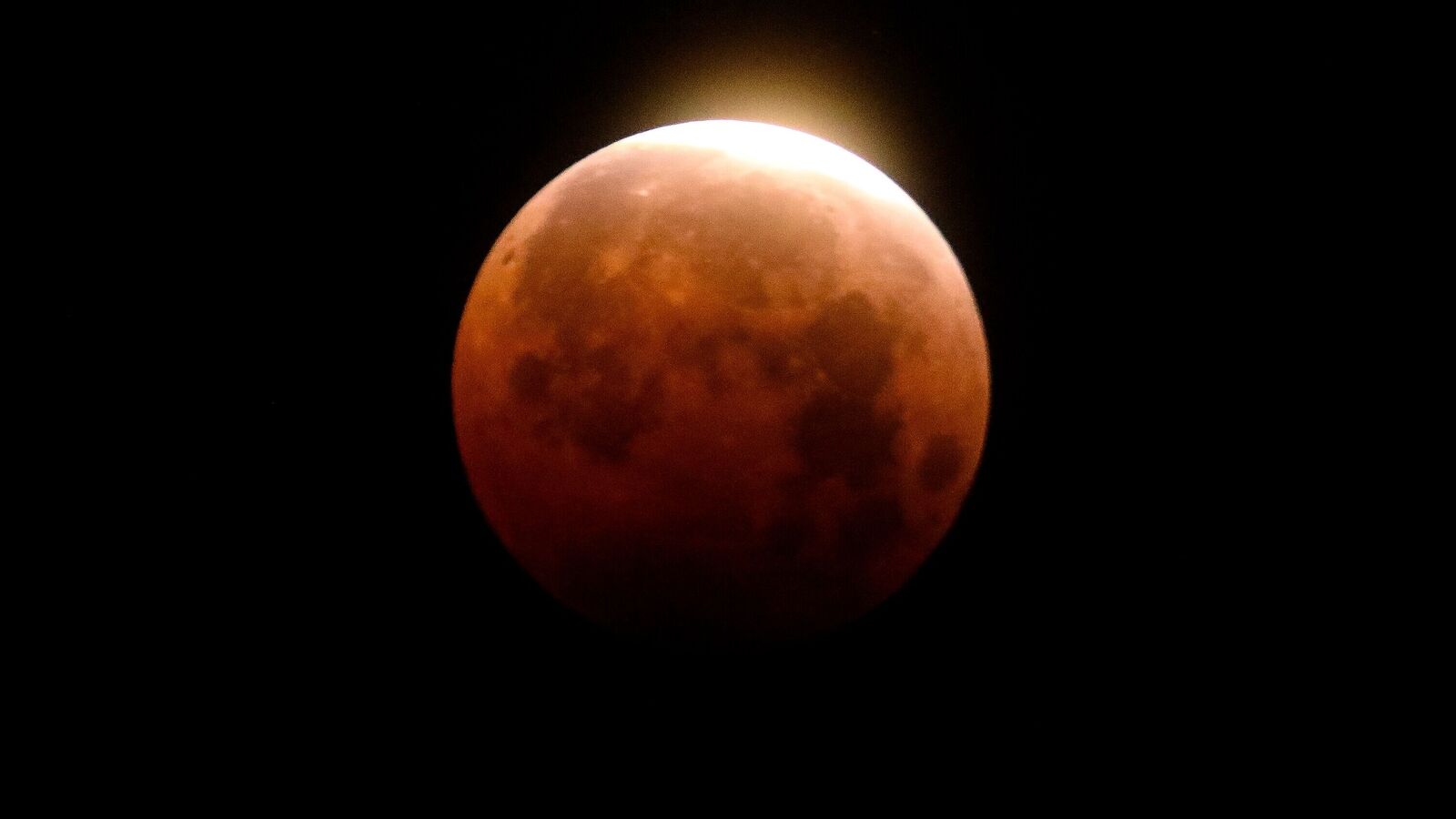
Prepare to witness one of nature’s most breathtaking spectacles as a total lunar eclipse, commonly known as a “Blood Moon,” graces the night sky from March 13 into the early morning of March 14. This celestial event promises a captivating view as the Moon takes on a striking red-orange hue, an optical phenomenon resulting from Earth’s atmosphere filtering sunlight during the eclipse.
According to NASA, the partial phases of the eclipse will commence at 10:57 p.m. ET on March 13 and conclude at 5:00 a.m. ET on March 14. The highlight, the total eclipse or “totality,” will span from 1:26 a.m. ET to 2:31 a.m. ET, with the peak of the eclipse occurring at 1:58 a.m. ET. This stunning event will be visible across the Western Hemisphere, providing a magnificent opportunity to step outside on the evening of March 13 or early on March 14 to witness this natural wonder.
The reddish tint of the “Blood Moon” arises when the Sun, Earth, and Moon align precisely, causing the Moon to traverse Earth’s shadow. As sunlight passes through Earth’s atmosphere, it scatters shorter wavelengths like blues and violets, while longer red and orange wavelengths illuminate the Moon. The presence of dust or clouds can intensify the red appearance, making the spectacle even more dramatic.
No special equipment is required to enjoy the eclipse, though using binoculars or a telescope can enhance your viewing experience. For optimal enjoyment, find a dark, open space away from urban lights. As you marvel at the lunar eclipse, cast your gaze towards the western sky to spot the planets Jupiter and Mars. Throughout the eclipse, the Moon will journey through the constellation Leo, then transition into Virgo, offering a rare opportunity for stargazers to see stars and constellations more clearly as the Moon’s brightness diminishes.
For those interested in the precise timeline of the event, the penumbral eclipse begins at 8:57 p.m. PDT (11:57 p.m. ET), followed by the partial eclipse at 10:09 p.m. PDT (1:09 a.m. ET). The total eclipse starts at 11:26 p.m. PDT (2:26 a.m. ET) and concludes at 12:31 a.m. PDT (3:31 a.m. ET). As the event wraps up, the partial eclipse will end at 1:47 a.m. PDT (4:47 a.m. ET), and the penumbral eclipse will finish by 3:00 a.m. PDT (6:00 a.m. ET).
As the solar-lit Moon dims, the stars in the constellations will emerge more vividly, providing an enriching experience for all night sky enthusiasts. The upcoming lunar eclipse is truly a must-see event for anyone interested in astronomy or the natural wonders of our universe. Whether you’re a seasoned stargazer or a curious observer, this celestial event offers a unique opportunity to connect with the cosmos from your own backyard.
So, mark your calendars and set your alarms to ensure you don’t miss a moment of this awe-inspiring lunar event. Remember, while the “Blood Moon” is captivating on its own, taking the time to appreciate the whole panorama of the night sky will enrich your experience and keep you engaged throughout this spectacular cosmic occurrence.
Original Source: https://www.livemint.com/news/world/total-lunar-eclipse-on-march-13-14-why-does-the-moon-turn-red-everything-you-need-to-know-11741469638761.html
Category :
Tags:
Publish Date: 2025-03-09 03:15:00