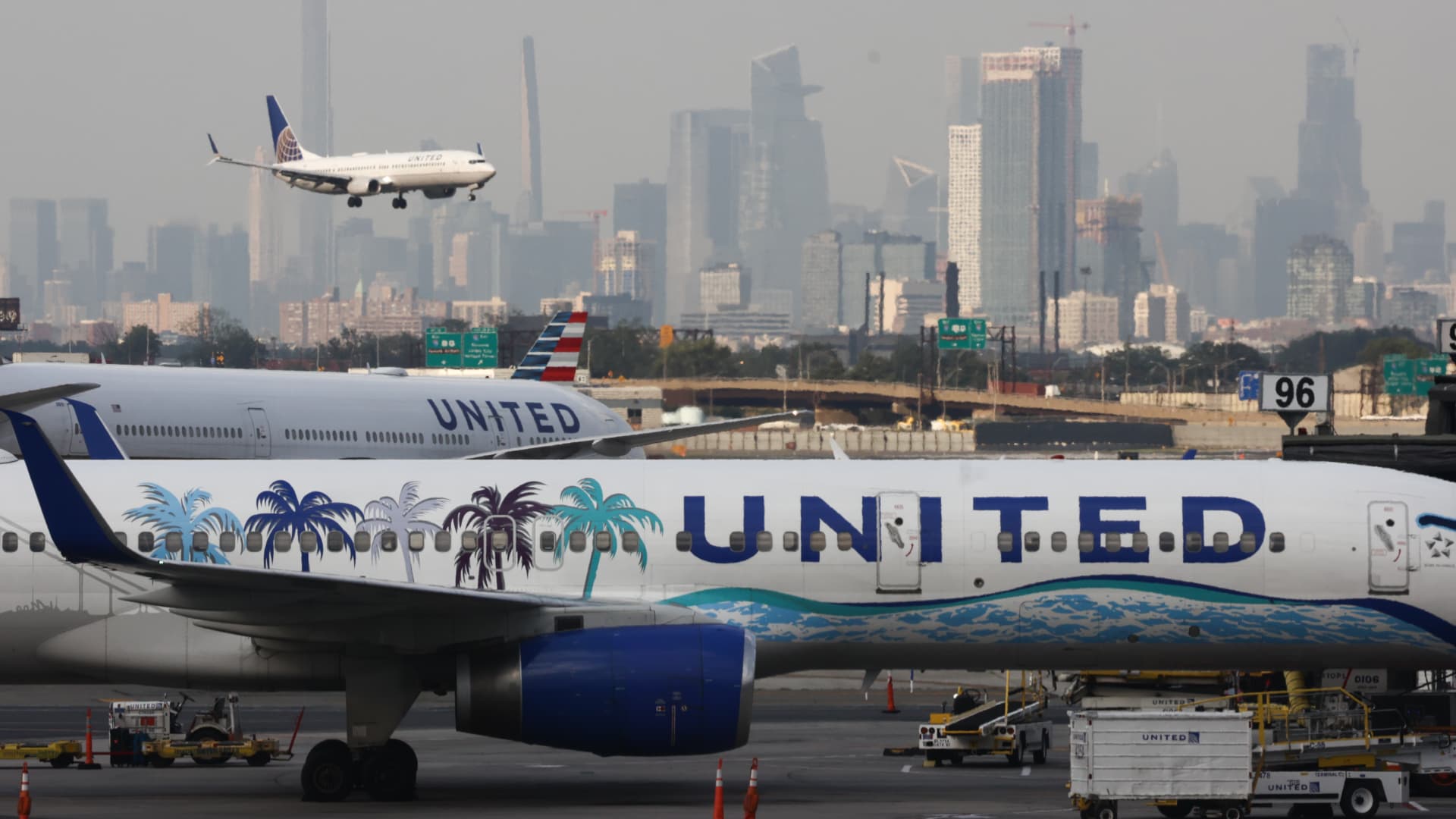

United Airlines aircraft were observed at Newark Liberty International Airport on July 16, 2024, marking a turbulent period for U.S. airline stocks. This downturn has driven airline shares to their lowest point since last year due to rising economic anxieties. The aviation sector, typically a beacon of consumer spending, is contending with these fresh challenges amid broader economic turbulence.
The sector’s struggles are magnified by newly imposed tariffs from former President Donald Trump targeting Mexico and Canada, coupled with increased levies on Chinese imports. These moves have triggered retaliatory tariffs, straining international trade relations. Prominent executives, including those from Best Buy and Target, have voiced concerns that these tariffs could lead to increased costs for consumers, adding to the economic strain. United Airlines, with significant operations linked to China, experienced a stock decline exceeding 7%, mirrored by Delta Air Lines. Similarly, American Airlines saw a drop exceeding 5% during midday trading. Domestic carriers like JetBlue Airways, Allegiant Air, and Frontier Airlines also felt the ripple effects, each experiencing healthy dips of more than 6%.
Despite the global challenges, full-service airlines with widespread international connections had previously offered a glimmer of hope, fueled by solid demand and a cooling in domestic flight expansion. However, analysts are increasingly predicting a potential decline in demand, particularly impacting price-conscious travelers, as the spring travel season looms. This comes amidst retail data from the U.S. Commerce Department indicating a January dip in consumer spending, marking the first decline in nearly two years. Earlier reports from February highlighted an unexpectedly large downturn in retail sales, stoking concerns about consumer behavior.
Deutsche Bank, reflecting on the situation, expressed optimism regarding the supply backdrop, yet acknowledged emerging economic weaknesses. “While we continue to remain constructive on the supply backdrop – which we still believe is favorable – our attention has shifted to what appears to be an emerging economic ‘soft patch,'” the bank stated in a note. Though the depth and duration of these challenges remain uncertain, there is an expectation that air travel demand, especially within the domestic discretionary segment, may be affected.
Despite the challenging landscape, signs of stability persist in corporate and international long-haul travel sectors. According to United Airlines CFO Mike Leskinen, who spoke at a Barclays industry conference, business travel remains “robust,” while international leisure travel is “very strong.” He indicated that domestic leisure travel aligns with company expectations, describing it as “kind of okay.”
As the airline industry navigates these turbulent economic times, maintaining a pulse on consumer trends, tariff developments, and market volatility will be essential for understanding the future trajectory of the sector. While some areas remain resilient, the focus will undoubtedly be on overcoming the economic hurdles that threaten to dampen the industry’s optimistic outlook.
Original Source: https://www.cnbc.com/2025/03/04/airline-stocks-tumble-amid-economic-concerns.html
Category :
Tags:
Publish Date: 2025-03-04 22:20:00