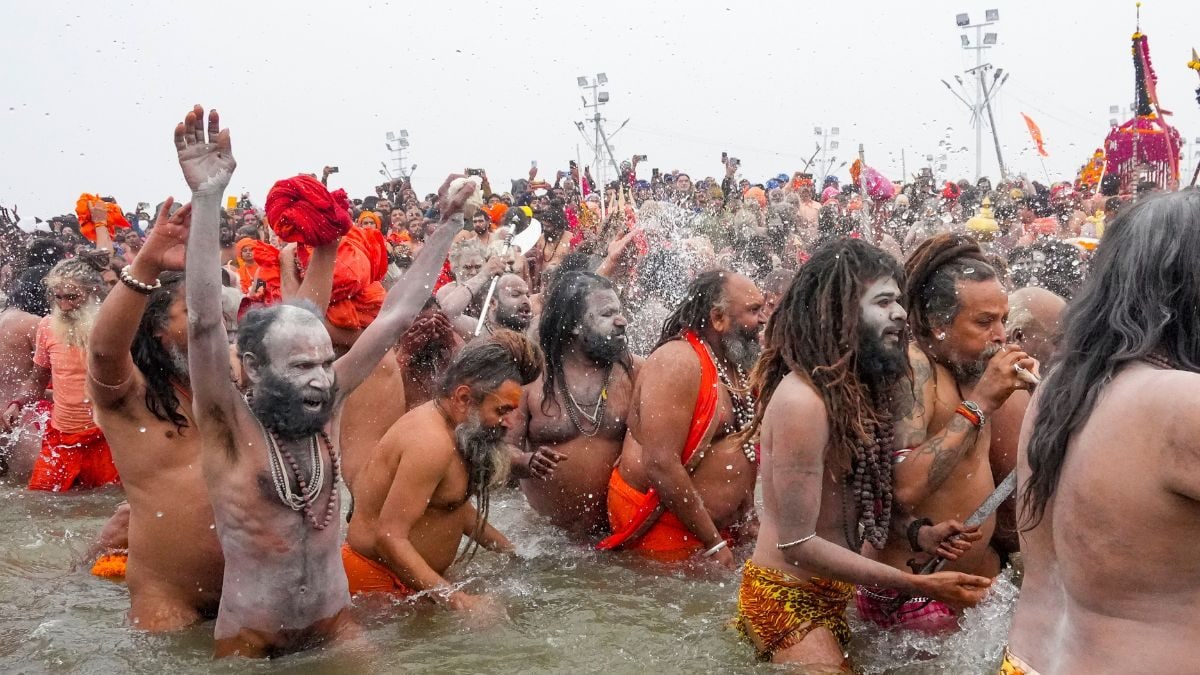
Unveiling the Mystique: How Akharas Powerfully Lead the Sacred Amrit Snan at Maha Kumbh Mela 2025

In the Maha Kumbh Mela 2025 held in Prayagraj, Uttar Pradesh, a significant event called the ‘Amrit Snan’ took place, coinciding with Makar Sankranti on January 14. Sadhus from the Mahanirvani Panchavati Akhara led the sacred ritual by taking a holy dip at the Triveni Sangam—the confluence of the Ganga, Yamuna, and Saraswati rivers. A total of 13 Akharas, split into three groups—Sanyasi (Shaivite), Bairagi (Vaishnav), and Udaseen—participated in the event, each adhering to a prescribed sequence for their ritual baths.
Historically, Akharas have been pivotal in preserving Hindu traditions, safeguarding temples, and organizing Kumbh Mela rituals such as the Amrit Snan since the 8th century. They are structured with distinct roles, led by a Mahant or Acharya, and play a cultural and spiritual role in Hindu society.
Among the key Akharas, the Juna Akhara, Niranjani Akhara, and Mahanirvani Akhara hold significant sway. Notably, the Kinnar Akhara, comprising transgender individuals, also participated in this sacred gathering. The current Maha Kumbh Mela reflects the rich spiritual heritage and organizational maturity of these Akharas, highlighting their integral role in maintaining tradition and promoting inclusivity within the Hindu community. The recent reinstatement of the term ‘Amrit Snan,’ replacing ‘Shahi Snan,’ underscores a return to ancient traditions, acknowledging their historical significance.
Original Source: https://www.news18.com/explainers/maha-kumbh-mela-2025-how-significant-are-akharas-and-how-do-they-lead-the-amrit-snan-explained-9188052.html
Category :
Tags:
Publish Date: 2025-01-15 01:35:00