China’s Ambitious Plan to Boost Consumption through Trade-Ins: Why the Results are Still Elusive

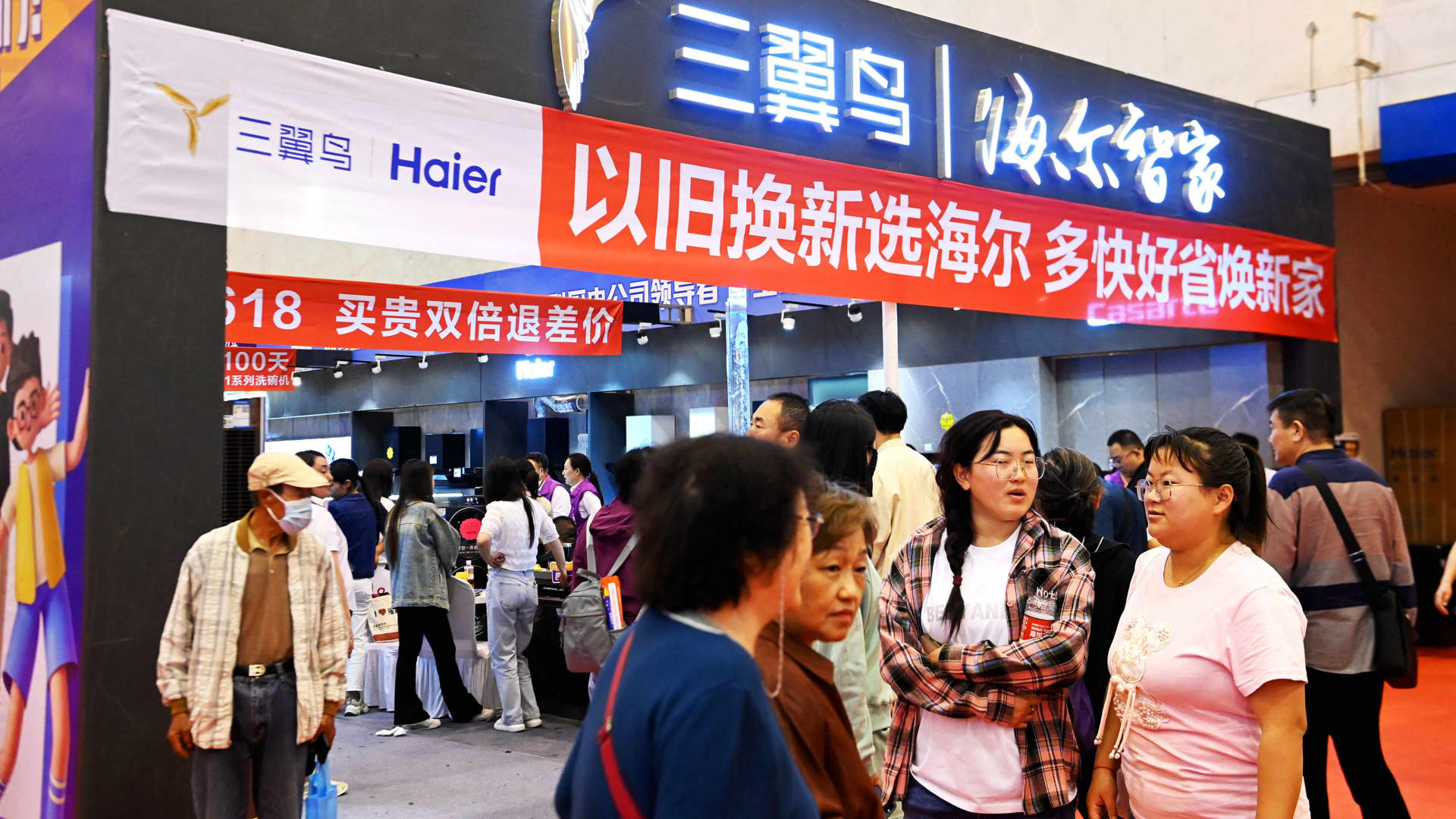
In a bid to boost consumption, China has rolled out a substantial trade-in policy utilizing 300 billion yuan ($41.5 billion) in ultra-long special government bonds. Announced in July, the plan aims to subsidize trade-ins of cars, home appliances, and large equipment, such as elevators. While this move surprised analysts, results have yet to materialize notably, as many consumers remain cautious about upfront spending and having a used product to trade in.
Jens Eskelund, president of the EU Chamber of Commerce in China, highlighted the need for effective execution for visible results, noting the central government’s budget amounts to about 210 yuan ($29.50) per capita—an amount unlikely to significantly boost consumption alone. Tao Wang, Chief China Economist at UBS, estimated the new program could uplift retail sales by only 0.3% in 2023.
China saw only modest retail sales growth—2% in June and 2.7% in July—with new energy vehicle sales surging by nearly 37% despite an overall decline in passenger car sales. The policy has doubled subsidies for new energy and traditional cars to 20,000 yuan and 15,000 yuan respectively. However, elevator modernization under this scheme has yet to see new orders, as noted by executives from Otis and Finnish firm Kone.
ATRenew’s CFO Rex Chen mentioned the policy’s long-term potential to support the secondhand goods market, despite no immediate short-term impacts. Trade-in volumes for certain products like mobile phones and laptops in Guangdong have risen, with trade-in orders from e-commerce platform JD.com increasing by over 50% year-on-year since the policy’s introduction.
The full scope of implementation at local levels remains to be seen, but these measures aim to stimulate China’s consumption and support broader market activities.
Original Story https://www.cnbc.com/2024/09/13/chinas-plan-to-boost-consumption-by-encouraging-trade-ins-has-yet-to-show-results.html
Category :
Tags: