
Stakeholders Stress On Enforcement and Affordable Alternatives
Morung Express News | Kohima | July 31
Nagaland state government’s attempts to reduce plastic consumption have repeatedly fallen short, drawing comparisons to the ineffective enforcement of the Nagaland Liquor Total Prohibition (NLTP) Act. Despite multiple bans on single-use plastics (SuPs) over the past seven years, the SuP menace persists, exacerbated by inadequate waste management.
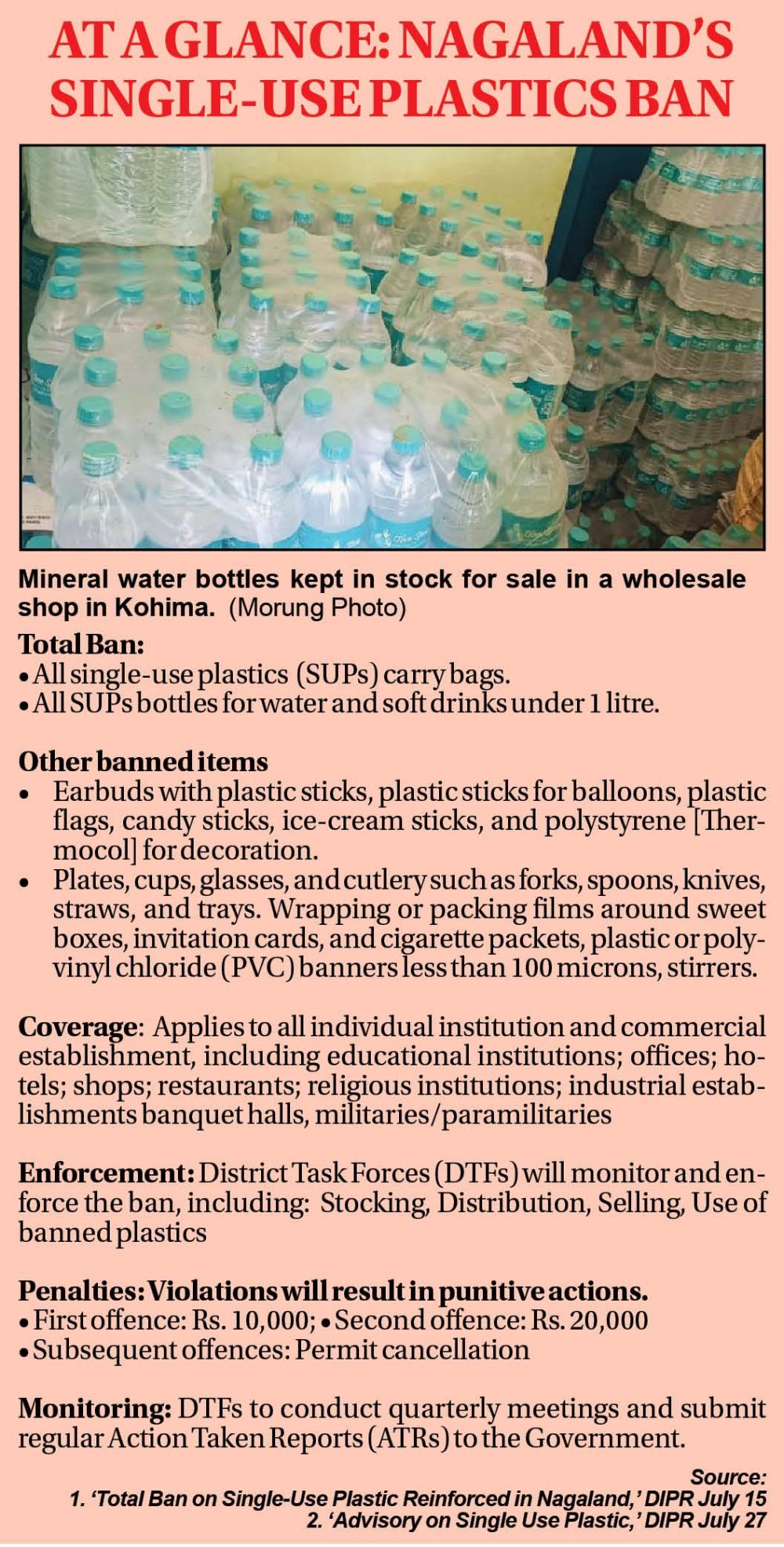
The latest ban, effective from August 1, 2024, targets SuP carry bags and water/soft drink bottles below one liter. While public reaction to the ban is generally positive, effective implementation remains a concern.
Yanpvuo Kikon welcomed the move, noting the environmental destruction caused by improperly disposed and non-recycled plastics, which contribute to severe climate effects like extreme weather and landslides. Wapong Longkumer underscored the global consensus on reducing plastic use and highlighted alarming research findings of microplastics in human blood, supporting the ban as the logical first step.
An unnamed government officer emphasized that strict enforcement is crucial for the ban to succeed. He suggested forming dedicated teams for enforcement, involving the Deputy Commissioner, Kohima Municipal Council, and other local authorities. Regular reporting, inspections, and penalties administered in collaboration with police were also recommended to ensure compliance.
Kikon added that enforcement requires a dedicated workforce and consistent reviews, not just superficial actions. He advocated for a balanced approach that considers both economic progress and environmental sustainability, noting the importance of effective waste management.
The need for affordable alternatives to SuPs was stressed. The government was urged to support local manufacturers through soft loans to produce eco-friendly products. Longkumer pointed out that while biodegradable alternatives might be costlier than plastic, they should be competitively priced. Subsidizing production and commissioning manufacturing units for biodegradable items were proposed as viable solutions.
A housewife, Adonuo, highlighted the practical challenges, stating that cheaper, durable regular garbage bags often outweigh the more expensive biodegradable options despite awareness of their environmental impact.
This summary captures key points from the original article, ensuring it remains engaging and retains the essential information while employing a professional journalistic tone.
Original Story https://www.morungexpress.com/nagalands-latest-tryst-with-plastic-bans-begins-today
Category : Nagaland
Tags: