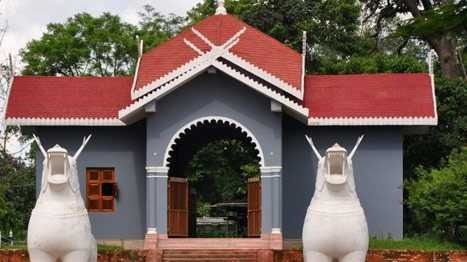

Historic Kangla Fort: Echoes of Manipur’s Regal Past
Imphal’s Kangla Fort, an ancient fortified palace, served as the traditional seat of Meitei rulers, marking the capital of pre-modern Manipur. This historic site, originally spanning both sides of the Imphal River, now retains only its western ruins. Standing at 798 meters above sea level, Kangla, which translates to "the prominent part of the dry land" in old Meitei, was the capital until 1891.
The fort has a history stretching back nearly two millennia, first mentioned during King Pakhangba’s reign in 33 AD. It is also reputedly haunted by soldiers’ spirits from the Anglo-Manipur War of 1891, a testament to the bloodshed and conflict it witnessed.
Kangla Fort faced multiple devastations, especially during the Seven Years’ Devastation (Chahi Taret Khuntakpa) from 1819 to 1826, under Burmese rule—a dark period in Manipur’s history marked by severe political, social, and economic upheaval.
During King Khagemba’s reign (1597-1652 AD), the fort saw significant development, including a brick wall at its western gate, influenced by techniques from Chinese prisoners of war. His son, Khunjaoba, further enhanced the fort with a moat known as Thangapat.
The fort, handed over to the Manipur government by Prime Minister Manmohan Singh on November 20, 2004, is now a prominent tourist destination with rich archaeological, religious, and historical significance. Its twenty-foot tall structure houses sacred sites like Pakhangba’s coronation site. The fort has three entrances—two in the west and one in the south, with the latter connecting to the Shree Shree Govindajee Temple via a canal.
Kangla Fort remains a symbol of Manipur’s grandeur and resilience, attracting visitors and scholars intrigued by its storied past and enduring legacy.
Original Story https://www.indiatodayne.in/manipur/video/kangla-fort-a-journey-through-manipurs-great-past-1060699-2024-07-30?utm_source=rssfeed
Category :
Tags: