Architecting Grid-Integrated AI Factories: Firm Renewables and Battery Firming

Contrarian opening: energy, not chips, is the new chokepoint for large-scale AI
We obsess about GPUs, interconnects and model scale – and rightly so – but the next wave of industrial-scale AI will be decided less by compute architecture and more by how reliably and affordably you can get electrons to the racks when the grid is stressed. A recent commercial agreement between an AI-factory developer and an energy trader puts that point into sharp relief.
The signal in two sentences
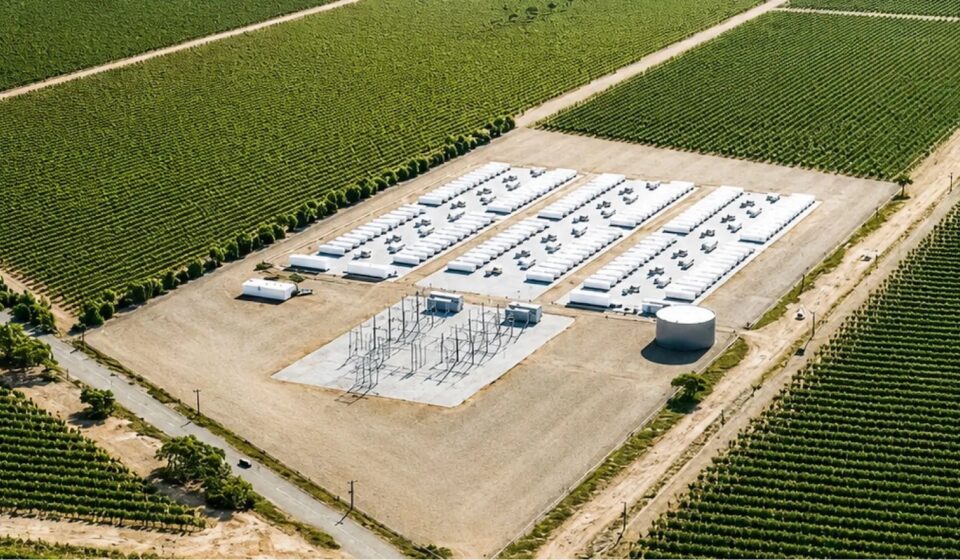
Firmus has secured a long-term wholesale energy arrangement that pairs new renewable generation, large-scale battery storage and demand-response commitments to support multi‑GW AI campuses in regional Australia. The deal is notable because it treats energy as an integral part of the data‑centre value chain rather than a peripheral procurement item.
What this means for enterprise and cloud architects
Treat power procurement as an architectural decision. Traditionally, architects design for compute, storage, networking and software resiliency; energy sits underneath as a utility. That mental separation is breaking down. Long-term offtakes, grid-forming batteries and demand-response provisions are mechanisms for converting intermittent renewables into “architectural SLAs” – guaranteed periods of capacity, predictable price exposure, and operational flexibility.
Design trade-offs are now multi-dimensional:
- Availability vs cost: Paying for firm capacity (batteries + dedicated renewables) reduces the risk of curtailed workloads but increases capital and contract complexity. Decide whether your workload is availability‑critical (real‑time inference, sovereignty-required data) or elastic (batch training, model finetuning).
- Flexibility vs performance: Embedding demand-response hooks into operations – e.g., queuing noncritical training during price spikes – means investing in workload orchestration, energy-aware schedulers and smarter provisioning logic.
- Sovereignty vs vendor lock-in: Long-term, vertically integrated energy+compute deals can strengthen national digital sovereignty, but they also create contractual dependency. Negotiation should preserve portability of workloads and data egress options.
Practical architecture patterns to adopt now
- Energy-aware orchestration: Extend resource schedulers with an energy API that considers price, carbon intensity and battery state-of-charge when deciding where and when to run training jobs.
- Workload tiering: Classify workloads into firm, flexible, and opportunistic buckets, and map them to different power contracts or run locations (on-site, regional, cloud spot).
- Co-investment models: For large organizations, consider joint investment in battery capacity or renewable PPAs to align incentives with energy suppliers while keeping control over operational policies.
- Resilient edge/backbone split: When firm energy is expensive, distribute latency‑tolerant inference to edge locations with local renewables; reserve centralized campuses for GPU-heavy, energy‑dense training.
Relevance for India and emerging regions
This model is directly relevant to India’s rapid cloud and AI adoption. Indian datacentres face similar constraints: high peak demand, evolving grid flexibility mechanisms, and strong policy emphasis on renewables. Rather than treating energy as a compliance checkbox, Indian enterprises and state-level digital programs should explore integrated energy‑compute strategies – combining long-term PPAs, storage, and demand-response clauses – to stabilise costs and build sovereign infrastructure for critical DPI workloads.
Key takeaways for CTOs and founders
- Reframe energy as a service-level design variable, not a utility line item.
- Build energy-aware orchestration: tie schedulers to price and carbon signals.
- Negotiate contracts that include flexibility mechanisms (demand response, storage access) and portability clauses for workloads.
- Evaluate mixed-site architectures: co-locate critical workloads where firm power is guaranteed; place elastic workloads in flexible, cheaper zones.
- Consider community and regulatory impact: regional projects must deliver local jobs and grid benefits to secure social licence.
Closing thought
If the last decade was about moving workloads to where compute is cheapest, the next decade will be about moving workloads to where energy is clean, firm and contractually dependable – and designing systems that can bend when the grid flexes.
About the Author: Sanjeev Sarma is the Founder Director and Chief Software Architect at Webx Technologies. With a core focus on Generative AI integration, Cloud-Native Scalability, and Enterprise Software Architecture, he has spent over two decades driving digital transformation across Northeast India and beyond. Beyond his corporate leadership, Sanjeev is deeply invested in shaping the future of the IT industry. He serves as an Industry Expert on the Board of Studies for Assam Don Bosco University’s School of Technology, advises state technology committees, and actively mentors emerging tech startups at STPI. He brings a unique, dual perspective of high-level enterprise execution and future-ready academic curriculum development.