Media, Markets and Energy Security: Rethinking North Sea Policy

The politics of short-term fixes vs. long-term systems thinking
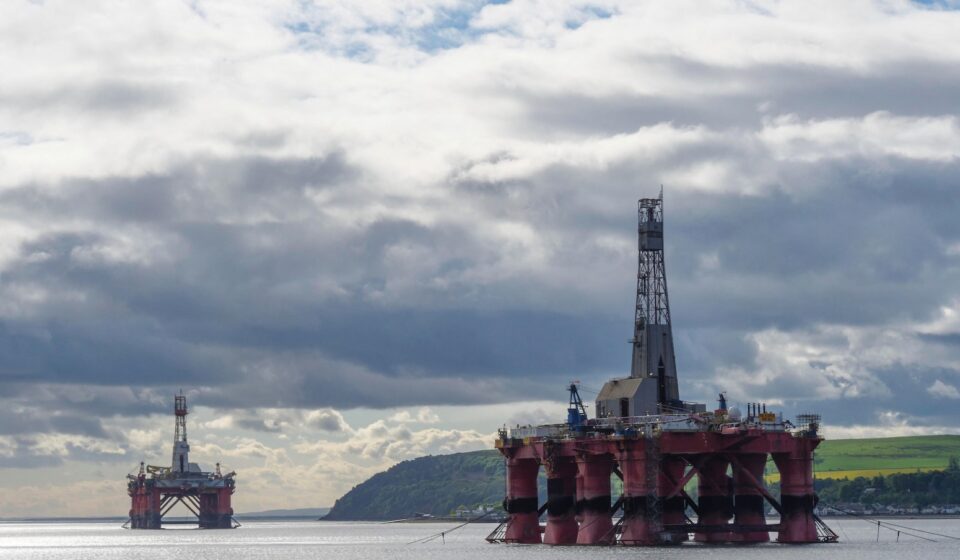
Last month I read a data-driven analysis showing that UK national newspapers published dozens of editorials this year urging more North Sea oil and gas drilling – an intensifying media campaign framed as an urgent fix for rising energy bills and geopolitical risk. That signal (press pressure for immediate resource extraction) sits on top of a much larger, slower-moving reality: mature basins, declining domestic output, and the structural drivers of energy prices that are largely outside the control of any single commodity source.
Why this matters beyond the headlines
The surface debate – drill more now, worry about transition later – is not just a political tussle. It mirrors a recurring failure mode I see in enterprise architecture and product strategy: leaders choosing short-term capacity increases or tactical workarounds to soothe immediate pain, rather than investing in systemic resilience and long-term transformation. In both cases, the incentives (electoral cycles, quarterly revenue or uptime metrics) favour visible, fast interventions even when they deliver marginal systemic value.
The systems trade-offs: speed, sovereignty and hidden costs
There are three architectural lessons here that are directly applicable to CTOs and founders:
-
Speed vs. stability. Rapid addition of capacity (whether spinning up new wells or bolting on microservices) can mask deeper brittleness. It may reduce a metric temporarily, but it increases complexity and operational risk. True resilience is often quieter: diversified supply (energy mix or multi-region infrastructure), demand-side efficiency, and robust contingency planning.
-
Local production ≠ local control. The intuition “produce locally to lower prices” ignores global market dynamics. UK oil sold on global markets behaves like cloud costs or open-market dependencies – ownership alone doesn’t guarantee favourable pricing or availability. Architectures built around single-vendor or single-region assumptions face the same mistaken belief.
-
Political and market signals create tech debt. When leadership reacts to short-lived signals (media storms, spikes in telemetry, regulatory pressure) without a strategic rubric, teams accumulate technical debt. That debt compounds and forces expensive trade-offs later – exactly the pattern seen in extractive industries whose assets are depleted while infrastructure remains under-invested.
What to do differently – for enterprise leaders
If you are responsible for a platform, product or country-scale program, the tactical instinct to “do something now” is understandable. But effective responses combine rapid triage with parallel strategic bets:
-
Scenario-based roadmaps: model a small set of plausible futures (short disruption, prolonged volatility, accelerated transition) and cost actions across them. Prioritize investments that pay off across multiple scenarios.
-
Invest in flexibility not just capacity: modular architectures, observable systems, and demand-side controls (feature flags, dynamic scaling, behavioral nudges) are more valuable than raw capacity additions that only show up in dashboards.
-
Measure the right outcomes: shift KPIs from single-point metrics (throughput, MWh output, feature delivery) to economically meaningful indicators (total cost of ownership, marginal resilience, user journey completion under stress).
A conditional Bharat note
For Indian leaders, the parallel is clear: focusing only on fuel supply or a single generation technology misses the larger systems work – grid modernization, distributed renewables, energy efficiency, and governance mechanisms. Similarly, India’s Digital Public Infrastructure teaches us that durable platforms are built by combining decentralization, open standards and sustained public investment – not by quick fixes for transient political pressures.
Takeaways
- Short-term fixes create long-tail technical and policy debt.
- Prioritize flexibility and scenario resilience over one-off capacity increases.
- Local production doesn’t guarantee local control; model global market behavior.
- Align KPIs with long-term economic and user-centered outcomes, not just short-term optics.
Closing thought
Good architecture – whether of energy systems or digital platforms – is the discipline of designing for the decades, not the headlines.
About the Author: Sanjeev Sarma is the Founder Director and Chief Software Architect at Webx Technologies. With a core focus on Generative AI integration, Cloud-Native Scalability, and Enterprise Software Architecture, he has spent over two decades driving digital transformation across Northeast India and beyond. Beyond his corporate leadership, Sanjeev is deeply invested in shaping the future of the IT industry. He serves as an Industry Expert on the Board of Studies for Assam Don Bosco University’s School of Technology, advises state technology committees, and actively mentors emerging tech startups at STPI. He brings a unique, dual perspective of high-level enterprise execution and future-ready academic curriculum development.