Architecting Nuclear-Powered Autonomous Systems for Sustainable Lunar Bases

A decade-long view: why a shelved rover matters more than its destination
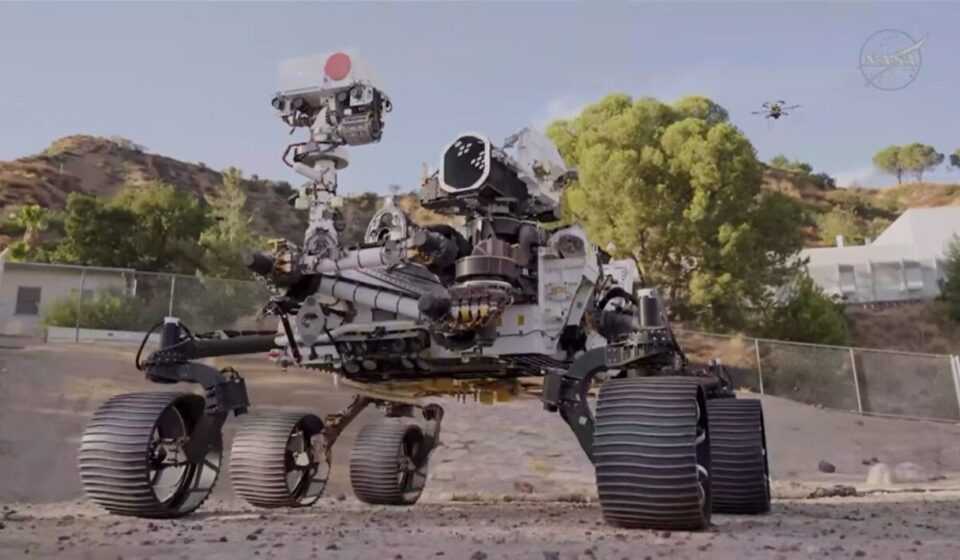
We tend to cover headline hardware – new landers, rockets, rovers – and miss the quieter engineering decisions that reshape how missions (and by analogy, enterprises) operate. NASA’s discussion of converting an engineering-development Mars rover into PROMISE, a nuclear-powered lunar polar explorer, is one of those quiet but profound shifts. It signals a move from single-purpose, single-environment hardware toward adaptable platforms designed for endurance, re-use, and multi-vendor resilience.
What’s happening (briefly)
I recently read about plans to repurpose a test rover at JPL into PROMISE – a plutonium-powered vehicle aimed at exploring permanently shadowed regions near the Moon’s south pole – and about the broader Moon Base Phase‑1 program that mixes multiple commercial landers and payloads. The strategic choices are interesting: choosing persistent power over solar-limited mobility, leveraging existing test assets, and embracing a diversified supplier base for delivery.
Why this matters for enterprise architecture
At the heart of this story is an architectural principle we use in software every day: design for longevity and reusability, not for a single sprint. A few parallels to consider:
-
Power as an SLO. In space missions, power availability is a primary non-functional requirement; nuclear power buys operational continuity in otherwise impossible environments. In enterprise systems, think of critical baselines such as a secure identity fabric, reliable data pipelines, and resilient compute. Prioritising a dependable baseline (even if more expensive upfront) can unlock capabilities that variable or cheap options cannot.
-
Repurposing testbeds reduces time‑to‑capability. Turning a development rover into a flight-capable lunar asset is analogous to hardening internal tooling or an experimental microservice into a customer-facing platform. The payoff comes from a shorter validation loop – but it demands rigorous verification, traceability, and a culture that treats prototypes as potential production first-class citizens.
-
Multi-vendor delivery is the new normal. NASA’s Phase‑1 mix of landers and contingency planning around launch vehicles reads like multi-cloud strategy: don’t over-rely on one vendor or one trajectory. That reduces single-point-of-failure risk but increases integration complexity. Enterprises must balance vendor diversity against the cost of orchestration and standardised interfaces.
-
Trade-offs: endurance vs. cost, flexibility vs. safety. Choosing a nuclear source (long-lived but complex) over solar (cheaper but limited) is an explicit trade-off. Similarly, choosing enterprise architectures that prioritise uptime and regulatory compliance may raise initial costs and complexity, but they enable capabilities – and markets – that opportunistic architectures cannot serve.
Actionable implications for CTOs and architects
- Treat baseline capabilities (power, identity, telemetry) as strategic assets, and budget for them accordingly.
- Maintain “productionizable prototypes”: a path from lab experiment to fielded product with defined gates (verification, safety, documentation).
- Adopt interface contracts and telemetry standards to simplify multi-vendor integration. The moon program’s need to carry identical payloads across different landers mirrors the enterprise need for portable workloads.
- Model worst-case environments in your non-functional tests: long offline periods, intermittent connectivity, and delayed recovery scenarios. Build for graceful degradation, not brittle fail-stop behaviour.
A note for engineers in India and the Northeast
There’s a useful lesson for our ecosystem: frugal innovation need not mean short-term hacks. Low-cost prototypes that are designed with clear hardening paths can be converted into long-lived solutions for rural energy, last-mile connectivity, or remote sensing. Institutions in Northeast India that host testbeds can intentionally document and version their prototypes so that “repurposing” is an operational choice, not an accident.
Key takeaways
- Durable, reusable platforms change strategic options more than one-off innovations.
- Invest in baselines (power/identity/telemetry) – they unlock markets and missions.
- Multi-vendor strategies increase resilience but require rigorous integration standards.
- Design prototypes with production gates; this lowers the cost of rapid re-deployment.
Closing thought
The compelling thing about PROMISE isn’t the destination – it’s the mindset: engineering for endurance, substitutability, and deliberate reuse. That mindset should be the bedrock of how we architect systems on Earth as well as machines destined for other worlds.
About the Author: Sanjeev Sarma is the Founder Director and Chief Software Architect at Webx Technologies. With a core focus on Generative AI integration, Cloud-Native Scalability, and Enterprise Software Architecture, he has spent over two decades driving digital transformation across Northeast India and beyond. Beyond his corporate leadership, Sanjeev is deeply invested in shaping the future of the IT industry. He serves as an Industry Expert on the Board of Studies for Assam Don Bosco University’s School of Technology, advises state technology committees, and actively mentors emerging tech startups at STPI. He brings a unique, dual perspective of high-level enterprise execution and future-ready academic curriculum development.