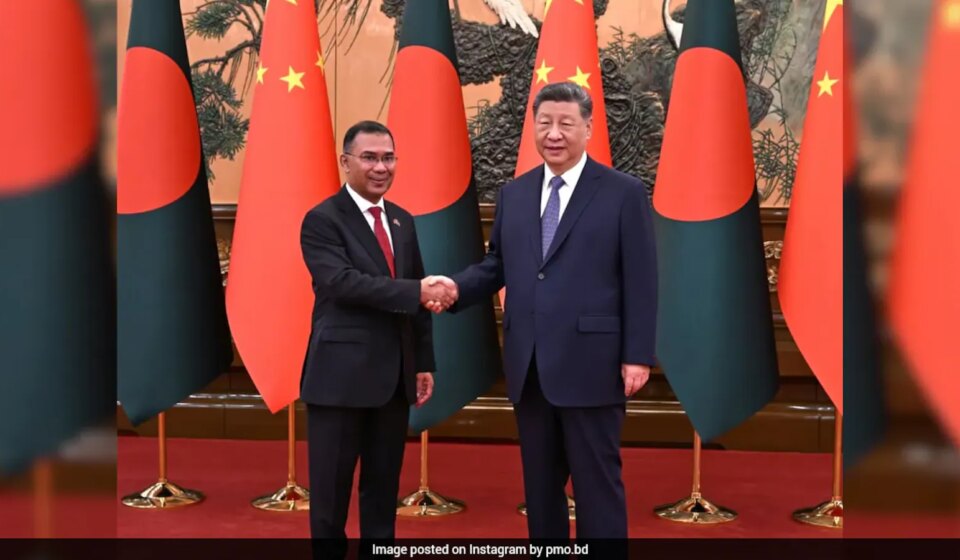

Bangladesh Prime Minister Tarique Rahman’s first international visit to China culminated in a joint statement that deepens Dhaka-Beijing ties and has raised concern in New Delhi over potential strategic shifts affecting India-Bangladesh relations. The statement pledges closer strategic cooperation, explores institutionalised high‑level dialogue including a foreign‑minister strategic channel and a possible “2+2” diplomacy‑and‑defence format, and signals Beijing’s intent to support major projects in Bangladesh.
The joint communique frames China’s 15th Five‑Year Plan as an opportunity for Bangladesh and calls for elevating the bilateral partnership to a comprehensive strategic cooperation aimed at shared development gains. It also says the two sides held wide-ranging exchanges on regional and international issues and reached broad consensus on deepening collaboration.
New Delhi’s attention is focused on two concrete items in the statement: the Mongla Port modernisation and expansion, and the Teesta River Comprehensive Management and Restoration Project (TRCMRP). The communique says Dhaka and Beijing will jointly advance Mongla port facilities and the development of a Chinese economic and industrial zone in Chattogram. It also commits Chinese support — within capacity — for feasibility work, technical cooperation and expert exchanges on the Teesta masterplan and related water‑management measures.
Those announcements mark a notable reversal from earlier arrangements. Under the June 2024 joint statement during Sheikh Hasina’s visit to India, projects including Mongla modernisation and Teesta water management on the Bangladesh side were described as involving India; the interim administration of Muhammad Yunus later made some changes. Ambassador Veena Sikri, a former Indian high commissioner to Bangladesh, told NDTV that seeing Mongla and Teesta move toward Chinese involvement represents “one big change” from previous agreements.
India’s strategic unease stems from the geographic sensitivity of these projects. The Teesta programme sits near the Siliguri Corridor — the narrow land link connecting India’s northeast to the mainland — and Indian officials view increased external presence there, particularly China’s, as a potential security risk. Ambassador Sikri described the outcome as “a big surprise, a big disappointment,” and said New Delhi will study the implications closely.
Beyond infrastructure and water management, the joint statement outlines cooperation in governance exchanges, healthcare and education, and Rahman has invited Chinese leaders to visit Bangladesh at a mutually convenient time. Dhaka, for its part, has publicly maintained that its foreign policy is not a zero‑sum game; as Foreign Minister Khalilur Rahman told NDTV earlier this year, “Our relationship with other countries is not a problem.” The developments will test whether Dhaka can broaden external partnerships while managing strategic sensitivities with its neighbour, India.
Original Source: https://www.ndtv.com/india-news/bangladesh-china-joint-statement-mongla-ports-implications-for-india-decoded-11696681#publisher=newsstand
Category:
Tags:
Publish Date: 2026-06-28 03:28:00