From Data to Decisions: Building Trustworthy Clinical AI Workflows

The human cost of technical limits – and the architecture that can help fix them
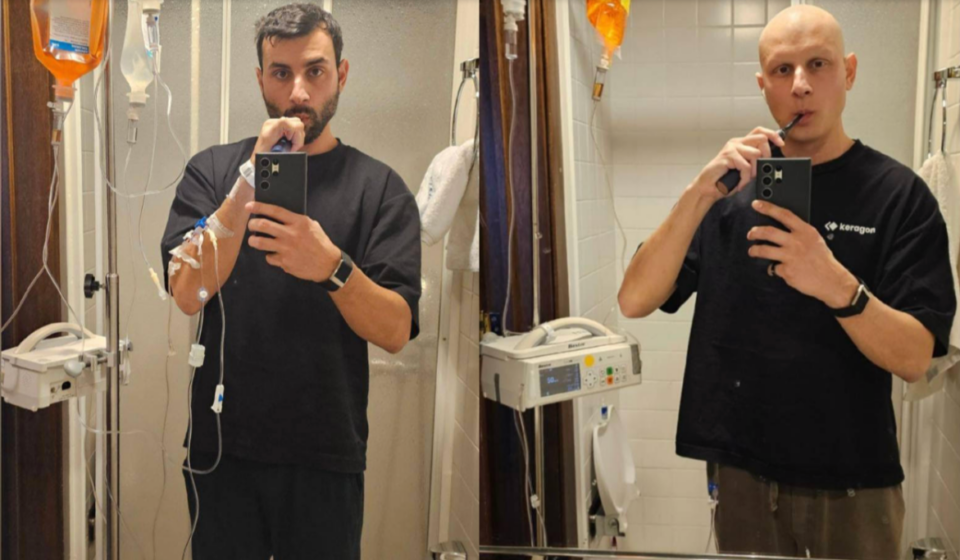
A recent case I read about a founder who obsessively tracked sleep, biomarkers and scans illustrates a simple truth: modern healthcare already produces enormous signals, but the system is still poor at connecting them in ways that help a single patient make better, timely decisions. That founder combined wearables, longitudinal labs and a general-purpose AI assistant to triangulate an ambiguous PET scan and avoid unnecessary radiotherapy. The signal isn’t that AI is magic – it’s that disciplined data orchestration plus human-in-the-loop models can materially change outcomes.
Why this matters for architects and CTOs
The core principle at play is not “more AI” but “better data plumbing with accountable decision-support.” Healthcare is a multi-modal, multi-stakeholder problem: time-series from wearables, structured labs, imaging, clinician notes, and patient narratives must be normalized, traced, and presented with provenance. When that happens, models – even generic LLMs – can help clinicians ask the right follow-ups, flag likely false positives, and accelerate decisions. But getting there requires deliberate architecture and governance, not ad-hoc integrations.
Architectural implications and trade-offs
- Data ingestion & normalization: Build an API-first ingestion layer that accepts streams (wearables), batch feeds (lab results), and heavy payloads (DICOM). Normalize to a common clinical schema (FHIR-like patterns) and maintain immutable provenance metadata. Without this, any downstream inference is guesswork.
- Multimodal orchestration: Use an event-driven pipeline to join time-series, imaging metadata and structured reports into patient timelines. Keep compute modular – image processing on GPU clusters, time-series analysis at edge/near-edge for latency-sensitive alerts, and aggregate model scoring in the cloud.
- Human-in-the-loop decision design: AI must produce explainable hypotheses and confidence bands, not directives. Architect for clinician workflows: easy one-click access to source documents, versioned model explanations, and an audit trail for every recommendation.
- Validation, monitoring and MLOps: Rare conditions expose models to distributional brittleness. Run rigorous retrospective validation, hold out cohorts by age/region, and deploy continuous monitoring for dataset shift. If a model’s precision drops, automated rollback and clinician notification are mandatory.
- Privacy, consent and provenance: Patient-held data (wearables, journals) should be treated as first-class. Consent capture, portable export, encryption-at-rest/in-transit, and selective sharing policies must be baked into the data layer. Consider federated learning or secure enclaves where central aggregation is infeasible or unacceptable.
- Liability and governance: Design systems so clinicians retain final responsibility. The platform’s role is to aggregate, prioritize, and explain. Policies and product design must align: who owns an incorrect model output, and how are corrections propagated?
What this means for India (and similar health systems)
India’s health landscape – fragmented providers, massive mobile reach, and resource-constrained facilities – is precisely where pragmatic, standards-based orchestration can create outsized benefit. Focus on:
- Lightweight, offline-capable clients for rural clinics and community health workers.
- Interoperability-first integrations with public health IDs and local EHRs, using minimal schemas and staged rollouts.
- Frugal UX that surfaces only the essentials to clinicians under pressure, while preserving the full provenance for specialists.
Actionable takeaways for CTOs and Founders
- Start with the patient timeline: invest in a canonical, auditable timeline service that joins all modalities before building models on top.
- Treat explainability as a product requirement: clinicians must see sources and confidence intervals, not opaque answers.
- Validate on local cohorts and run prospective pilots with clear clinical endpoints.
- Build governance into the release cycle: testing, monitoring, rollback and legal review are non-negotiable.
- Use federated techniques and edge compute where privacy or bandwidth make centralization untenable.
Closing thought
Technology’s biggest promise in healthcare isn’t replacing clinicians – it’s giving patients and clinicians a clearer, auditable map of reality so better decisions are possible. The architect’s job is to make that map honest, usable and resilient.
About the Author: Sanjeev Sarma is the Founder Director and Chief Software Architect at Webx Technologies. With a core focus on Generative AI integration, Cloud-Native Scalability, and Enterprise Software Architecture, he has spent over two decades driving digital transformation across Northeast India and beyond. Beyond his corporate leadership, Sanjeev is deeply invested in shaping the future of the IT industry. He serves as an Industry Expert on the Board of Studies for Assam Don Bosco University’s School of Technology, advises state technology committees, and actively mentors emerging tech startups at STPI. He brings a unique, dual perspective of high-level enterprise execution and future-ready academic curriculum development.