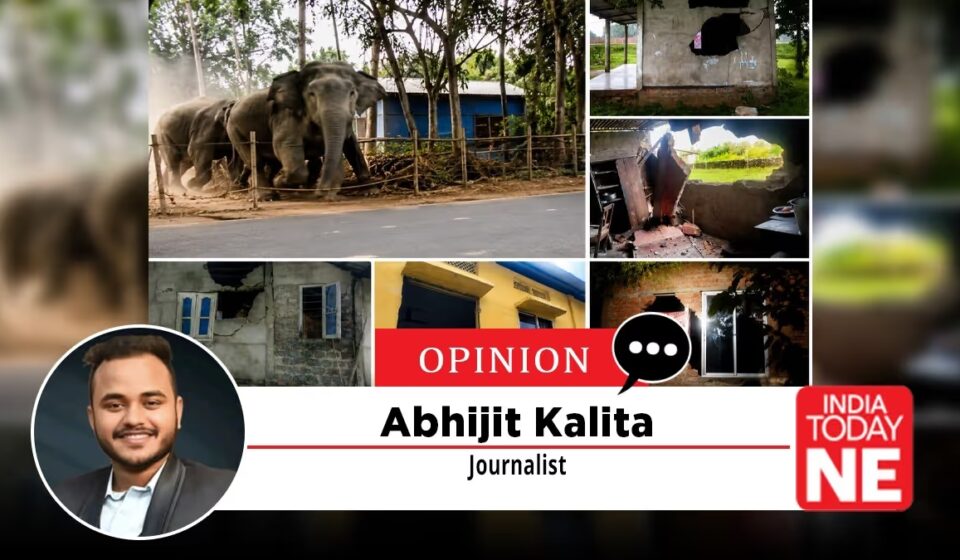

The latest elephant rampage that tore through Palasbari and neighbouring Assam–Meghalaya border villages — including Rani, Maniari Tiniali, Tatibama‑Niralpur and Bikrampur — is not an isolated incident but a warning of a deeper ecological crisis: destroyed homes, flattened paddy fields and broken granaries show that elephants are losing the space they need to survive.
Residents say herds now enter villages almost nightly, damaging houses, eating stored grain and wrecking standing crops, while families spend sleepless hours with torches, fire, crackers and drums. Those traditional deterrents are increasingly ineffective against large herds that have grown habituated to human presence.
Historically, elephants moved along broad forest corridors linking Meghalaya’s hills to the plains of Kamrup. Over time, expanding settlements, roads, agriculture, stone quarrying and habitat fragmentation have narrowed these routes. As forests shrink and wild food sources decline, elephants are being pushed into cultivated lands where paddy, bananas and stored grain are easy to find.
Palasbari now illustrates this “push‑and‑pull” dynamic: degraded forests push elephants out, while nutrient‑rich fields pull them in, creating a deadly overlap between wildlife habitat and human livelihoods. The area lies on an active movement zone; elephants cross state boundaries easily, making the problem transboundary rather than purely local.
On the ground, the response has been mainly reactive. Forest officials often arrive only after damage is done. Villagers report a lack of permanent preventive measures such as solar fencing, early‑warning systems, regular monitoring teams and scientifically designed elephant barriers. Compensation processes are frequently slow, leaving families frustrated and financially exposed.
The consequences go beyond property loss. Several fatalities linked to human‑elephant conflict have been reported across Assam and along the Assam–Meghalaya border in recent years, while elephants themselves die from retaliation, electrocution, accidents and pressures related to habitat loss. Both people and wildlife are suffering.
Conservationists note that elephants are following ancient migration routes long established before modern settlements. Labeling them invaders ignores the fact that their habitats have been carved up, leaving few safe options and making habitat loss the primary driver of conflict in Northeast India.
At the same time, recognising ecological causes does not relieve the immediate hardships of villagers. For many families in Palasbari, a single destroyed harvest can mean a year of financial hardship, and living in constant fear affects children and the elderly. Coexistence must therefore include justice and tangible support for affected communities.
A sustainable response requires multiple coordinated steps. Assam and Meghalaya should jointly identify and legally secure elephant corridors along the border. Scientific mitigation — including solar fencing, watchtowers, early‑warning networks and community rapid‑response teams — must be scaled up. Compensation for crop and property damage should be timely, transparent and adequate. Long‑term land‑use planning must prevent further fragmentation of critical movement routes.
There are small signs of progress: revised insurance provisions that include crop losses from wild animals may offer some relief to farmers. But insurance cannot substitute for preventing habitat degradation and poor planning; prevention must remain the priority.
The crisis in Palasbari tests our ability to balance development with conservation. If current trends continue, conflicts will intensify, producing more destruction, more deaths and deeper distrust between communities and wildlife authorities. The choice is stark: continue reacting to each rampage, or address the ecological and governance failures that cause them. The future of Palasbari’s people and the elephants that cross the Assam–Meghalaya border depends on which path is chosen.
Original Source: https://www.indiatodayne.in/opinion/story/living-on-the-frontline-of-human-elephant-conflict-1413896-2026-06-25?utm_source=rssfeed
Category:
Tags:
Publish Date: 2026-06-25 12:20:00