From Foundry to Fleet: Architecting India’s High-Value Manufacturing Ecosystem

A decade-long pivot: why India’s manufacturing renaissance is more than capacity-building
Ten years ago, “Make in India” meant large assembly lines and low-cost labour. Today’s conversation is different: it’s about materials science, embedded systems, industrial automation and integrated service models that blur the line between product engineering and software-defined operations. That strategic shift is what makes the recent wave of investments and hardware-first startups noteworthy-not because they build things, but because they reframe how enterprises must design systems end-to-end.
The signal
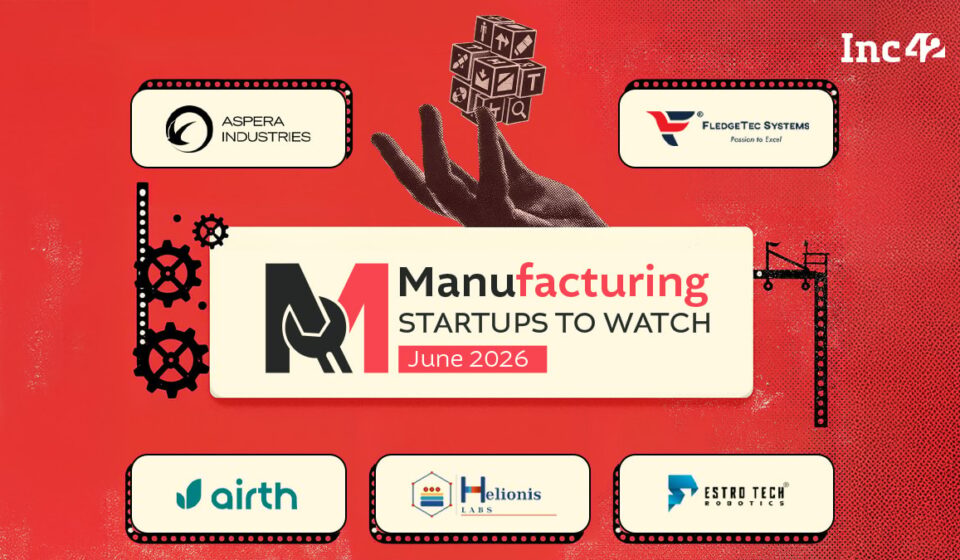
Recent market moves and a new crop of manufacturing startups show a pattern: capital is flowing into advanced, high-value manufacturing (precision aerospace parts, electronics substrates, industrial robotics, clean-air systems and even autonomous cargo aircraft). These efforts are tied to localisation of critical inputs, vertically integrated production, and hardware-plus-software platforms that demand new enterprise architectures.
Why this matters for architects and CTOs
-
From product to product-service system: Founders are no longer shipping stand‑alone hardware. They are delivering a product that requires lifecycle software, remote diagnostics, firmware updates, and supply‑chain telemetry. For enterprise architects this means designing for observability, secure OTA (over‑the‑air) updates, and cloud-to-edge data flows from day one. The old separation of “device maker” and “IT team” is no longer viable.
-
Material and process risk become architectural risk: When a business substitutes imported substrates or coatings with a new local material, that change cascades into thermal models, reliability testing, and sourcing strategy. Architects must marry physical test data with digital twins and quality‑of‑service SLAs so that product design decisions are reflected in operational runbooks and procurement plans.
-
The new trade-offs: speed vs. stability, scale vs. customisation. Rapid prototyping and in-house manufacturing shorten iteration cycles, but they can increase technical debt if test regimes and standards aren’t institutionalised. Enterprises need governance layers-component registries, compliance pipelines, and traceable BOMs-so speed doesn’t degrade long‑term reliability.
-
Cyber-physical security and compliance: Connected robotics, air‑quality devices, and autonomous aircraft introduce attack surfaces that span firmware, cloud services and logistics partners. Security must be embedded into the CI/CD pipeline for hardware: signed firmware, immutable logs, zero‑trust device identity and supply‑chain attestations.
Actionable implications for leaders and founders
- Design a “digital thread” from CAD to field data. Integrate PLM, MES and analytics so design changes propagate automatically into manufacturing and service workflows.
- Invest in modularity: break systems into replaceable, verifiable modules (mechanical, electrical, firmware, cloud), each with its own test and certification scaffold.
- Treat materials as first‑class data: capture thermal, ageing and failure-mode test results as structured datasets to inform product reliability models.
- Build security and OTA strategies before going to market: certification is harder and costlier later.
- Partner with academic and certification bodies early. Co‑developing test protocols (as some startups have done) reduces rework and accelerates customer adoption.
A practical Bharat/Northeast lens
There is a genuine opportunity to align these developments with regional needs. Riverine and hilly geographies in the Northeast make last‑mile logistics a technical barrier-autonomous amphibious aircraft concepts deserve particular attention there, not as a novelty, but as viable infrastructure for remote supply chains. Similarly, affordable industrial automation and locally produced thermal substrates can lower the entry barrier for MSMEs across Bharat, turning regional engineering talent into competitive manufacturing clusters.
Key takeaways
- The strategic value is in systems, not single machines: hardware must be designed as part of a service and operational ecosystem.
- Institutionalise engineering data (materials, telemetry, tests) as enterprise assets.
- Prioritise cyber-physical security and compliance early-retrofits are expensive.
- Regional needs (logistics, energy efficiency, frugal innovation) can and should guide where advanced manufacturing investments yield the most social and commercial return.
Closing thought
Manufacturing’s future in India will be won by those who link material science to software, and who treat the factory as a cloud-native system rather than a siloed production line.
About the Author: Sanjeev Sarma is the Founder Director and Chief Software Architect at Webx Technologies. With a core focus on Generative AI integration, Cloud-Native Scalability, and Enterprise Software Architecture, he has spent over two decades driving digital transformation across Northeast India and beyond. Beyond his corporate leadership, Sanjeev is deeply invested in shaping the future of the IT industry. He serves as an Industry Expert on the Board of Studies for Assam Don Bosco University’s School of Technology, advises state technology committees, and actively mentors emerging tech startups at STPI. He brings a unique, dual perspective of high-level enterprise execution and future-ready academic curriculum development.