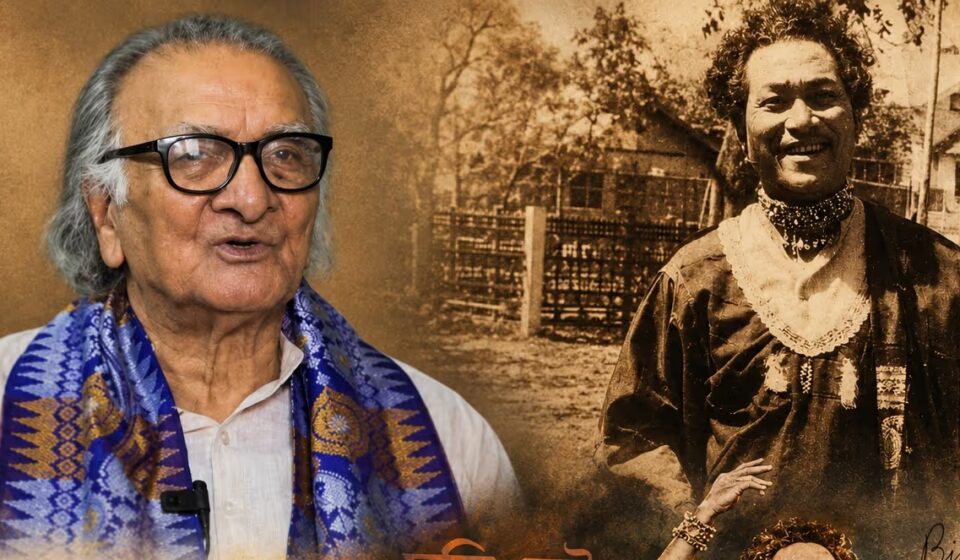

On a quiet morning in late 1940, a young Jatin Goswami arrived at the home of Bishnu Prasad Rabha seeking dance lessons from a man already regarded as one of Assam’s foremost cultural figures. Goswami — then trained in the Adhar Satra tradition — performed a Sutradhari piece for Rabha, who listened without praise, corrected his hand movements and introduced the technical concepts of abartan and bibartan, asking the novice to practise them. Goswami later called that moment “the beginning.”
Today Padma Bhushan Jatin Goswami remains one of Assam’s most respected dance exponents and recalls Rabha not only as a master performer but as an insatiable student of knowledge. Rabha, he said, read constantly, rose before dawn regardless of how late he slept, and carried books wherever he went. “I have never met another person with such enormous knowledge,” Goswami said. “Whatever subject you discussed with him, he seemed to know it in depth.”
Goswami keeps several letters written by Rabha. Apart from discussing art and scholarship, the correspondence reveals personal hardship: in one letter Rabha wrote of needing around Rs 200–300, a considerable sum then, and asked for help. “He dedicated his life to art, culture and the people, yet towards the end of his life he was facing financial hardship,” Goswami said. “It pains me to think that a person who gave so much to society had to struggle.”
Rabha spent years studying the Natyashastra and developed an extraordinary grasp of the karanas and angaharas described in its fourth chapter. He compiled his notes and commentary into a manuscript that was later lent to someone and never returned — a loss Goswami regards as the disappearance of years of unique scholarship. “I never came across a dancer or dance guru in Assam who possessed the kind of knowledge of the Natyashastra that Bishnu Rabha had,” he said.
Goswami lived and travelled with Rabha, remaining close to him until three days before Rabha’s death. He performed in and later taught sequences from Rabha’s celebrated dance-drama Mukti Deu, bringing its songs and choreography to audiences across Assam, especially in Darrang. Goswami observed that Rabha’s choreography fused classical technique with Assamese folk forms, and that his art was inseparable from his social and political convictions.
Many of Rabha’s works carried a spirit of resistance and social awakening — songs such as Bhaang Bhaang Bhaang Sikoli and Bol Bol Bol Krishak Shaktidal voiced themes of liberation and empowerment, often prefaced by Sanskrit verses that framed their philosophical depth.
Goswami regretted never completing training in the form for which Rabha became renowned: Tandava Nritya. Rabha preferred to call his work Shiva Nritya and used the Natyashastra’s karanas to interpret stories such as Kamadeva Bhasma, which he staged widely — in Guwahati, Tezpur, Shillong, Jorhat, Nagaon and later Kolkata, and even at Banaras Hindu University in March 1940.
Eighty-five years after their first meeting, Goswami says the lessons endure, the letters remain, and through dedicated students the legacy of Bishnu Prasad Rabha continues to shape Assam’s dance and cultural life.
Original Source: https://www.indiatodayne.in/assam/story/i-still-preserve-his-letters-jatin-goswami-recalls-bishnu-rabhas-lessons-from-nearly-85-years-ago-1411983-2026-06-21?utm_source=rssfeed
Category:
Tags:
Publish Date: 2026-06-21 23:21:00