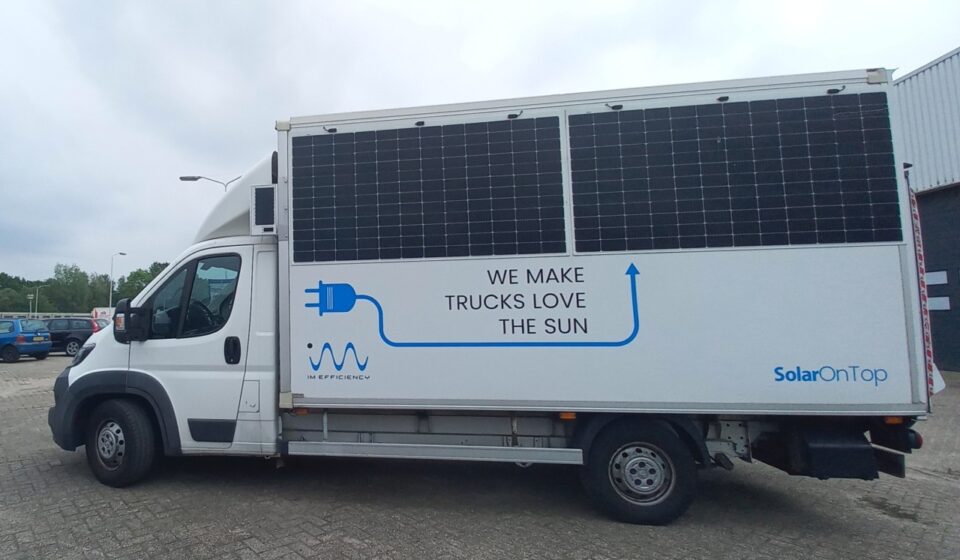
Architecting Fleet Energy: Vehicle-Integrated PV for Grid Resilience

When we hear “solar car,” most of us picture a niche experiment: a lightweight prototype cruising across a desert. That framing misses a more pragmatic – and potentially impactful – idea emerging from recent research: vehicles as distributed, stationary-capable solar assets that reduce grid load and operating costs for fleets rather than trying to replace conventional roof-mounted PV for buildings.
The signal: a European research project analyzed vehicle-integrated photovoltaics (VIPV) across passenger cars, vans and heavy vehicles and concluded that integrating solar modules into vehicle surfaces can meaningfully cut external charging or fuel needs – especially for vehicles with large roof areas or daytime duty cycles. The study’s operational dataset and modelling show the strongest outcomes in logistics and commercial fleets where roof area, predictable routes and daytime energy needs align with solar availability.
Why this matters to enterprise architects, fleet CTOs and logistics founders
- Energy at the edge changes system boundaries. Treating vehicles as energy-generating nodes forces us to re-architect both fleet back-ends and grid-facing systems. Instead of a simple charge/consume model, you need a vehicle energy management system (VEMS) that understands generation profiles, state-of-charge, route energy forecasts and charging windows. That VEMS must integrate telematics, route-planning and the enterprise resource planning (ERP) stack to turn intermittent generation into reliable operational benefit.
- Different value pools than rooftop PV. For private owners, VIPV is often a minor convenience. For enterprises, the value is operational: reduced diesel for auxiliary loads, extended daily range for electric trucks, fewer depot charges, and lower peak demand from the grid. That shifts the ROI conversation from sticker novelty to TCO and uptime economics – and it’s a conversation engineers and CFOs can measure.
- New interfaces, standards and trust layers. Fleet managers will require APIs and standards for PV yield telemetry, warranty-traceable degradation metrics, and secure firmware updates for solar inverters and controllers. Cybersecurity becomes a non-negotiable element: the energy plane and the vehicle control plane must be isolated and auditable.
- Operational realities drive selection. Dust, shading, panel degradation, and vehicle routes that park at night or under cover sharply affect yield. Effective pilots require digital twins and simulation to estimate realistic benefits before retrofit or OEM integration. Maintenance processes (cleaning schedules, sensor calibration, IV curve checks) become part of fleet ops rather than an afterthought.
- Business models will evolve. Expect solar-as-a-service for fleets, performance guarantees tied to daily kWh yield, and bundled financing that capitalizes the PV premium while passing fuel/energy savings to operators. Insurance and warranty products will follow.
A practical bridge to India (where it makes sense)
India’s high solar insolation and rapidly expanding commercial logistics sector make the VIPV case worth testing locally – especially for last-mile electric vans, refrigerated delivery trucks and buses with daytime operation. However, environmental factors (dust, monsoon exposure) and operating patterns in many regions will demand stricter maintenance SOPs and realistic yield modelling. For Northeast India specifically, pilots focused on refrigerated transport for perishables or government fleets with daytime duty cycles could surface practical insights faster than passenger-vehicle pilots.
Actionable takeaways for leaders
- Start with fleet segments, not consumer PR: identify vehicles with large roof area, daytime parking in sunlight, and predictable routes.
- Build an energy model per asset class: simulate realistic yields, accounting for soiling and shading.
- Architect an integrated VEMS: telematics + PV telemetry + route planner + charger scheduler. Make cybersecurity and OTA updates mandatory.
- Negotiate outcome-based commercial models with automotive-grade PV suppliers (performance guarantees, degradation rates, service SLAs).
- Treat maintenance and end-of-life as core ops: cleaning cadence, sensor health, and recycling must be in the capex/opex model.
Closing thought
VIPV doesn’t flip the industry overnight – but when architects treat vehicles as distributed, monetizable energy assets rather than one-off curiosities, it becomes a pragmatic lever in fleet decarbonization and grid resilience.
About the Author: Sanjeev Sarma is the Founder Director and Chief Software Architect at Webx Technologies. With a core focus on Generative AI integration, Cloud-Native Scalability, and Enterprise Software Architecture, he has spent over two decades driving digital transformation across Northeast India and beyond. Beyond his corporate leadership, Sanjeev is deeply invested in shaping the future of the IT industry. He serves as an Industry Expert on the Board of Studies for Assam Don Bosco University’s School of Technology, advises state technology committees, and actively mentors emerging tech startups at STPI. He brings a unique, dual perspective of high-level enterprise execution and future-ready academic curriculum development.