Architecting Goal-First Investment Platforms for Next-Gen Investors

We often treat new fintech launches as product updates: a prettier UI, a different fee schedule, another acquisition. That misses the larger shift under way – the industry is no longer selling financial products first; it is designing for individual goals, attention patterns, and lifecycle monetization. The technical and architectural consequences of that shift are profound.
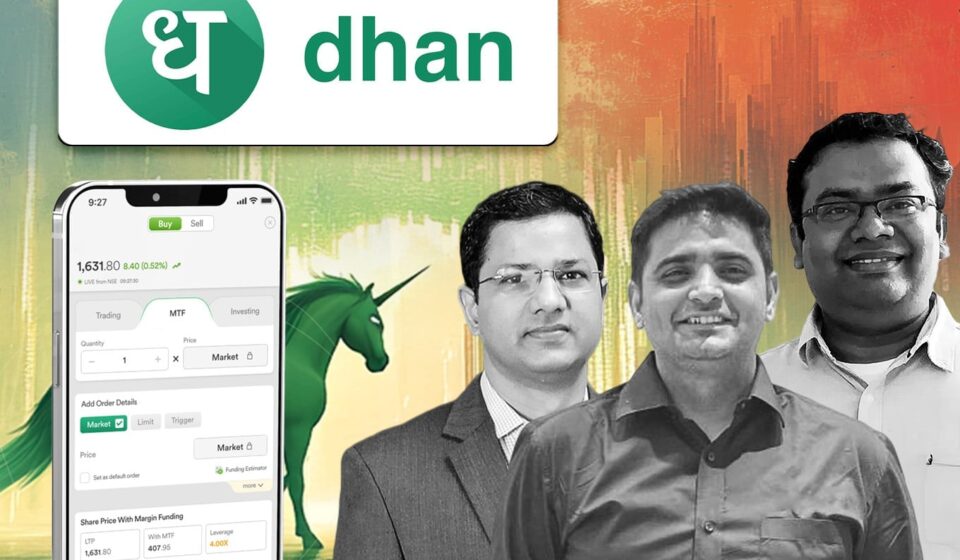
Context: a new, goal-first investing app aimed at Gen Z has entered the market, backed by a larger broking and fintech stack that’s rapidly consolidating capabilities across broking, algo trading, insurance distribution and AI-driven insights. The move highlights two signals: (1) retail investor demographics are getting younger and more digitally native, and (2) incumbents are responding by stitching product breadth to goal-oriented experiences rather than product catalogs.
Why this matters for enterprise architects
Goal-based investing is a different product requirement-and therefore a different systems problem-than a catalogue of mutual funds and equity screens. When the user’s primary mental model is “save for a side hustle” or “build passive income,” systems must prioritize personalization, intent mapping, explainability, and lifecycle orchestration over simple order routing.
Architectural implications and trade-offs
- Event-driven personalization: Goal journeys are stateful and long-lived. Architectures must embrace event-sourcing and durable orchestration (e.g., stream processing + workflow engines) so goals, micro-contributions, rebalancing events and behavioural nudges remain consistent as the product evolves.
- Data contracts and model governance: Personalization requires models trained on sensitive financial behaviour. Enterprises must implement clear data contracts, feature stores, and model lineage so recommendations are auditable for both product insight and regulatory compliance (SEBI, AML/KYC). Explainability is not optional when recommendations influence investments.
- Composability vs. Integration Debt: Rapid M&A and product acquisitions accelerate capability breadth, but they also increase integration complexity. API-first design, bounded contexts, and federated identity/data access are essential to avoid fragile point-to-point integrations that blow up during scaling or audits.
- Real-time risk and throughput: Removing onboarding/brokerage friction can increase transaction velocity. Backends must scale for real-time order matching, margin calculations and risk throttling. This raises the classic Speed vs. Stability trade-off: low-latency paths for execution, and slower, strongly consistent paths for settlement and compliance.
- Monetization & ethical design: Zero-fee or low-fee models often monetize via adjacent services (insurance distribution, premium insights, order flow, or lending). Architectures should separate user-facing value from opaque monetization so user trust and regulatory transparency are preserved.
Operational and R&D consequences
Teams must pair product PMs with platform engineers and MLops early. The incremental cost of personalization (feature plumbing, retraining cadence, A/B frameworks) is real. Investing in a shared feature store, robust CI/CD for models, and runtime monitoring for concept drift will determine whether personalization scales or becomes technical debt.
Bharat & Northeast perspective (where it genuinely applies)
For India – including the Northeast where digital access and financial literacy are still growing – goal-based, mobile-first investing has strong potential, but not without intentional design. Low-bandwidth experiences, vernacular education, and frictionless KYC/UPI flows will be decisive. In my mentoring with STPI and local startups, I’ve seen products that succeed when they couple simple goal metaphors with transparent pricing and local outreach.
Actionable takeaways for CTOs and founders
- Build for long-lived user state: use event-driven workflows and durable orchestration for goals and lifecycle events.
- Treat personalization as platform work: invest in feature stores, model governance, and explainability from day one.
- Prioritize composable APIs and federated data access to ease M&A integration and audits.
- Separate low-latency execution paths from high-integrity settlement and compliance flows.
- Localize thoughtfully: optimize UX for low bandwidth and regional vernaculars where adoption is still nascent.
Closing thought
The fintech race today isn’t only for customers; it’s for persistent, trusted relationships expressed as life-long goals. Winning requires engineering systems that are auditable, composable, and designed around human intent – not merely product catalogs.
About the Author: Sanjeev Sarma is the Founder Director and Chief Software Architect at Webx Technologies. With a core focus on Generative AI integration, Cloud-Native Scalability, and Enterprise Software Architecture, he has spent over two decades driving digital transformation across Northeast India and beyond. Beyond his corporate leadership, Sanjeev is deeply invested in shaping the future of the IT industry. He serves as an Industry Expert on the Board of Studies for Assam Don Bosco University’s School of Technology, advises state technology committees, and actively mentors emerging tech startups at STPI. He brings a unique, dual perspective of high-level enterprise execution and future-ready academic curriculum development.