Architecting Quick-Commerce Systems for Fresh Perishables at Scale

We glorify speed in quick commerce – 15‑minute deliveries, hyperlocal dark stores – but the deeper engineering challenge is often about preserving quality while scaling the supply chain. Speed without reliable freshness is a brittle promise; getting both right changes the whole economics and architecture of a business.
Quick signal
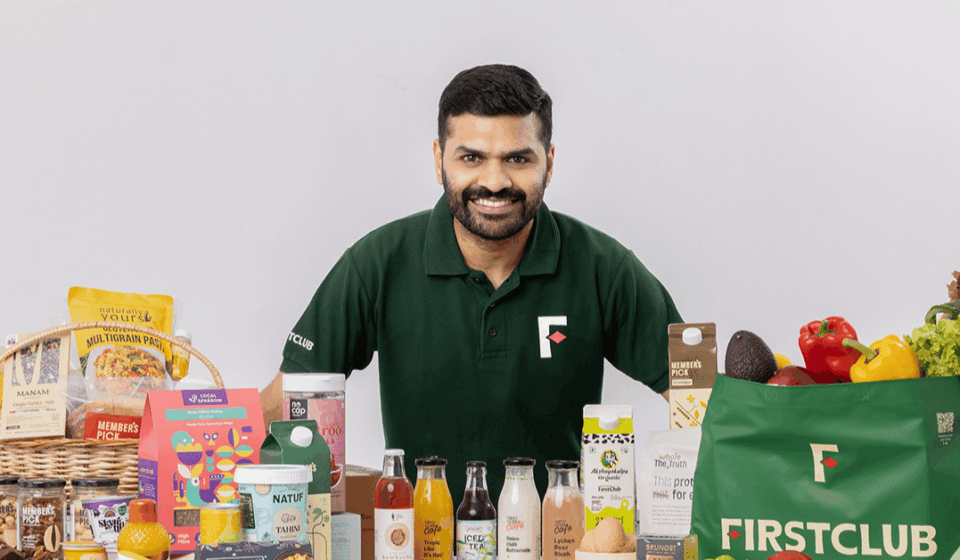
I recently read a report about FirstClub’s $55 million Series B and their explicit bet on freshness: lab checks, cold‑chain friendly packaging, a mix of stores and warehouses, and plans for category expansion and membership. The news is less about a single startup’s growth and more about the structural choices facing any company moving perishables fast into dense urban markets.
What this implies for architecture and ops
-
The speed-vs-quality trade-off is an architectural decision, not a marketing problem.
Prioritising freshness (temperature control, lab verification, provenance) raises variable costs – packaging, sensors, handling, shrinkage – and requires different operational patterns than commodity grocery. Engineers and architects must make those trade-offs explicit: what services will accept higher OPEX for lower churn and higher ASPs, and which will be optimised for cost-leadership? Treat perishability as a first-class constraint in design conversations, not an afterthought. -
Hybrid fulfillment (micro‑fulfillment + regional hubs) is a sensible evolution – but it introduces data consistency and routing complexity.
Moving from a pure dark‑store model to a mix of stores plus larger warehouses demands an event-driven, location-aware inventory model. Inventory must be represented as qualified by temperature, lab‑test status, and sell‑by windows. That pushes you toward streaming systems (real‑time stock state), strong eventual consistency guarantees, and clear ownership boundaries between micro‑fulfillment nodes and central hubs. -
Telemetry, lab results and provenance must become product metadata.
If a platform claims “lab-tested” or “cold‑chain,” those attestations must be auditable and attached to SKU metadata: supplier certificates, batch IDs, lab timestamps, and sensor logs. Architect this as immutable provenance records (append‑only event stores) so compliance, customer disputes, and membership benefits (e.g., guaranteed freshness credits) can be executed without manual reconciliation. -
Edge computing and real‑time control are necessary at scale.
Cold‑chain monitoring is not just telemetry; it’s control. Edge components in warehouses/vehicles should perform local anomaly detection (temperature excursions, door ajar) and take automated remediation actions (route reassignment, quarantine). Central ML models predict spoilage and optimal reorder points, but local controllers must act when connectivity or latency prevents central intervention. -
Memberships change economics – but require real behavioral design.
A membership that promises value must be backed by reliable operational performance (fewer stockouts, exclusive SKUs, or faster delivery windows). Before large scale rollout, model lifetime value under realistic retention and usage curves, and run continuous A/B tests on benefits. Memberships can shift customer composition – think through service level prioritisation during peak times.
The India angle (practical considerations)
Urban India presents both opportunity and constraint: dense demand clusters make 20–25 minute delivery viable, but inconsistent cold‑chain infrastructure (power, refrigerated transport costs, and last‑mile variability) amplifies OPEX. Frugal engineering – passive cooling, temperature‑segmented bags, and prioritised SKU assortments – often wins in Indian contexts more than expensive end‑to‑end refrigeration for every SKU. If expanding beyond metros, factor in longer transit times and higher spoilage risk into SKU selection and pricing.
Takeaways for CTOs and founders
- Treat perishability as a system requirement: elevate temperature, provenance, and lab status into your core inventory model.
- Invest early in edge telemetry and local controls; don’t rely solely on central orchestration.
- Model unit economics per SKU (including shrinkage and lab costs) before scaling assortments or geography.
- Design membership experiments as operational commitments, not marketing levers – ensure service levels can be delivered reliably.
- Build auditable provenance aligned to compliance and customer trust; immutable event logs pay back in dispute resolution and product claims.
Closing thought
Fast delivery is necessary for modern urban commerce – but durable differentiation comes from the systems that guarantee what customers actually want when the package arrives: quality, safety, and predictable experience.
About the Author: Sanjeev Sarma is the Founder Director and Chief Software Architect at Webx Technologies. With a core focus on Generative AI integration, Cloud-Native Scalability, and Enterprise Software Architecture, he has spent over two decades driving digital transformation across Northeast India and beyond. Beyond his corporate leadership, Sanjeev is deeply invested in shaping the future of the IT industry. He serves as an Industry Expert on the Board of Studies for Assam Don Bosco University’s School of Technology, advises state technology committees, and actively mentors emerging tech startups at STPI. He brings a unique, dual perspective of high-level enterprise execution and future-ready academic curriculum development.