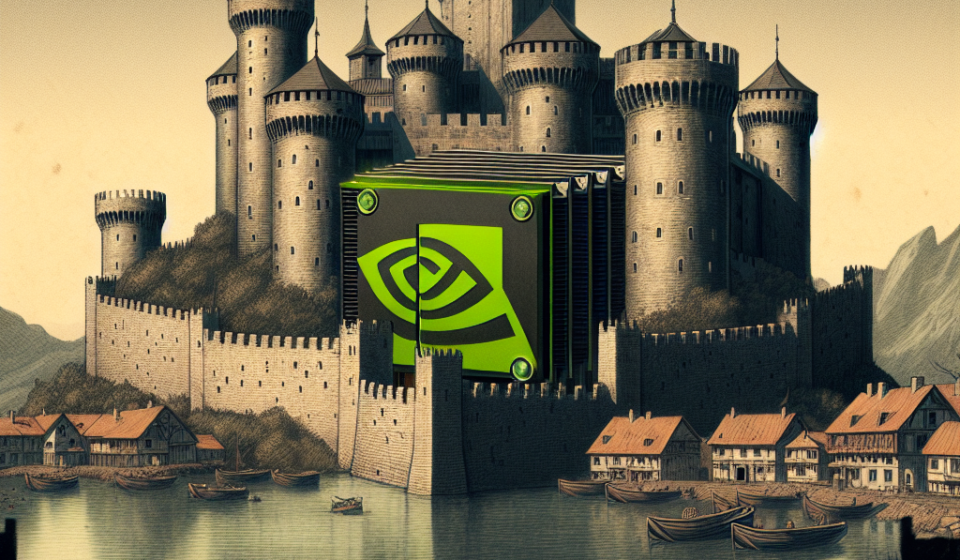

We obsess over model size, dataset curation and latency SLAs – but the single biggest strategic advantage in modern AI is often the software that makes hardware sing. That’s the moat many teams overlook.
Context
A recent analysis highlighted how Nvidia’s CUDA – a low-level platform for orchestrating GPU parallelism – functions as a de facto competitive barrier. The piece also noted efforts by teams to bypass high-level stacks and program closer to the metal (PTX-level tuning) to eke out efficiency gains. Taken together, the signal is clear: performance wins are now often won in the software-hardware interface, not only in model architecture.
Analysis – what this means for architects and leaders
1) Moats can be software, not just IP or data. As a chief architect I’ve seen organisations chase lofty model improvements while ignoring runtime inefficiencies. CUDA is a reminder that the orchestration layer – compilers, kernels, optimized libraries – can multiply or neuter even the best model. For enterprises running production ML at scale, a 2–5x improvement in throughput or a 30–50% cut in GPU hours translates directly to budgets, procurement cycles and carbon footprint.
2) Vendor lock‑in is a strategic risk, not just a procurement annoyance. CUDA’s depth and the ecosystem around it produce developer productivity advantages that are hard to replicate elsewhere. That advantage creates dependency – on tooling, on drivers, on supply chains. CTOs must treat this risk like any other: quantify exposure, stress-test alternatives, and include contingency plans in architecture roadmaps.
3) Trade-offs: performance vs portability vs maintainability. Teams that dive into PTX-level optimization (or any assembly-level tuning) win raw performance but pay in complexity and long-term maintainability. For most enterprises, the right call is pragmatic: use tuned libraries and higher-level compilers where they exist, reserve low-level optimization for a tiny set of production-critical kernels, and factor sustainability into staffing and documentation.
4) An operational playbook: modern ML stacks are multilayered (model -> runtime -> compiler -> driver -> hardware). Effective cost and resilience optimization requires thinking across layers. Invest in benchmarking, reproducible performance tests, and a CI pipeline that measures not only correctness but cost-per-inference and training throughput. Use ML compilers (XLA, TVM, MLIR-based toolchains) and abstraction layers that offer a path off a single vendor if needed.
5) Security, supply chain and geopolitics matter. Heavy reliance on a single silicon/software vendor concentrates risk. For public-sector projects, DPI initiatives, or mission-critical enterprise systems, that concentration compounds legal, procurement and continuity risks. Include dependency assessments in vendor evaluations and where appropriate, demand contractual SLAs that reflect long-term availability and support.
A brief Bharat/Northeast note (practical, not rhetorical)
For government and enterprise digital initiatives in India – including projects I advise at state-level bodies – these considerations are concrete. Cost sensitivity, skills availability, and procurement timelines make it important to design AI systems that are performance-efficient yet vendor-agnostic where possible. In regions with constrained connectivity and smaller teams, leaning on portable toolchains and managed platforms that hide low-level complexity can reduce operational debt and accelerate adoption.
Actionable takeaways
– Inventory: map where GPU-optimized libraries and vendor-specific tooling are used in your stack.
– Benchmark: measure cost-per-training-run and latency-per-inference across candidate runtimes and clouds.
– Tier your optimizations: reserve low-level tuning for top 5% of compute-heavy workloads.
– Diversify: evaluate ROCm, oneAPI, and compiler-based portability (TVM/XLA) as part of a multi-vendor strategy.
– Govern: add dependency risk to your architecture risk register and procurement decisions.
Closing thought
In the age of AI, the durable advantage will rarely be a single model or dataset – it will be the software-hardware symphony that lets your models run both efficiently and reliably. Design for that symphony.
About the Author Sanjeev Sarma is the Founder Director of Webx Technologies Private Limited, a leading Technology Consulting firm with over two decades of experience. A seasoned technology strategist and Chief Software Architect, he specializes in Enterprise Software Architecture, Cloud-Native Applications, AI-Driven Platforms, and Mobile-First Solutions. Recognized as a “Technology Hero” by Microsoft for his pioneering work in e-Governance, Sanjeev actively advises state and central technology committees, including the Advisory Board for Software Technology Parks of India (STPI) across multiple Northeast Indian states. He is also the Managing Editor for Mahabahu.com, an international journal. Passionate about fostering innovation, he actively mentors aspiring entrepreneurs and leads transformative digital solutions for enterprises and government sectors from his base in Northeast India.